I finished The Nightingale sitting on my yoga mat, drenched in sweat and with goosebumps all over. Kristin Hannah weaves emotions like love, hate, anger, and fear into the story, and as I read, I found myself drawn into the world of Vian and Isabelle, my heart breaking and mending over and over again.
As I read, it felt as though she were sitting beside me, saying, “I understand. Go ahead and cry. I’ll wait for you.” Once my emotions had settled, I would immerse myself in the story once more.
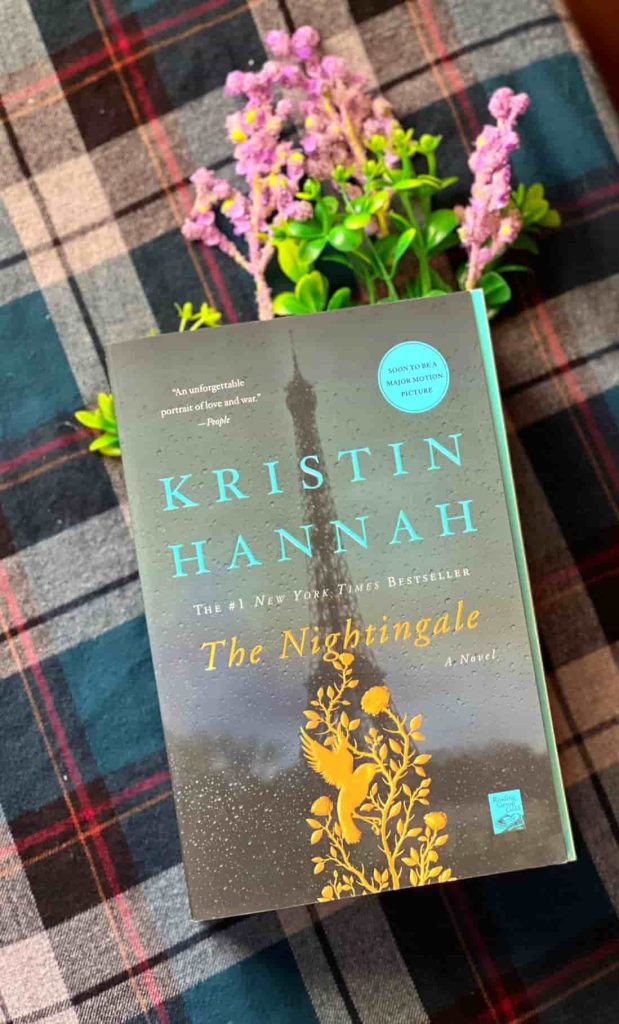
Two sisters, two choices, two lives
One rebellious as fire, throwing herself into the flames of war; the other gentle as water, guarding her home. One dying with dignity; the other living in humiliation.
The former embodies bravery, but isn’t the latter a different kind of bravery as well?
In war, dying is so easy, while surviving is incredibly difficult. I find it hard to say which Nightingale I prefer. The courage to resist and die nobly is one kind of bravery, but enduring humiliation, staying alive, and holding fast also require deep thought and effort.
Love and Sacrifice
I was deeply moved by the novel. I find myself wondering: what is the true meaning of persevering to survive after enduring so much suffering? And what do those who willingly sacrifice themselves do so for?
My answer is love. Love for family and love for one’s homeland. Only with love in one’s heart can one navigate the darkest of times. I am willing to sacrifice for love, and I am willing to persevere for love.
Yet another question comes to mind: if one day I had nothing left to hold onto, would I still be able to find a reason to live? I don’t know. Selfishly, I hope that moment never comes in my life.
There are two scenes in the book that brought tears to my eyes.
One is when Vian kills Beck with a shovel to protect Isabelle. She made a choice between Beck and Isabelle, but wasn’t Beck innocent too? He was also a victim of this war, and he too longed to protect Vian and his own family.
The other is when the father sacrifices his life to protect Isabelle. As he himself said, he wasn’t a competent father, yet he had always protected his family in his own way.
Father and Daughter Reunited
The three of them—father and daughters—each hid their identities, each operating in the shadows. The moment the truth was revealed, love and faith drew them toward one another—in that instant, the intertwining of universal love and familial love was portrayed with profound intensity. Past misunderstandings pale in comparison; they finally see one another for who they are: father and daughters, sisters, and comrades-in-arms fighting for their country.
Even in the darkest of times, the light of humanity never completely fades. It may be faint, it may be forced into hiding, but as long as there are those willing to listen to the nightingale’s song, human hope will never vanish.
Women and War
If anyone says war is a man’s business, they are wrong. War is a disaster for everyone; no one can remain untouched by it.
Kristin Hannah conveys something deeper in the book. At the end, she has Vian say these words: “Men tell the stories; women carry on with life. For us, it was a phantom war. When the war ended, no one held a parade for us, we were not awarded medals, and history textbooks make no mention of us. During the war, we did what we had to do; after the war, we cleaned up the mess and started over.”
Such struggles are passed down from generation to generation.
The Complexity of War and the “Silver Lining”
The novel shifts from its initial, somewhat lackluster focus on the sisters’ principled disagreements and personality clashes to a fast-paced, heart-wrenching resistance campaign. In such an environment, it’s hard to say whether standing up or enduring in silence is right or wrong; everyone has their own way of fighting, and surviving is always the right choice.
War is cruel in every respect, yet it unexpectedly brought about reconciliation within this family. This war helped them grow and allowed them to rediscover the love of a father they thought they had lost. From this perspective, it can be seen as a small blessing amidst the misfortune.
This reminds me of Love in a Fallen City: the fall of a city brought a man and a woman together, and a national catastrophe brought a family together. I know this analogy is imperfect—war ultimately does not bring fulfillment, but rather deprivation. Yet it does allow me to glimpse that faint glimmer of humanity amidst the disaster.
Epilogue
Love helps us understand the person we aspire to be; but war reveals our true selves.
This novel is like a cruel mirror—when life feels hard, think of how they planted roses amidst the flames of war: even if the world collapses, they will sing upon the ruins.
That is true feminine strength.
Wounds will heal. Love will not die. We are still here.
