In the days following the passing of a loved one, I couldn’t muster the energy to engage with anything around me. My emotions felt as though they were constantly plummeting into a deep abyss. It was then that I read Tuesdays with Morrie—and to my surprise, this story about death offered me such a warm sense of redemption, steadying me and holding me up. It was the first time I realized that the underlying tone of “living toward death” is one of warmth and light, and I saw myself clearly once again. After reading through my notes from these fourteen lessons, I was in tears, feeling a long-lost sense of fulfillment—as if the energy of life were flowing through me once more.
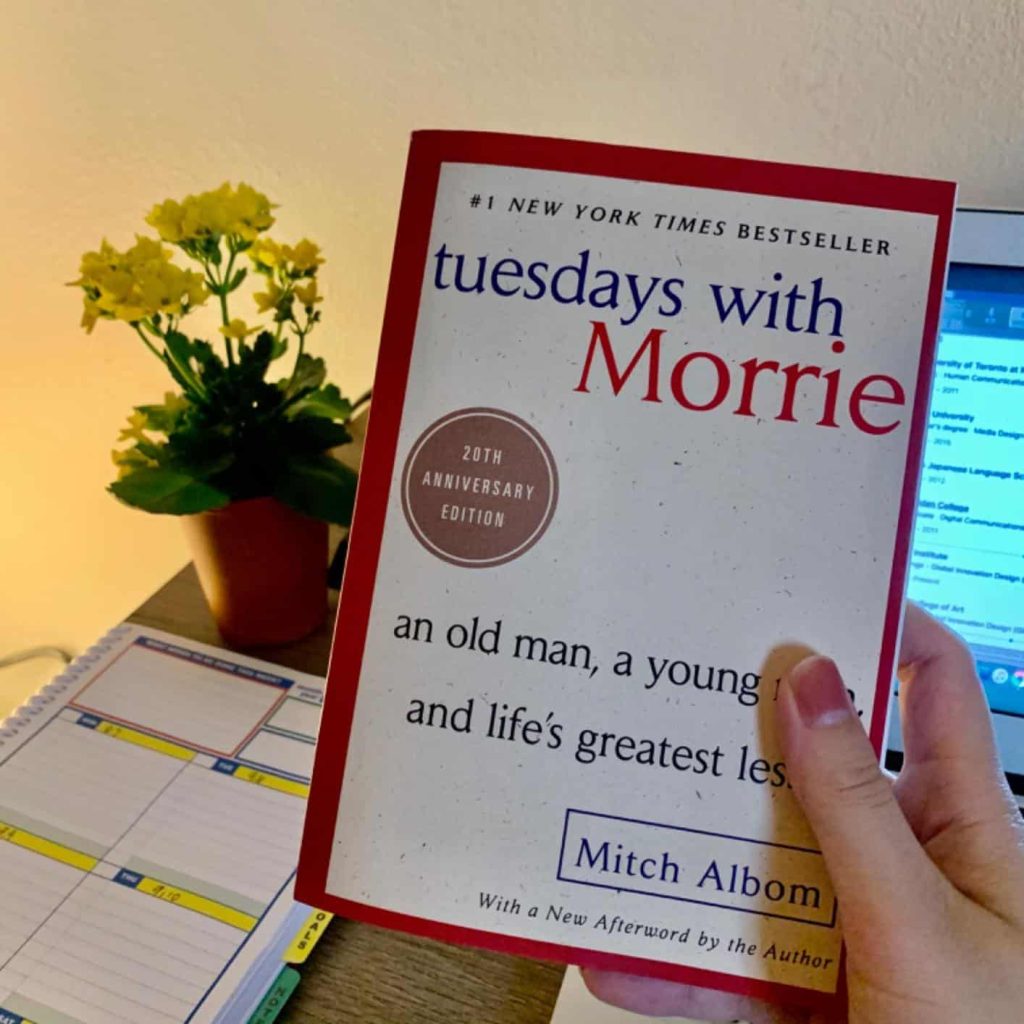
What moved me most about Morrie was his courage to live toward death. He was fully aware that life was slipping away bit by bit, yet he did not complain or sink into despair; instead, he turned his illness into a classroom and his farewell into an epiphany. We are always busy chasing after things, anxious, and even competitive, turning life into a race, yet we forget to stop and ask ourselves: What truly matters? Morrie offers the simplest answer: Love is the only rationality. He tells us that the value of life lies not in wealth or status, but in sincere connections, gentle companionship, and the open-hearted giving and acceptance. We often use busyness as an excuse to distance ourselves from family, ignore our feelings, and suppress our true selves—only to realize their value once they’re gone. Yet Morrie uses the remainder of his life to remind us: don’t wait until the end to start living well. He teaches us to make peace with life. To accept imperfection, embrace aging, and say “yes” to regrets. No self-pity, no resentment, no being held hostage by worldly standards—instead, maintaining inner order and reserving time for love and those who are worthy. This “reconciliation” is not compromise, but a clear-eyed love for life that endures even after seeing its true nature.
As I read, I came to see Morrie as an elderly mentor I’d known for many years. Perhaps he still clung to some old-fashioned ways, yet he was wholeheartedly committed to keeping pace with the times. After graduation, though I often recalled his earnest teachings, our contact was limited to holiday greetings—all of which came to a halt as his health rapidly declined. With my limited life experience in my twenties, there were certainly many parts I didn’t fully grasp. However, from the parts I did understand, the old professor struck me as a man of great ease—a kind of ease that remains grounded in the realities of life.
Many people say this book is thin and shallow, that they didn’t find any particular depth in it, and question why it has consistently dominated the U.S. bestseller lists. Yet many others say that after reading it, they felt a sense of redemption, a sudden clarity, and a deep sense of peace. I suppose it comes down to differences in life experience. Just as there are love songs you can only truly understand after a breakup, and certain melodies that only those with lived stories can sing. Similarly, a book isn’t meant for everyone, nor can everyone grasp its meaning. Because when you’ve truly experienced the birth, aging, sickness, and death of loved ones; when you’ve weathered life’s setbacks and low points; when you’re mired in despondency, doubt, or even despair—this book is undoubtedly a potent remedy.
So, what about us—we, these small and ordinary people? What do we use to sustain our souls? After I die, aside from the memories my loved ones hold of me, everything else is fleeting. No matter how cherished or how hard it is to part with, nothing in this life can be taken away by a body reduced to ashes; nothing can be enjoyed beyond that. What I can receive is the longer-lasting remembrance of more people—that is what I leave behind to live on in this world.
While I am alive, what I need is to pour out all my love. The wider I sow the seeds of love, the more remembrance I will reap, and the more opportunities my life will have to be reborn. “We fear death because we do not see ourselves as part of nature. In truth, we are not above nature; where there is life, there is death, and even in death, we do not truly cease to exist. The love you have created still exists; all memories remain; and you are still alive—living in the hearts of every person you have touched and cherished.”
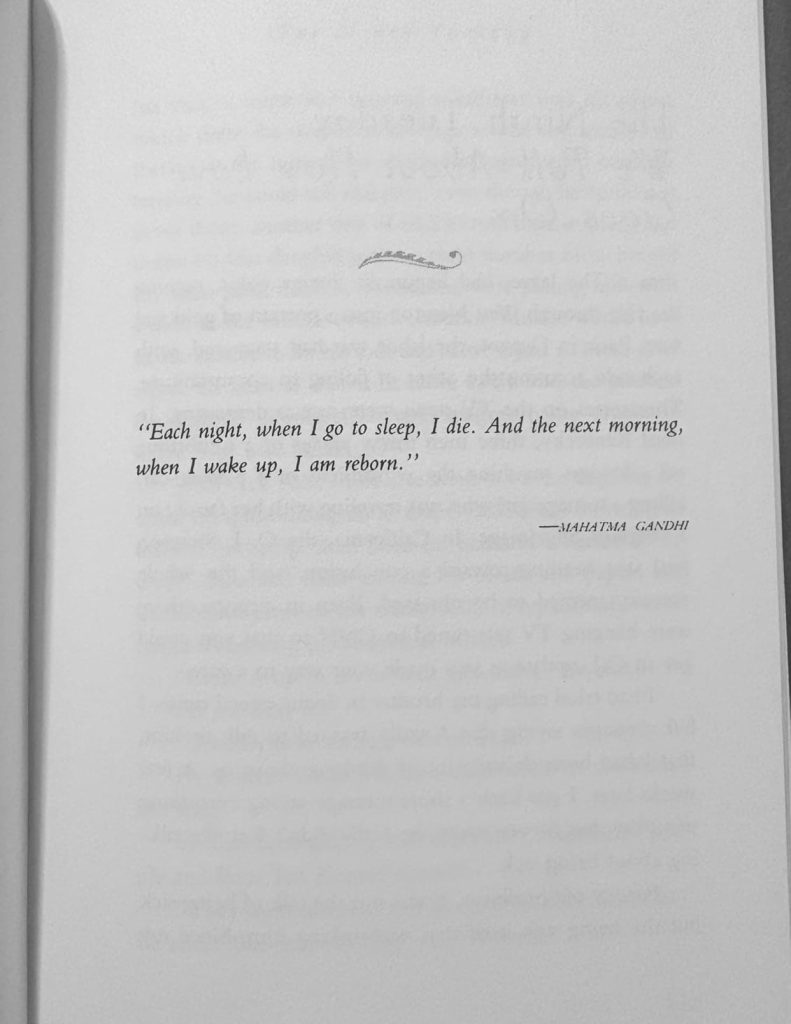
“Once you learn how to die, you also learn how to live.” This is the sentence that resonated most deeply with me in this book. So, I will make a pact with love in this lifetime.
Life is a constant ebb and flow. You want to do one thing, yet you are destined to do another. You are hurt, yet you know you shouldn’t. You take certain things for granted, even though you know you shouldn’t. The push and pull is like the movement of a rubber band. Most of us live right in the middle of it.
At that time, I thought I had lost. But Morrie told me: In the end, which side will win? Love will win. Love is the eternal victor.
