“The soul of Africa always takes the form of an elephant. For no animal can defeat an elephant. Not the lion, not the buffalo, not even the snake.”
These are the words Polish journalist Ryszard Kapuściński wrote on the final page of Heban. The 29 short essays that precede them are like individual prisms. Each one invites you to follow in Kapuściński’s footsteps, experiencing firsthand a specific event that occurred at a particular time and place on the African continent: as harrowing as the Rwandan genocide, as startling as a coup d’état or the downfall of a tyrant, as tense as a perilous journey, as subtle as the treatment of malaria, or as casual as a chance encounter in a train compartment. The scale of the event matters little; Kapuściński always has the ability to use it as a starting point to recount Africa’s history, politics, religion, culture, and customs… These 29 prisms come together to form a dazzling kaleidoscope, faithfully capturing the true face of Africa.
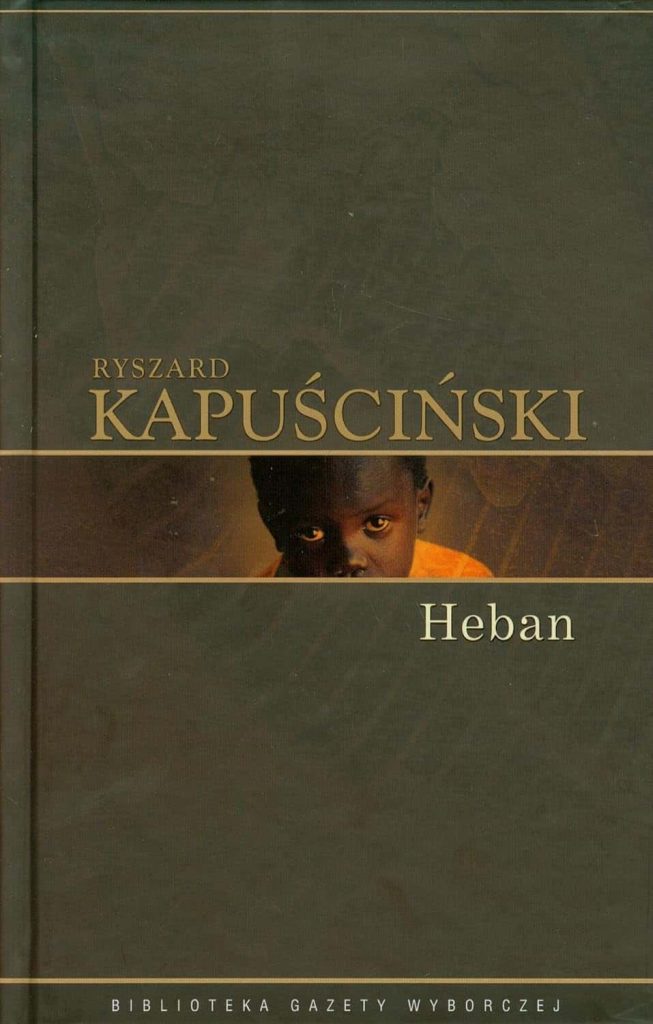
This book should have ended in despair, but instead it chose the elephant.
What sets Kapuściński apart is that he was not a descendant of colonizers who flew in from London or Paris, but rather a man who came from an Eastern European country that was itself dominated by a great power. He possessed no arrogance, only empathy and a profound sense of self-awareness. He had firsthand witnessed the deepest darkness, survived twenty-seven coups, and been sentenced to death four times. As a white man writing about Africa, he constantly reminded himself not to become the kind of condescending observer. There is a line in the book worth savoring again and again: “The world is folded. Africa is unseen; when it is seen, it is still treated as an object.”
Using himself as a lens and empathy as his vessel, he lays bare the profoundly rational logic underlying Africa’s seemingly bizarre and intractable realities. Like an exceptional anthropologist, he consistently steps outside his own culture to uncover, through lived experience, the stark laws of cause and effect behind what Western culture perceives as strange, irrational, or even “foolish.”
“A woman wailed in despair—her pot had been stolen. That pot was her entire fortune: she would buy beans on credit in the morning, cook them in the pot, and sell the beans to earn her daily bread. With the pot gone, her life was gone.” Such extreme poverty is beyond the imagination of us. Kapuściński used no statistics; with just this single pot, he made us understand what abject poverty truly means. It is not an abstract number; it is a person who, upon losing a pot, loses everything.
Individual despair is the theft of a single pot; collective despair is 800,000 corpses.
“Yesterday, a group of completely innocent people murdered another group of completely innocent people. Most of them did not die from cannonballs, but were hacked to pieces with long knives, hammers, and wooden clubs.” Kapuściński revealed an even more terrifying truth: the colonizers first armed mutually hostile tribes with guns and cannons. For people who had once fought with stones and wooden clubs, the efficiency of their killing was amplified exponentially. This was not a sudden tragedy, but centuries of pent-up resentment concentrated into decades of resistance, revenge, and struggles for power and interests. Nor can it be reduced to a struggle between two ethnic groups; rather, it was a sharp clash between dictatorship and democracy. This is the darkest shadow cast by “modernity”: it amplified primal hatred.
“Africans ask: When does the bus leave? The answer: It leaves when it’s full. To them, this is a form of certainty.” The objective concept of time we are accustomed to ceases to apply here. Time is defined by events, not by clocks. This notion shapes the African way of life: no accumulation, no planning—just living, waiting in the shadow of the sun. This waiting itself is a form of despair, for you do not know what you are waiting for, nor how long you must wait.
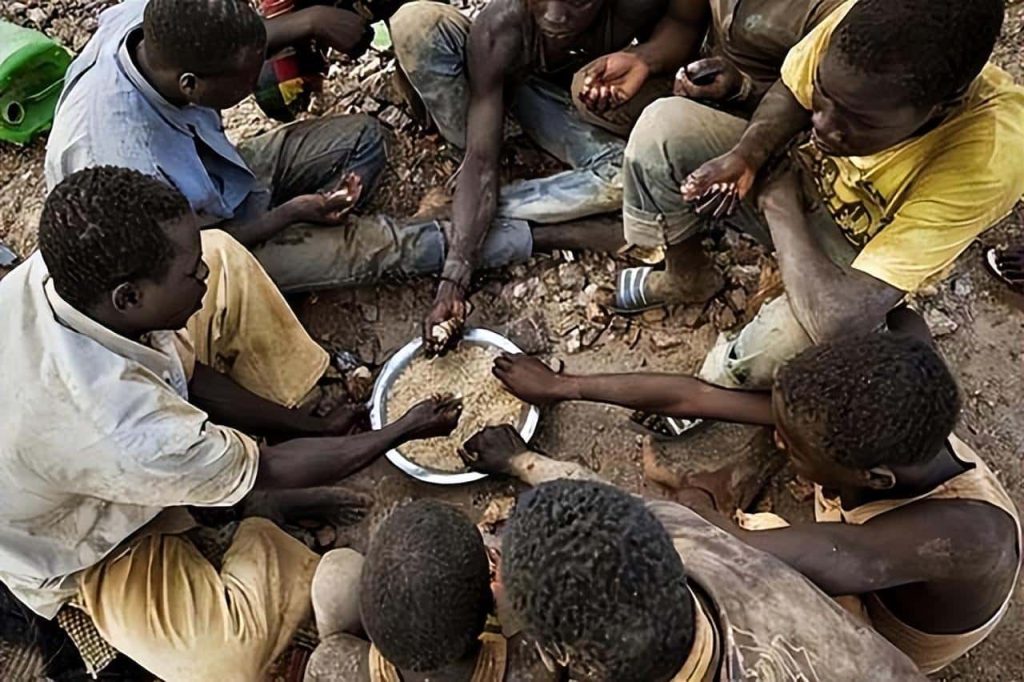
But Kapuściński did not stop there; in that land, he saw three things that would never fade away.
First and foremost is life itself. There is a passage in the book that is worth savoring again and again: “Those whose faces gleam with the luster of ebony speak with the conviction that they bear responsibility for the history of their people.” This sense of responsibility is not an obligation enshrined in the constitution, but something far deeper: even when one has nothing, one retains a sense of one’s own dignity. It is not a gift of civilization, but an instinct of life. It may be obscured by hunger, crushed by violence, or silenced by fear, but it will never vanish entirely. Like the shadow of the sun—the deeper the shadow, the brighter the sun.
Then there is the elephant.“The soul of Africa always appears in the form of an elephant. For no animal can defeat the elephant. ”The elephant is not gentle. It is the most indestructible being on this continent, not because it is the strongest, but because it cannot be defeated. Not by the lion, not by the buffalo, not even by the snake. This is a hope of “not being defeated.” It promises no victory, no happiness, only a single fact: as long as the elephant remains, the soul of Africa has not vanished.
Finally, there is dawn. In the penultimate paragraph of the book, the author writes: “It is still night, but Africa’s brightest moment draws ever closer—dawn is coming.” This is a deeply restrained hope; it does not declare that dawn has already arrived, but merely suggests that you can discern the direction of dawn within the darkness.
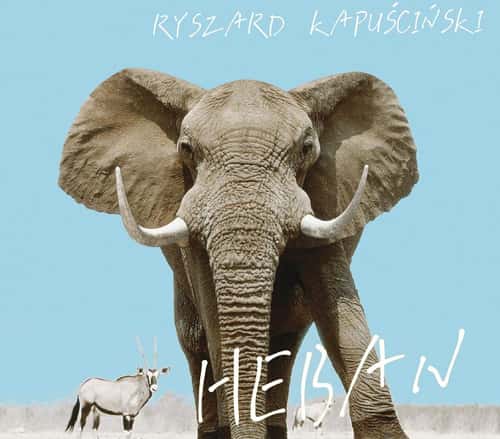
That night after finishing Heban, I kept wondering: What made Kapuściński believe that the elephant could never be defeated?
Later, I came to understand. It wasn’t because the elephant was the strongest, but because on this continent, all the forces that sought to destroy it—colonizers, dictators, famine, war—came and went, while the elephant remained. Just like the “face gleaming with the luster of ebony” he described in his book, it had weathered it all, yet it was still there.
This is not a naive hope. It is a hope that has been tested. It does not promise victory, but only one thing: no matter how deep the shadows, the sun will eventually rise. And as long as the sun remains, the shadows are merely shadows; they can never replace the light itself.
What Kapuściński ultimately offers is not an answer about Africa, but a way of understanding it. Like an anthropologist, he shows us that behind suffering that seems incomprehensible lies an internal logic that can be understood. Perhaps this is the true nature of hope—not blind optimism, but the choice to face reality even after seeing it clearly.
