This is another book by the author of The Martian, and his chatty writing style is actually quite engaging. To be honest, the hard sci-fi elements were a bit off-putting; I ended up skimming through a large portion of it. However, the plot is compelling, and the author is highly skilled at explaining science—he manages to describe complex physical principles clearly using simple, accessible language.
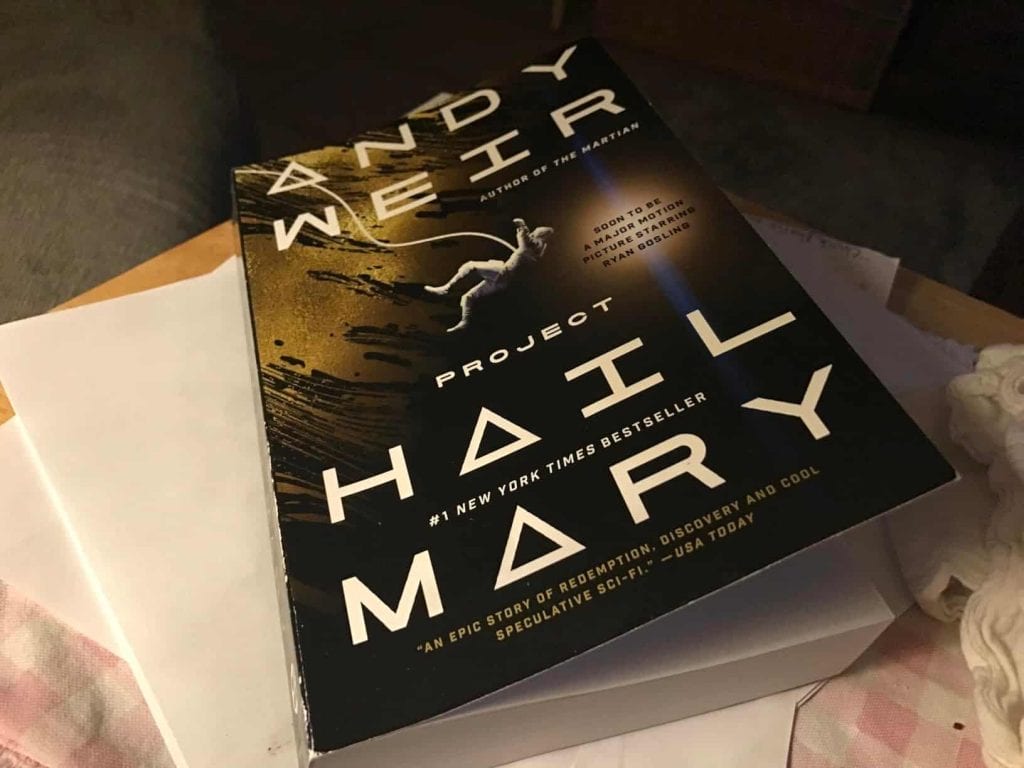
Grace, the protagonist of Project Hail Mary, wakes up unable to remember even her own name. This isn’t exactly a novel premise. But Andy Weir’s genius lies in the way he weaves memory and reality together, blurring the lines between fact and fiction—so much so that as you read, you start to feel like you’re the one in that predicament.
Another source of this sense of immersion is Grace himself. He is far from perfect and faces many inner struggles. It is precisely because of this that his character feels so real and relatable. No matter how hard the sci-fi shell may be, it cannot hide the humanity within him.
He is not a hero in the traditional sense. He did not embark on this journey of his own volition. He knew better than anyone that this was a suicide mission; he refused, only to be forcibly sent aboard the spacecraft. In other words, he is not a savior who steps forward of his own accord, but an ordinary person thrust into the abyss by fate. This premise is so moving because it strikes at our deepest, most genuine fear: if it were me, I too would be afraid and would run away. Yet it is precisely this “coward” who, at the story’s end, makes a heroic decision.
This decision wasn’t a sudden epiphany, but a path forged step by step. From his initial instinct for survival, to the gradual blossoming of a cross-species friendship with Rocky, and finally to his choice to abandon his return to Earth and turn back to save his five-legged alien friend—Grace’s growth is marked not by grand declarations, but by a series of small choices made with the mindset of “I was afraid, but I did it anyway.” Through a chatty, stream-of-consciousness style filled with inner monologues, the author renders these psychological struggles with unflinching realism.
How can someone who skips over the scientific details claim this book is good? My answer is: it wraps the softest core in the hardest sci-fi shell. It pushes you away with its scientific details, only to pull you back in with its plot. An ordinary person who considers himself a “coward” ultimately becomes a hero whom others see as unattainable. When we finish the last page, a thought wells up inside us: perhaps in the face of despair, courage isn’t innate—it’s something forced out of us, step by step.
I didn’t expect the ending to be like this. I thought Grace would return to Earth; I even imagined Commander Gao saying:“I hate you, but perhaps I once loved you.”It turns out my perspective was too narrow. I assumed a hero’s destiny was to return home in triumph, but this book defines a hero as someone who continues to be an ordinary teacher on a foreign planet. The fate of Earth is left open-ended; neither we nor Grace will ever know what happened there, while Grace, on another planet, continues to do what he loves most: teaching.
And this, perhaps, is the most precious gift Project Hail Mary offers us. It tells us that even in the vast and unforgiving universe, an ordinary person afraid of death can still choose to turn back.
