This is the first book I’ve read in 2026. When I went to borrow a book, I picked up one with a brightly colored cover and an intriguing title without hesitation—it was called Remarkably Bright Creatures. Only after finishing it did I realize that this book, chosen purely on a whim, was actually recommended by Bill Gates and had topped The New York Times bestseller list for 51 weeks.
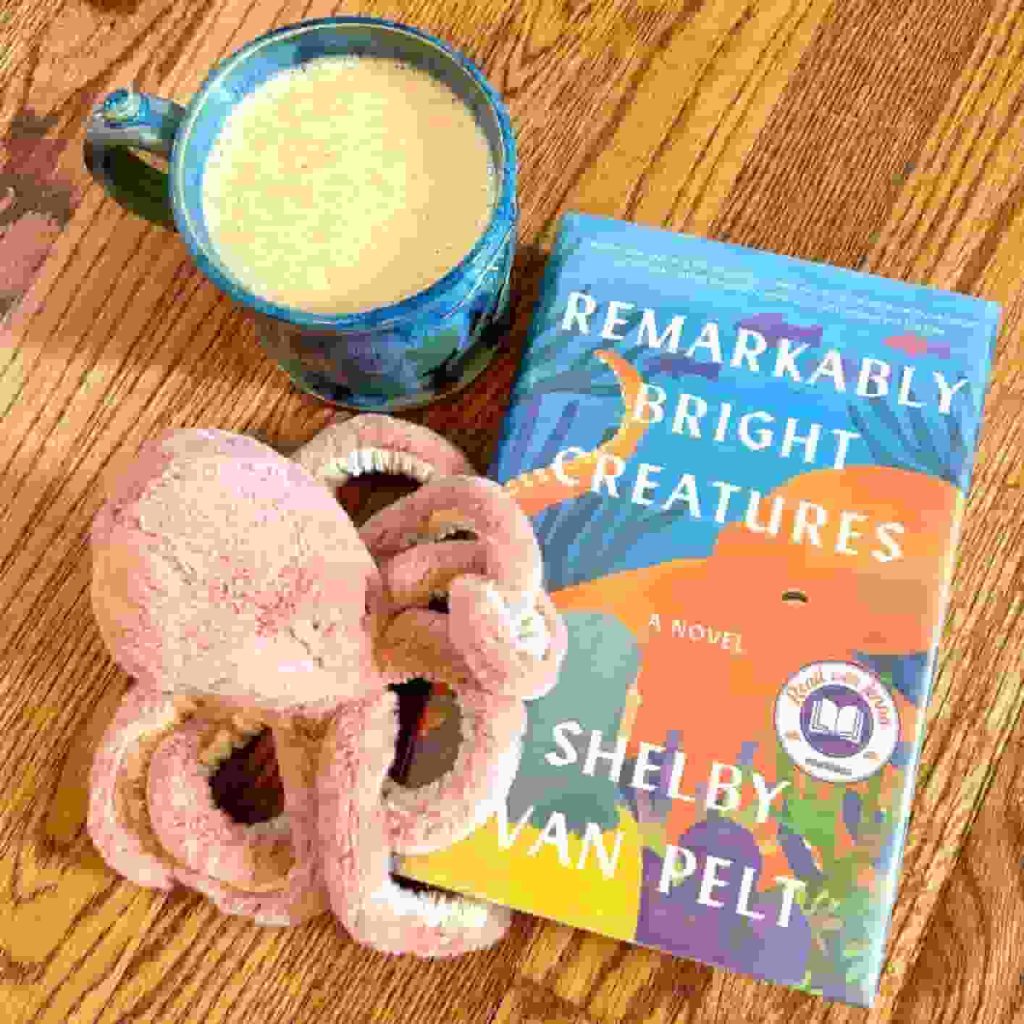
An elderly woman and a clever, kind octopus with three hearts. A gentle touch of its suction cups brings the young man and the old woman together, gradually unveiling a secret that has been hidden for many years.
Humans and octopuses—two completely different species. Reading this book allowed me to view the world from a different perspective.
If I had to describe this book with a metaphor, I’d say it’s a glass of lukewarm water. The story unfolds in a straightforward, unhurried manner. There’s warmth—it occasionally touches your heart—but it’s neither startling nor thrilling. It’s not as scalding as hot tea, nor as jarring as ice water; it’s simply a glass of lukewarm water. You could call it ordinary, or even boring.
I originally thought it would be a fairy tale like *The Shape of Water*, but it strikes the perfect balance with realism. The three storylines and three perspectives shift back and forth seamlessly, without any confusion. The introduction of the octopus’s perspective is particularly unique—it’s amazing how a “character” confined to a single setting can drive the entire story forward. No one can read the final three chapters without being moved by the author’s masterful structure and storytelling.
The passage that moved me the most was spoken by the octopus, Marcellus: “Generally speaking, I like holes. The hole in the top of the tank gives me freedom. But I don’t like the hole in her heart. She has only one heart, unlike me, who has three. Tova’s heart. I’ll do everything I can to help fill it.”
The elderly Tova, too, mustered all her strength and, just as she was about to leave the aquarium, took Marcellus with her back to the ocean.
As the mystery unravels layer by layer and the truth is revealed, I find myself no longer fixated on the details of thirty years ago. What I remember is the friendship between Tova and Marcellus—a bond that transcends species.
This book introduced me to this clever, kind, wonderful, and fascinating little ocean creature—the octopus. Its tentacles can regrow if severed; its soft body can squeeze through narrow gaps; it can survive briefly out of water; and it can even change color to match its surroundings! It even changes color while sleeping! They say that’s when it’s dreaming.
After finishing the book, I rewatched the documentary My Octopus Teacher, mimicking seaweed, playing with schools of fish, and strolling along the seabed, curling into a ball to defend herself with a shell, wrapping herself in seaweed but leaving a slit for her eyes to peek through and observe secretly—especially when she lay on Foster’s chest. I longed for that big, warm embrace too. When injured, her pale face and closed eyes were so moving and beautiful.
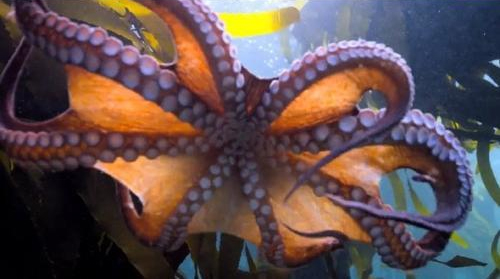
In the book, Marcellus eventually returns to the sea, but what about real-life octopuses? In Cape Town, after mating and laying eggs, the octopus sinks weakly to the seabed, eventually carried off by a shark into the seaweed forest; animals in aquariums are imprisoned, lacking Marcellus’s good fortune. Perhaps luck isn’t just about timing; it comes from kindness, contentment, and generosity. Luck is humanity—being kind to all living things and giving the world more beauty.