When I initially read this book, I experienced an intense feeling of discomfort within me. During that period, I was having a rough time within the team. It was difficult for me to interact with anyone surrounding me. Some of them perceived me as being rather cold towards them. They believed that I was always concerned about logic and hardly ever showed compassion towards others. On some occasions, they considered me to be speaking in a circuitous manner. I was very indirect in everything I said. I had to console myself during that period. I used to tell myself that everyone is simply different in terms of their personality in the workplace.
I opened the book, feeling impatient and unwilling.
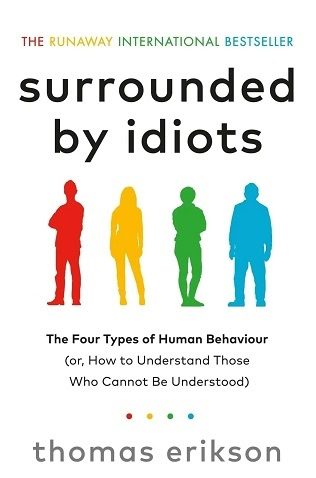
The Four Personality Types: The Key Answer to Communication Breakdown
The concept of four color personality at the workplace has been discussed in this book. The accuracy in the explanation of how people behave and communicate with each other is very basic. We never communicate effectively with others. There is no intention behind it to make anybody a target. We simply do not know anything about the personality of that particular individual. Neither do we know how they talk nor how they behave. You need to recognize the personality of the other individual and communicate with him the way he is accustomed to.
I had not experienced any epiphany when I read the book for the first time. In fact, I felt offended.
The author’s message comes across quite clearly. This problem is not that other people are stupid. This problem is that you simply do not know anything about them. Personally, I felt extremely uncomfortable reading these lines. I almost put down the book. There was absolutely no desire to continue. However, after forcing myself to calm down, I understood how correct his thoughts were. We hate when others categorize us. We are tired of the fact that we can be labeled with just one phrase. We find it offensive because we are complicated enough for that. But we categorize other people. We categorize using terminology that we are more familiar with. Such as MBTI. Or even such as houses in Hogwarts. Just for the sake of understanding them better.
This book contains some easily overlookable information. In fact, no one can be described by only one color.
In reality, most people consist of two and even three colors combined. The author did not want to label anyone with something. People have already done it themselves while reading the book.
MBTI is much alike. People are complex creatures. Yet, in practice, we cannot stop searching for simplicity. The model places everyone into one of the simple boxes.
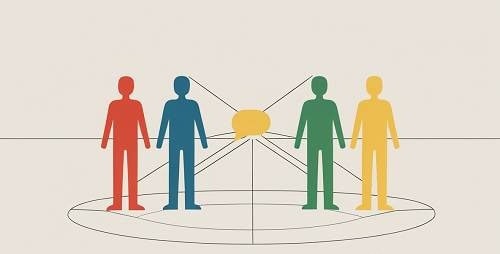
The True Value of the Four Personality Model: Adapting Communication Styles
The four-color model of the book contains such personality types as red, yellow, green, and blue. The model can be viewed as a workplace version of the MBTI test. It does not classify anyone, or identify your personality type. It is used to make quick assessments of people and determine the type of interaction that works with the person in front of you.
The value of the four-color model does not lie in its classifying ability. Instead, it is based on the vivid descriptions of each type included in the book. The descriptions are realistic and familiar. They reflect life. You will be amused comparing them with real people.
For example, he describes the blue personality in a brilliant way. Tell him that you don’t have to spend those last thirty pages reading through the contract. He will not believe you are helping him to save time; instead, he will just feel uncertain about what you do.
Also, there is red personality. From birth, they do not see themselves as having to obey any regulations at all. For them, the speed limit sign beside the road is an option rather than mandatory. There is even a chapter written on how to provide negative feedback for red personality. The title of the book carries a tiny bit of humor as well. In simple terms, it means that if you wish to discuss the topic, you need to prepare yourself mentally. You need to remain vigilant. You need to be ready to stand up to them anytime.I got to that bit and just could not help but laugh.
It is beautiful because it is not at all a theory, but rather a moment that one recognizes in an instant when working. While reading, I couldn’t help but immediately find the proper seat with the proper number: “Isn’t this my colleague?” While some may criticize the book for being too simplistic and condescending, like a conversation with a child, that is why it is brilliant.
I finally finished reading the book. I no longer bothered with whether it was right or wrong. Instead, I used the book to observe real communication. A slow transformation took place subtly. I was no longer anxious. I was no longer preoccupied with how difficult it was to communicate with others. I stopped and reflected: Was I asking others to see the world through my eyes?
The book did not make me more knowledgeable. It made me slightly more patient. Such patience would be more valuable in the workplace than any precise assessment of personality.
“We don’t succeed because we’re smart, but because we understand and accept others.”
“The art of communication is understanding: understanding yourself, and understanding others.”
