As I read, I could clearly sense that Vineland is a masterpiece, but unfortunately, the difficulty level is still too high for me right now, and I kept dozing off while reading. Many of the plot twists played out in my dreams, and for a while, I couldn’t tell which parts were real and which were just dreams.
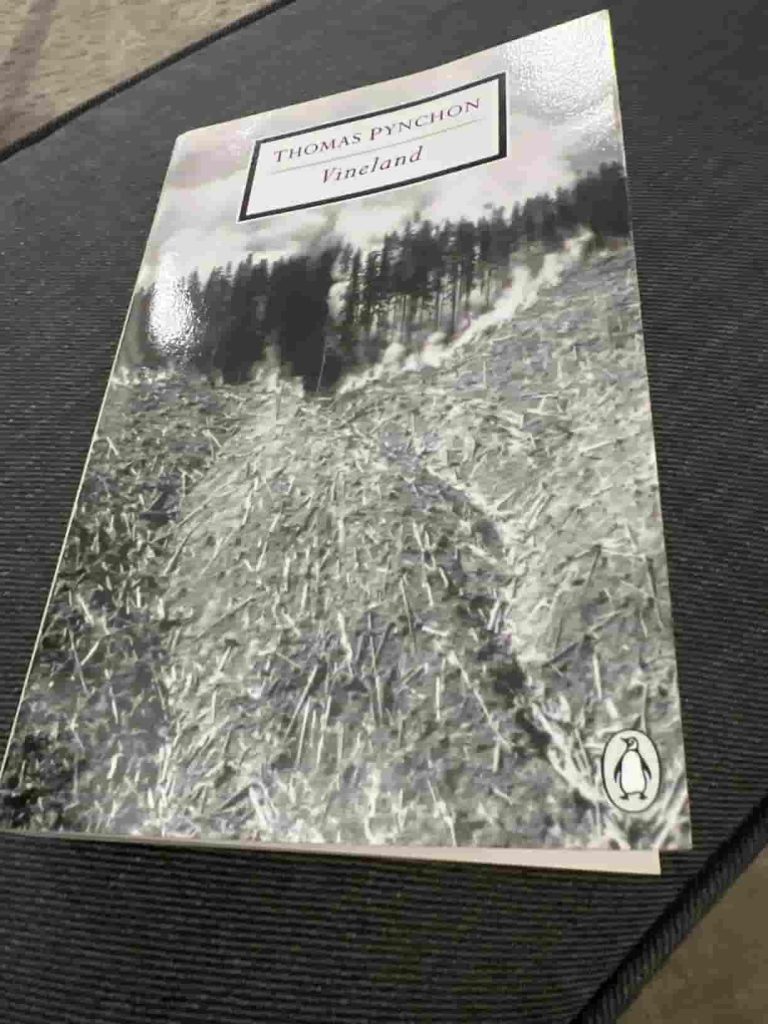
This novel is steeped in a surreal atmosphere, where the drifting of the mind mirrors the vagaries of fate. Individual destinies intertwine and are deeply embedded in the political and cultural history of 1960s America—the lingering aftermath of the Vietnam War continues to pull at the fabric of this era. The narrative jumps around, shifting to another story at any moment, just like in a dream. Absurd as it may be, there’s a glimmer of poetry in that storytelling. Prairie was forced to part with her mother at a young age. She resolutely searches for her mother throughout her journey, only to discover that what she’s actually seeking is a postmodern version of Telemachus—yes, the one from Ulysses who’s searching for his father. Pynchon is clearly sending a message across the ages to Joyce. But this quest ultimately turns into a disguised happy ending—her mother is not a myth, but a de facto rebel of her time, an enigmatic fallen figure. Meaning vanishes, leaving only a cacophony of words. Is this what postmodernism amounts to?
With this bewildering reading experience in mind, I’d like to discuss a few passages from the book that left a deep impression on me. I won’t go over the plot summary again—my memory might not even be accurate. But those turbulent years of rampant drug use and clashing ideologies are laid bare in the book; you can see it at a glance. At the beginning of the book, Zoyd, the father who acts completely insane just to get welfare, made me think for a moment that this book was somewhat similar to Salinger’s The Catcher in the Rye, but I was far too naive—I was completely wrong. The entire book is propped up by absurdity and the ugliness of human nature, ranting from start to finish—ranting against hippie culture, against the drug epidemic, against the concentration and imbalance of power. Yet one can also sense that Pynchon harbors sympathy and compassion for those struggling at the bottom. There’s the lengthy Japanese passage on karma, and the story of the 24 fps group—I feel Pynchon is also exploring religion and politics, leading readers to unearth those chaotic tales buried by history, which conceal underlying logic and the realities of society.
There’s another scene that captures the spirit of the era particularly well: “Sparks, disguised as an extremely enthusiastic Cuban communist, quickly won the trust of the bearded dictator with his charm. He planned to present Castro with a giant Cuban cigar and light it for him. Inside the cigar was actually a sophisticated bomb Sparks had designed himself, made from plastic explosives, detonators, and a length of fuse. To the chagrin of freedom-loving people everywhere, several mishaps during construction resulted in the cigar’s tip and the fold looking exactly alike. The unscrupulous Latin American tyrant bit the wrong end, pulling out the fuse with his teeth, and the guards immediately reacted to the danger. “The rulers of that red slave state arrested Major Prous and executed him on the spot…”—that’s a pretty vicious way to put it. Pynchon uses this absurd, almost comical scene to expose the dirty little secrets of U.S.-Cuba relations, while taking a swipe at the politics of power.
There’s another particularly interesting passage: “When they were going through the divorce proceedings, she took the advice of some eccentric, long-haired, devilish lawyer and referred to the nineteen-inch French-style floor-standing television as the third party, arguing that the TV was a member of the family, with its own space, and that the household paid for all the electricity needed to power it, other family members greet it and have real, long conversations with it, so of course, just like the cheap sluts Hector might encounter at work, it’s capable of stealing other people’s affections…” Even Tolstoy would have to admit that this imagination and description are impressive. It’s not that he couldn’t have written it—it’s that he’d never even seen a television! Tolstoy also wrote about the law, property, loose women, and lies, but could he have written a television set as a third party? Impossible, because such a thing didn’t exist in his day. To personify property in this way would be impossible without postmodern thinking. This practice of treating property as a person is quite postmodern.
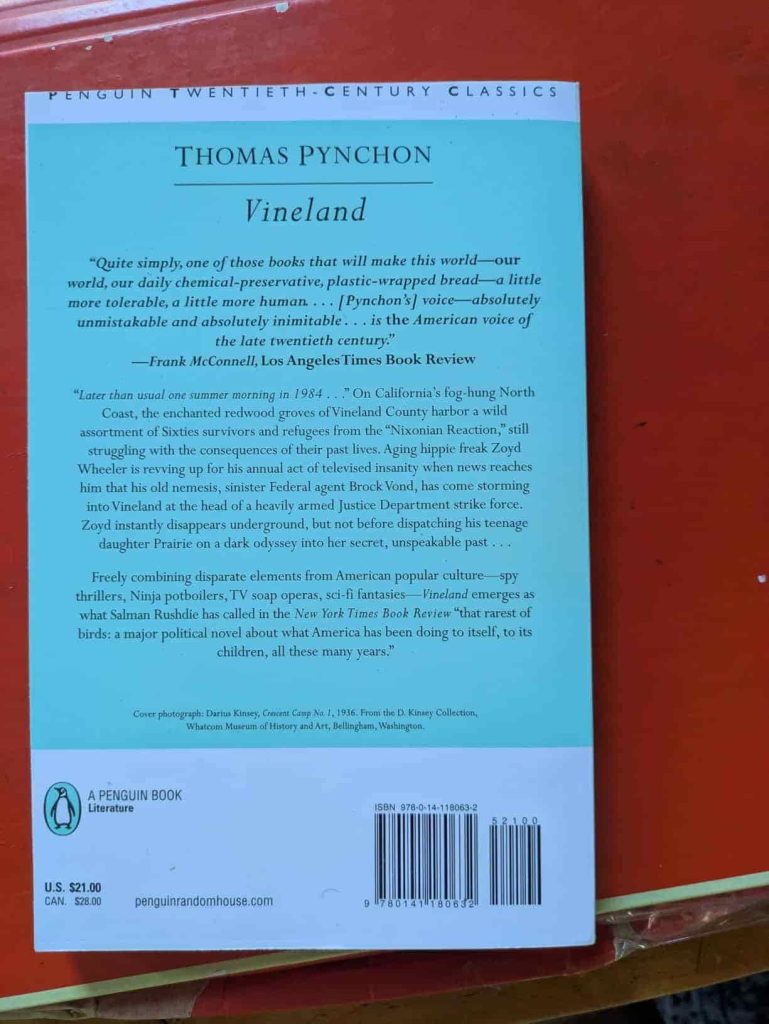
By the end, I realized that my own reading experience had formed a strange intertextual connection with the character Prairie in the book. I had intended to find some kind of theme, even if it were absurd. But in the end, I was just like Prairie—she was finally awakened by the warm tongue of a dog whose whereabouts were unknown. That’s the ending. The search is hopeless, and so is my reading. This is probably what Pynchon meant—don’t look for themes, symbols, or abstract meanings in his novels; there aren’t any.