If I had another chance, I would never open this book before going to sleep. I had only intended to read the beginning to help me fall asleep, but instead—I stayed up all night. A full, sleepless night. It was almost dawn outside, yet there I was, wrapped in my blanket, staring at the ceiling, my scalp tingling and my heart pounding.
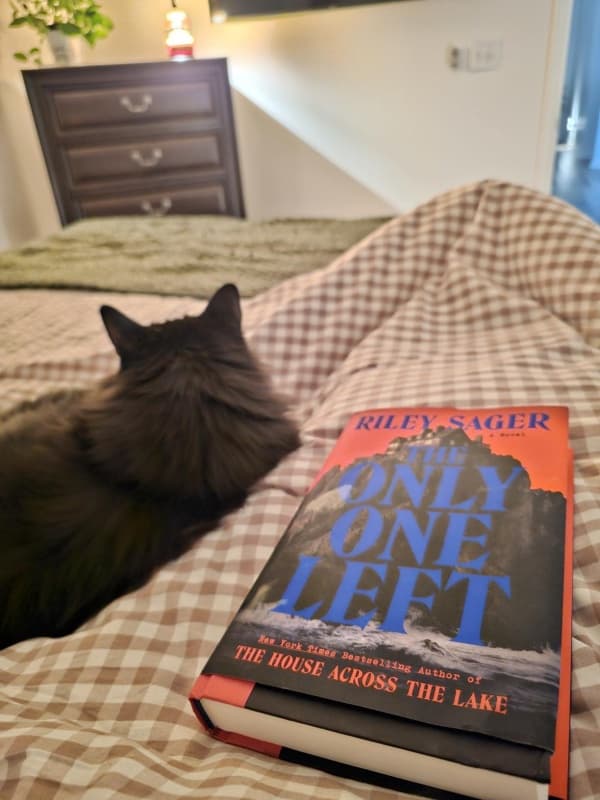
What kept me awake all night wasn’t some ghost or monster, but an old mansion sliding toward a cliff, a paralyzed old woman, and a typewritten manuscript filled with self-doubt. The story takes place at Hope Manor, where a young caregiver named Kit is hired to look after Leonora, an old woman now paralyzed who was accused of murdering her entire family decades ago.
Reading this book is like riding a roller coaster. The first half is a slow climb, where the eerie atmosphere leaves you breathless, bouncing back and forth between sympathy, suspicion, and fear. In the final 20%, the roller coaster plunges downward—nonstop thrills! Twist after twist after twist! I’m not exaggerating. The final chapters are packed with information—every single plot thread is resolved, and every detail is confirmed. Those seemingly insignificant asides turn out to be boomerangs, striking you right in the heart. When I reached the last 10 pages, the earth-shattering twist left me, just like Kit, completely speechless. It turns out we’d been played from the very beginning!
This isn’t just a murder mystery. It’s about how a woman survives in a desperate situation by clinging to lies, about how home can become the sweetest of prisons—and about just how far a person is willing to go to protect a secret.
Every character in the book has their own secret, and it’s precisely because these secrets constantly intertwine that the truth remains elusive.
But every time a secret is revealed, it hits you—you realize there really are reasons that can’t be spoken aloud.
Behind every truth that isn’t immediately revealed often lies an even bigger, more intractable problem.
But I have to admit, when I read the moment the truth was revealed, my first reaction was—is that it?
No earth-shattering conspiracy, no serial killer’s mad scheme. The core of the truth turned out to be… some trivial family matters. That feeling, “I waited three hundred pages for this, and this is what you give me?”
But closing the book and reflecting on it, this disappointment itself might be a flaw cultivated by modern suspense fiction. We expect dramatic evil, but what the book presents is precisely something more real—and more unsettling: everyday lies, accumulated resentment, and self-sacrifice that escalates to preserve appearances. In an aristocratic family of 1929, reputation was everything. Those secrets that seemed trivial to me were, at the time, enough to destroy a person’s entire social existence. When I judge the madness of a century ago through today’s lens, is that in itself a form of arrogance?
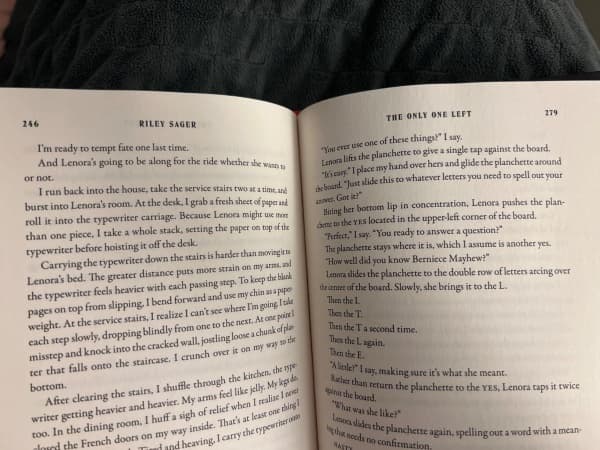
Even harder to understand than this is Leonora. She clearly didn’t care much for her younger sister, yet out of a sense of duty bordering on obsession, she cared for her day in and day out for decades. You might call her selfish or cruel, yet at the end, she has a sudden change of heart. This turnaround comes so quickly that it feels jarring.
Later, I realized that perhaps my understanding of “motivation” was flawed. Leonora’s care did not stem from love, but from something darker: the atonement of guilt and the violence of internalized roles. She may not have liked her sister, but she was the one assigned the role of “protector” by the family system. When someone is told from childhood, “You must take care of her,” that discipline becomes internalized as a compulsive behavioral pattern—even if the mind resists, the body and actions carry on as usual. The reason her “sudden awakening” seems jarring is that it marks the moment when her true self, suppressed for decades, finally breaks free. That wasn’t a transformation; it was an explosion.
Sager’s control of the narrative rhythm is remarkably precise. The novel does not rush to present sensational scenes but unfolds layer by layer, like peeling an onion. The typewriter that sounds automatically in the dead of night, the inexplicable noises in the old house, and the contradictory “memories” revealed through Leonora’s typing—these details are like faint glimmers of light in the darkness, both guiding the way and creating confusion. Readers seem to share the same unease as the protagonist, Kit: beneath the calm surface, there is a persistent sense that something is amiss, yet it remains elusive. On the one hand, the narrator, Kit, carries her own “past” and psychological trauma, which may distort her judgment. On the other hand, Leonora, as virtually the sole source of information, conveys a “truth” through the typewriter that is difficult to verify. This narrative structure erodes the reader’s trust in the narrative authority, forcing us to actively interpret the conflicting clues. As the plot progresses toward its climax, the tension built up earlier erupts like an avalanche; the foreshadowing we’ve noticed throughout the story is picked up one by one and reassembled into a completely different picture. When the moment of truth arrives, it not only overturns our understanding of the case but also shakes the emotional connections we’ve formed with the characters. Every twist is underpinned by meticulous detail; looking back, we realize those clues were planted long ago, though our attention was skillfully diverted elsewhere.
With a Gothic, suspenseful atmosphere and a cinematic opening, the book offers a fully immersive experience—once you start, it’s hard to put down. The narrative setup has the flavor of classic detective fiction: a terrifying nursery rhyme leads to a mystery at a cliffside castle, featuring an unreliable narrator, a suffocating environment, and the enigma it carries within. With dual—or even multiple—female protagonists, the story explores growth and the unearthing of truth through extreme emotional tension and endless plot twists. Particularly in the final dozen or so pages, the developments feel not abrupt but rather like the culmination of all the foreshadowing and setups, delivering a deeply satisfying reading experience.
It’s worth noting that this book isn’t just a standout in the mystery genre. The emotional arcs are also intricately woven and seamless. As you delve deeper through the first-person perspective, the emotional bonds between characters gradually come into focus—the themes of love, sex, and money, as well as the uncontrollable consequences stemming from the uncontrollable nature of human desire, are all worth pondering repeatedly.
When I turned the final page, dawn had already broken.
What came to mind wasn’t the twists or the schemes. What came to mind was the image of that bedridden old woman, tapping out the final word with a single finger. She had lost decades of her life, lost her freedom, and had almost lost herself—yet she had guarded that secret. Or perhaps it was the secret that had guarded her.
After finishing the book, I pondered a question for a long time: When a person spends a lifetime guarding a secret—is it the secret that needs to be protected, or does she need that secret to survive?