I crouched down and said, “Mommy will be back soon.” My toddler screamed like his heart was breaking. I tried sneaking out while he was distracted, but the moment he turned and saw I was gone, his scream grew even louder.
If you are dealing with toddler separation anxiety, the goal is not to stop every tear. The goal is to help your child experience, again and again, that you leave and you come back.
Quick Answer
The reason toddler separation anxiety happens is that little kids don’t yet understand time. An adult knows what “I’ll be back in five hours” means, but a toddler just feels like you’ve disappeared. What really helps isn’t explaining things for a long time. It’s having lots of safe goodbyes, a little routine you always follow, and calm, loving hellos when you come back.
Here are four things that helped us most:
- Use the same short goodbye ritual every time.
- Do not sneak away, even if your toddler is crying.
- Practice tiny separations through play when no one is stressed.
- Build trust through consistent returns, not long speeches.

One misunderstood fact: He wasn’t crying out of mistrust. He was crying because he couldn’t understand time yet.
Adults know, “Mommy goes to work and comes back in five hours.” A two or three year old doesn’t understand what “five hours from now” means. His brain only understood “right now.” The moment I disappeared, his experience was, “Mommy is gone. Maybe forever.” He wasn’t being difficult. He was genuinely scared.
Once I understood that, I stopped trying to “make him understand I’ll come back.” I changed my goal. Instead, I focused on helping his body and brain collect evidence through lots of small, safe separations. That evidence was that Mommy really does come back. Not through explanations. Through repeated experience.
Here are the four hardest moments and what I tried.
Use a Short Goodbye Ritual at the Daycare Door
I used to try the quick escape. I would sneak out while he was looking at a toy. It backfired. He cried harder, and his teacher said he wouldn’t join the other kids for half an hour. So I switched to something else.
I made a short, fixed goodbye ritual. Same thing every time. I crouched down, looked him in the eye, and said, “Mommy is going to work. I’ll come get you after snack time.” Then I gave him a quick hug, kissed his palm, and said, ”Kiss your hand when you miss me – I’ll feel it.” Then I stood up, waved, and walked away. The whole thing took under thirty seconds. No lingering. No running back.
The first few days he still cried. But the crying got shorter. By the third week, he was holding out his palm before I even said the words.
Why it worked
A toddler’s brain craves repetition and predictability. When the goodbye ritual was exactly the same every time, his brain could predict what came next. Uncertainty dropped, so fear dropped. The palm kiss gave him a small comfort object he could control on his own, without me being there.
Use Check-Ins When Separation Anxiety Shows Up at Bedtime
Bedtime was another separation. The lights went off, the door closed, and he was alone in his bed with no ability to picture the next morning. He called “Mommy” over and over. Not because he wasn’t tired. Because he was afraid I had vanished.
I told him, “Mommy is going to be in the living room, but I’ll come check on you every three minutes.” And I did. I went back every three minutes, stayed ten seconds, said, “Mommy’s still here, you’re okay,” and left again. I did this maybe five or six times. The first night I had to go back a lot. The second night I had to go back less. After a week, he was often asleep before I even made it to the door.
Why it worked
This was a version of gradual separation, a kind of “check in.” He wasn’t left alone all at once. He experienced a fast cycle of “Mommy leaves, Mommy comes back.” Each return gave him evidence that leaving wasn’t permanent. Over time, he didn’t need me to come back as often, because he had started to believe that I would.
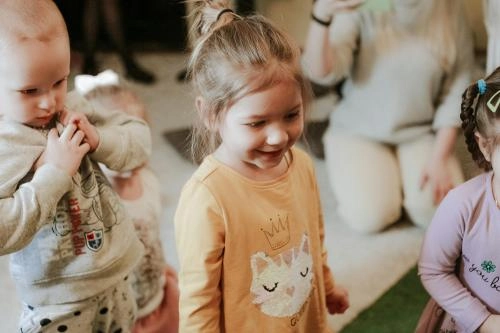
Leave Clearly Even When Your Toddler Is Already Crying
Sometimes I couldn’t do a rehearsal. I got an unexpected call. Or he was just having a rough day. Nothing I said calmed him down. He was going to cry no matter what.
I gave up on the goal of “making him not cry.” I handed him to another trusted adult and said, “I know you’re sad. It’s okay. Mommy will come back.” Then I left. I didn’t sneak out. I told him I was going, even while he was crying. The moment I came back, I grabbed him and said, “See? Mommy came back.”
Why it worked
Children build more security from a separation followed by a successful reunion than from never being separated at all. Every reunion was evidence that “Mommy was right, she really did come back.” Sneaking out robbed him of that evidence. His crying didn’t mean I was doing it wrong. The crying was just fear. And I was showing him, with my actions, that the feared thing didn’t happen.
Practice Separation Through Play When Everyone Is Calm
The first three moments were all about forced separations. Later I realized the best practice happened when no one was anxious. I started playing tiny separation games at home.
I would hide under a blanket and say, “Mommy disappeared.” Then pop out a few seconds later and say, “Mommy came back!” He would laugh. I would walk from the kitchen to the living room, say “bye” as I left, then come back a few seconds later with “hello.” I let him be the one who left, running away and then charging back into my arms. These games took just a few minutes a day.
Why it worked
When separation happened inside a game, his body went through the exact same motions of “Mommy leaves,” but without the fear, because a game felt controllable. Every single “coming back” in the game left a tiny mark in his brain: leaving was temporary, coming back was certain. Those tiny marks added up. When a real separation came, they floated up and helped. I didn’t need to explain any of this. I just needed to play.
One last thing
I am not a bad parent because my child cried. His crying was not my failure. My job was not to eliminate the tears. My job was to give him repeated experiences of “I cried, and Mommy still came back.” Every time I showed up on time, every time I did the same goodbye ritual, each time I checked on him in the dark, every time I played the silly “Mommy disappeared” game at home, I was writing a line of code in his brain: “Leaving is not disappearing. Mommy goes, but she also returns.”
There was no overnight fix. But one day, without warning, it got better. I crouched down, said my words, and he turned and walked into the classroom without looking back. I stood there for a second, proud and a little empty at the same time. That was the fruit of all those small, repeated things I had done.
When Toddler Separation Anxiety May Need Extra Help
Most toddler separation anxiety gets easier with predictable routines, calm goodbyes, and repeated safe returns. But it may be worth talking with your pediatrician or a child therapist if your toddler’s fear is getting worse over time, separation causes hours of distress, sleep or eating changes dramatically, or your child cannot recover even with a trusted caregiver.
Asking for help does not mean you failed. It simply means your child may need more support than a home routine can provide.
FAQ About Toddler Separation Anxiety
Is toddler separation anxiety normal?
Yes. Toddler separation anxiety is common because young children are still learning that a parent can leave and return. It does not mean your toddler is spoiled, manipulative, or unable to trust you. It usually means separation still feels too big for their brain and body to handle easily.
Should I sneak away when my toddler is distracted?
Usually, no. Sneaking away may stop the crying for a moment, but it can make separation feel less predictable. A short, calm goodbye is often better: “Mommy is going to work. I’ll come back after snack time.” Then leave without dragging the goodbye out.
What should I say when my toddler cries at drop-off?
Keep it short and steady. You can say, “I know this is hard. I love you. I will come back after snack time.” Then hand your child to the trusted adult and leave. The goal is not to convince your toddler to feel happy right away. The goal is to make goodbye predictable and reunion reliable.
Am I hurting my toddler if I leave while they are crying?
Crying does not automatically mean you are harming your child. If your toddler is with a safe, trusted caregiver and you return when you said you would, the separation can become part of how they learn security. What matters most is that you do not disappear without warning and that you reconnect warmly when you come back.
