You know that small panic when you drop a letter into a mailbox and then realize you forgot to write the address. Chekhov‘s Vanka stretches that feeling into a three page story, and then it never leaves you.
Vanka is a nine year old orphan boy apprenticed to a shoemaker in Moscow. On Christmas Eve, while the other apprentices are at church, he steals a sheet of paper and a pen from his master’s desk. He writes a letter to his grandfather, Konstantin Makarych, a night watchman in a distant village. He begs to be rescued from the beatings with a shoemaker’s last, the herring poked into his face by the mistress, the sleepless nights rocking a crying baby on the cold floor.
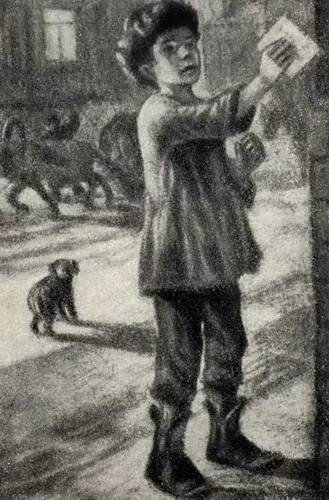
He remembers small kindnesses: a cook who gave him bread, the dogs that wag their tails. He promises to rub his grandfather’s tobacco and never complain. Then he folds the letter, writes on the envelope “To my grandfather in the village,” and drops it into a mailbox. No last name, no street, no town. Just a child‘s blind faith that the mail will find its way.
Chekhov doesn’t show the postman throwing the letter away. He doesn’t need to. The wrong address is the whole tragedy. The letter will sit in a snowy mailbox until spring, then be discarded. Vanka will keep waiting, looking out the window, listening for sleigh bells. No one will come. But here’s the cruel part: Chekhov lets Vanka fall asleep happy. The boy feels light after mailing the letter. He imagines his grandfather reading it, getting angry, putting on his fur coat, riding the sleigh all the way to Moscow. He dreams of the dogs, the fir trees, the warm stove. That happiness, that relief, is real. And it is also completely useless.
What makes Vanka so devastating isn’t the poverty or the violence. It’s the gap between the boy’s hope and the reader’s certainty. We know what he doesn’t know: the postal system, the missing address, the weight of distance. Chekhov doesn’t turn the story into a lesson or a tearjerker. He just shows you a child who believes so hard that words can save him. And then he shows you a world that doesn’t work that way.
I remember a friend in college who wrote a long letter to her estranged father. She used the last address she had. Three months later the envelope came back stamped “return to sender.” She didn’t cry. She just stared at it. That’s Chekhov’s trick: he makes you feel the weight of a message that will never arrive, without ever showing the moment of failure. The gap between hope and reality is the whole machine of the story.
Chekhov wrote this in 1886, and it has never stopped being read. Not because of Christmas or Russia. Because everyone has felt like Vanka at some point. You write something honest, urgent, full of need. You send it off. And the silence that comes back is not even silence. It’s nothing. No reply. No acknowledgment. Just the empty slot where an answer should live.
Vanka is barely three pages long. But those three pages weigh more than many novels. You should read it if you‘ve ever mailed a letter that never arrived. Or if you’ve ever been the one who couldn’t write back. It won’t make you feel warm. But it will make you feel something real, and that’s rare.
