I used to freeze when it mattered. Practice and warm-ups were fine, but when the whistle blew, my body seemed to forget all it had learned. I would grip too hard, think too much, move too late. Coaches called it “tight”; I called it hell.
After enough embarrassments, I sat down and wrote myself a card. Not a long list of tips, just a few lines I could read between warm ups and the starting whistle. Here’s what ended up on that card, and behind each line, the game I learned it in.
Card line one: “The first three minutes are noise. Ignore them.”
I played soccer, and the opening minutes used to destroy me. I would miscontrol an easy pass, hear someone sigh, and spend the next half hour trying to be invisible. Every mistake felt like a verdict on my whole game.
Then I watched a veteran teammate play a terrible first five minutes. She slipped, missed a header, passed straight to the other team, but she didn’t hang her head. She just kept running. By the second half, she scored the winning goal. After the game, I asked her how she did it. She said, “The first few minutes don’t count; everyone is still waking up. You just have to survive them.”
So I put that on my card: the first three minutes are noise. I stopped trying to play well right away; I just tried to stay on my feet. And every time I survived the opening without losing my head, the rest of the game got easier.
Card line two: “You don’t have to feel ready. You just have to show up.”
Before big matches, my stomach would churn. I would feel weak, slow, unprepared, and I used to think that meant I wasn’t ready to compete. I would panic, try to pep talk myself into confidence, and wear myself out before the game even started.
One day a coach pulled me aside. She said, “You’re not going to feel ready. Accept it. Feeling ready is not the same as being ready.” That line hit me. I realized that the best games I ever played, I didn’t feel great beforehand; I just stepped onto the field anyway.
So I added that to the card: you don’t have to feel ready. I stopped waiting for a magical feeling of calm. I just lined up and let my body do the thing it had done a thousand times in practice.
Card line three: “One play at a time. Not the score, not the clock.”
I had a habit of calculating during games. “If we score here, then we’re back in it.” “Only ten minutes left, don’t mess up.” That math was poison; every calculation pulled me out of the present moment and into a future I couldn’t control.
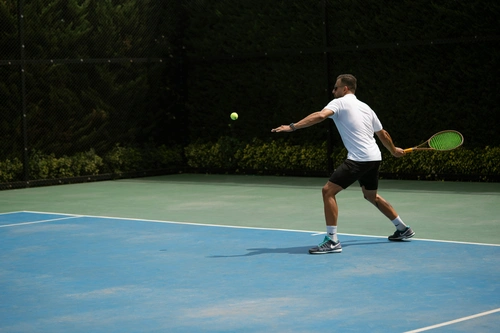
The shift happened during a tennis match. I was down a set, thinking about how bad the loss would look, and I double faulted twice. Then I heard myself mutter, “Just this point.” I served, won the point, then “just this point” again. I didn’t win the match, but I played the best tennis of my life for the next twenty minutes because I stopped looking at the scoreboard.
Now the card says: one play at a time. Not the score, not the clock, not what people will say. Just this one thing in front of me.
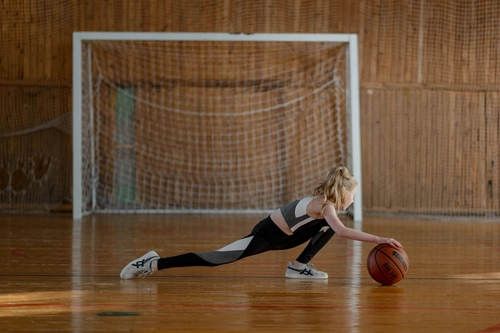
Card line four: “Do the physical thing. The mental thing will follow.”
When I got nervous, my brain would freeze. I would stand there thinking “move,” but my legs wouldn’t listen. I tried to think my way out of it, and that never worked.
I learned a trick from a basketball player. She said, “When your mind locks up, give your body a tiny job. Bounce the ball twice. Tap your shoes. Take one deep breath. Anything physical.” I tried it. In the middle of a panic, I bounced the ball twice, then took a free throw. Swish.
The physical act created a small channel for my brain to climb back through. So the card says: do the physical thing; the mental thing will follow. I don’t wait to feel calm; I simply let my hands do something small.
Card line five: “The mistake already happened. The next play is a brand new game.”
I used to carry mistakes. A dropped pass would live in my head for the next three possessions, and I would think, “I’m the reason we’re losing.” That thought made me play worse, which led to more mistakes, which fed the loop.
A teammate once grabbed me after an error and said, “That play is dead; it’s not coming back. The next one is a clean slate.” Simple, but I needed to hear it. I started treating every play as its own tiny match. Win it or lose it, then move on.
Now the card reads: the mistake already happened; the next play is a new game. I don’t apologize, I don’t replay, I just reset.
That card lives in my bag now. The edges are soft and one corner is torn. I don’t read it before every single game anymore, just the ones where my stomach starts doing that familiar flip. Sometimes it helps, sometimes it doesn’t, but having it there changes something anyway. It’s like a lucky sock. It may not improve your performance, but it makes you feel less alone at the starting line.
You can create your own card, jot a note on your phone, or write a sentence on your wrist. It doesn’t matter what it is, just something that’s yours, that you can look at when the pressure comes and you need to remember that you’ve survived this before.
