Last week I read Virginia Woolf’s The Waves. Afterwards I sat on a beach for an hour, just watching the waves hit the same rock again and again. Each wave looked different, but all of them came from the same water. That’s what this book felt like. Six characters, six voices, no plot to speak of. They grow up, go to school, fall in love, fail at jobs, lose the people they care about, get old. Nothing happens in any conventional sense. You don’t keep turning pages to find out who dies. You keep turning them because the language pulls you under.
The six voices: Bernard, Susan, Rhoda, Neville, Jinny, Louis. They speak in soliloquies, one after another, from childhood into old age. You’ll never see a straightforward sentence like “Bernard walked to the train station. Instead you get Bernard saying, “The train is moving. I am inside it. The lamps are passing. I am not the same boy who left this morning.” Woolf doesn’t tell you what these people do. She tells you what it feels like to be them.
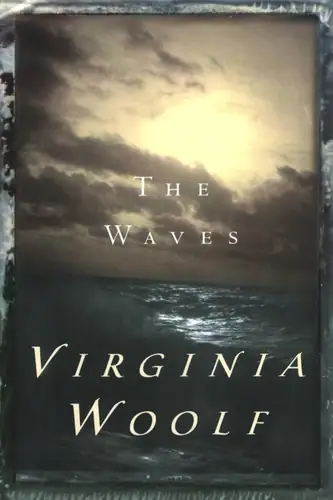
The first thirty pages were a struggle. Everyone sounds the same at first – lyrical, fragile. Then slowly they begin to separate. Rhoda turns into the one who can never finish anything; she wants to disappear. Neville is precise, obsessed with order and a boy he loved in school. Susan becomes the earth mother, bitter and rooted. Bernard becomes the talker, spinning everything into a story, because for him stories are what make things real.
I hit a moment somewhere in the middle that stopped me cold. Bernard is in his forties. He realizes he’s spent his whole life pretending to be someone else. “I have no face,” he says. “I have only the faces I have worn for other people.” I put the book down and looked out the window. I’ve had that exact thought – not in such beautiful language, but the feeling was the same. Who are you when no one’s watching? Woolf never gives an answer. She just leaves the question there, like a wet footprint on a wooden floor.
The final section is Bernard’s alone, looking back. The others have died or simply faded away. He stands on a terrace while waves crash below. He tries to sum everything up, but he can’t. He keeps talking, keeps trying, and finally says, “Against you I will fling myself, unvanquished and unyielding, O Death!” It’s not a happy ending. It’s not even a sad one. It’s a human being who refuses to stop, even knowing he’s going to lose.
I didn’t come to this book because I wanted a story. I came because I wanted to know what it’s like to be inside another person’s head. Woolf gives you six of them. After a while, you start hearing your own voice in theirs: the kid who was afraid of everything, the teenager who thought love would save him, the adult who realized that no one was coming to fix things.
Read The Waves if you’ve ever had the sense that your life is just a series of moments strung together without any clear point. You won’t get answers. But you might feel less alone in the asking.
