I picked up Josephine Tey’s The Daughter of Time because I was ill in bed. The choice felt appropriate. The book’s protagonist, Inspector Alan Grant, is also confined to a hospital bed, deeply bored, studying portraits of historical figures. One face stops him: Richard III. The hunchbacked villain who supposedly murdered his young nephews in the Tower of London. Everyone knows that story. Grant looks at the portrait and thinks: this man does not look like a serial killer.
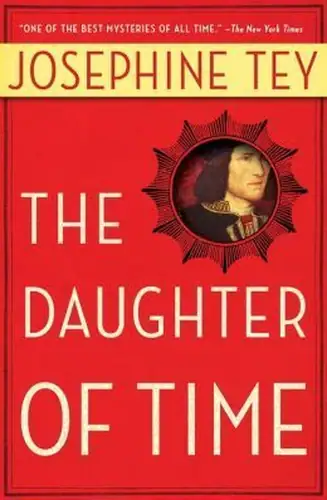
What follows departs from the conventional detective story. There is no crime scene, no forensic evidence, no chase. Grant, with the help of a young American researcher, begins examining old historical texts. He dismantles the Tudor narrative piece by piece. He asks simple questions: Who truly had access to the princes? Who benefited from their disappearance? Why did no one see their bodies? And the largest question of all: what if history was wrong?
I read this book in two days. Not because it is a thriller—it is slow, methodical, almost academic. Yet I could not put it down, because Tey was writing not merely about a fifteenth century king. She was writing about authority: how stories get told by the winners and then never questioned again.
Josephine Tey wrote this book in 1951, at the age of fifty five, having spent her entire career outside the London literary establishment. She never married. She lived quietly in Scotland. She refused to join the Detection Club because she disliked cliques. In other words, she was exactly the kind of person who would look at a five hundred year consensus and say: prove it.
Tey knew what it felt like to be on the outside of a story. The Tudor version of Richard III was written by the victors. Henry VII needed Richard to be a monster, so he paid historians, poets, and playwrights (including a young William Shakespeare) to ensure everyone believed it. Tey’s genius was not in discovering new evidence—she had no secret documents. Her genius lay in asking the question no one else had asked: what if the sources are lying?
That realization struck me deeply. I thought about all the stories I have swallowed whole: the history I memorized in school, the news headlines I skimmed and believed, the “everyone knows” assumptions I never bothered to test. Tey is not merely defending Richard III. She is defending the right to doubt.
The book’s real protagonist is not Richard III. It is the act of thinking for yourself.
There is a moment near the middle where Grant says: “History is not a matter of evidence. It is a matter of accepting what is printed in books.” I had to put the book down for a minute, because he is right. Most of what we call knowledge is merely inherited belief dressed up in footnotes. Tey was not a trained historian; she was a novelist. But perhaps that is precisely why she saw through the lie. She understood narrative. She knew that a good story can bury the truth for centuries.
Of course, The Daughter of Time has its flaws. Tey’s version of Richard III may be too clean, too innocent. Modern historians hold more complicated views. And her dismissal of certain sources can feel convenient. Yet that is not the real point. The point is the method: the courage to start from zero and say, “I will believe nothing until I see the chain of custody.”
I finished this book feeling unsettled—not because of Richard III, but because I realized how many “facts” in my own head I have never examined.
Tey died in 1952, one year after this book was published. She never saw Richard III’s remains discovered under a parking lot in Leicester in 2012. She never saw the DNA testing that confirmed the bones were his. She never saw the scoliosis and the healed battle wounds. But she would not have been surprised. She already knew the truth had been buried. She simply wanted someone to start digging.
So no, this is not a mystery novel about a dead king. It is a quiet, furious argument with every person who has ever said “everyone knows.” And it is one of the most subversive books I have ever read.
