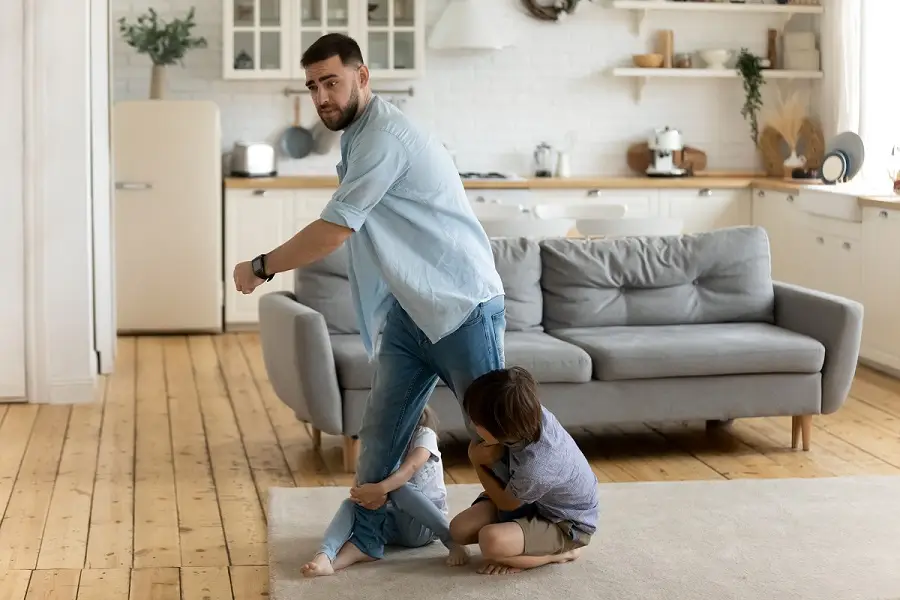
My 7-year-old daughter has become my little shadow lately. I was cooking in the kitchen, turned around, and almost tripped over her—she’s sitting on the floor with her picture book. I go to the bathroom and close the door; within a minute, I hear “knock knock knock”: “Mom, are you in there?”
Last week, I took her to a classmate’s birthday party. She gripped my shirt and wouldn’t let go. Only when she saw the cake did she finally let go of my shirt, then turned back and said, “You’re waiting for me right outside, promise? Don’t go anywhere.”
In that moment, I honestly thought: is this kid getting too clingy?
Over-Attachment Isn’t Always About “Bad Parenting”
Later, I read some child psychology resources and gradually came to understand. Most clingy behavior is not about misbehavior. It’s about a child trying to feel emotionally steady again.
Sometimes this neediness isn’t “I need you too much.” It’s less about needing you constantly and more about their nervous system craving predictability during transitions.
But when this need becomes particularly intense, lasts a long time, or starts affecting daily life, there may be reasons behind it.
Some Kids Worry More Than They Know How to Explain
Beyond my daughter’s situation, many children show similar patterns. Some kids cling to their parent’s leg in unfamiliar places and refuse to speak. Some need to touch their mom’s ear every night to fall asleep. Others, even when mom is in the same room, keep running over to check: “Mom, look what I’m doing.”

These behaviors often come from a few shared reasons.
A child may not have enough chances to practice independence — Sometimes we do too much. Getting dressed, packing a backpack, solving a small conflict with a friend—if we always jump in first, the child never gets to experience “I can do it myself.”
I thought back and realized that every time my daughter said “Mom, help me,” I just did it for her. She rarely got to try trying to tie her shoes on her own, even if she didn’t finish or reach a book on her own on a high shelf. Over time, “I can’t” became her default answer, so of course she relied more on me.
A significant life change has happened recently — Moving, switching schools, welcoming a new sibling, parents fighting or divorcing—these are big shifts for a child. When the outside world feels unpredictable, children instinctively hold tighter to the most certain person in their life.
Our family has had some changes recently. My daughter just started first grade—new classroom, new teacher, new desk mate, even a different daily schedule. With so many things she can’t predict during the day, she especially needs the feeling that “Mom is still here, everything is the same” when she gets home.
The child is naturally more sensitive — Some children are sensitive to sound, light, and emotional changes from a very young age. The same environmental shift might be fine for one child but deeply stressful for another.
My daughter is the kind of kid who can tell “Mom’s tone feels different today.” She’s not trying to be clingy. Her nervous system just picks up on “unease” more easily than some other kids.
So… Is This Actually Normal?
| Age Range | Common Clingy Behaviors by Age |
| Around 1 year old | Cries when mom leaves the room, immediately reaches for her when she returns |
| 2-3 years old | Clings to mom’s leg at the preschool door but is fine a few minutes after the teacher steps in |
| 4-5 years old | Gets extra clingy when sick or tired, returns to normal when feeling better |
| 6-7 years old | Wants to talk to mom for a long time after coming home and asks again who will pick her up before bedtime |
These behaviors look “clingy,” but they don’t need the label of “excessive attachment.” They’re more like normal reactions at certain ages or in specific situations.
When Should You Worry About Clinginess?
So when might it be worth paying closer attention? A few situations come to mind.
Sudden immature behavior after age 10
For example, an 11-year-old suddenly wants to be held like a baby to fall asleep, or throws tantrums in very immature ways—and this continues for weeks, not just a day or two.
One approach is “reverse role play.” You pretend to be the child, and let her pretend to be you. Say something like: “Mom, I don’t want to go to school today. I need you to stay with me.” Watch how she responds. Kids often accidentally say their own real worries during play—much more effectively than if you asked directly.
Refusing school or bedtime because of separation
This could mean refusing to go to school, not wanting to attend a best friend’s birthday party, or saying no to a sleepover at grandma’s house. This is different from regular “I don’t want to go.” The regular kind involves some complaining, but once you get there, they’re fine. This kind involves real panic—they won’t go in even when you’re at the door.
I experienced something similar with my daughter when she started first grade. What ended up helping was surprisingly small. Every morning before she left, I drew a little picture on her lunch bag. A cat, a cloud, a smiley face. I told her: “When you open your lunch today, you’ll see what Mom drew. Then you can draw something back for me.” That tiny act gave her one small moment to look forward to.
These small rituals help create emotional continuity for the child. The key is making them feel that even when you’re not physically there, there’s still a small thread between you that only the two of you know about.
When separation feels overwhelming
Sometimes the smallest things make the biggest difference. A simple drawing on their lunch bag before school can do it. A tiny note tucked into a pocket. A quick secret handshake at the door. A small sticker they discover later in the day.
These are not techniques. They are quiet signals that say: you are still connected to me, even when I’m not here.
Another simple approach is to calmly name what you see:
- “You’re having a hard time saying goodbye.”
- “It brings up big feelings when I leave.”
- “You really want me close right now.”
No fixing is needed in that moment. The goal is simply to help the child feel understood. And often, when a child feels understood, the intensity naturally softens.
If you’ve tried these approaches for a few weeks and things haven’t improved—or are getting worse—it might be worth talking to a child psychologist or a counselor.
That doesn’t mean your child “has a disorder.” Just like we see a doctor when something doesn’t feel right in our body, it’s perfectly normal to seek professional support when something feels off emotionally or behaviorally.
Real Questions Parents Ask (FAQ)
Why is my child so attached to me?
Children often become clingy due to anxiety, transitions, or sensitivity. They rely on parents for emotional safety and struggle with uncertainty, especially during changes like school, routine shifts, or stressful family situations.
What should I do when my child won’t let me leave?
Stay calm and consistent, acknowledge feelings briefly, and keep goodbyes short. Try not to come back once you’ve said goodbye, and use small rituals like notes, hand signals, or a special goodbye routine to help your child feel secure during separation.
When should I worry about my child being overly attached?
Be concerned if clinginess is persistent, intensifies over time, or disrupts school and daily functioning. Watch for panic during separation, refusal to attend school, or strong regression beyond normal developmental behavior.
Sources:
– American Academy of Pediatrics – “Separation Anxiety in Children”
– Zero to Three – “Understanding Separation Anxiety”
– Child Mind Institute – “Why Kids Get Clingy and What to Do”