My mother keeps a box of letters from people she has never met. Pen pals from the 1980s, a soldier in Kuwait, a woman in New Zealand who once mailed her a wool hat. She no longer writes to them, yet she cannot bring herself to throw the letters away. Reading 84, Charing Cross Road finally helped me understand why. The people you never touch can still hold you up.
The book is not a novel. It is a collection of real letters between a struggling writer in New York and a used bookshop in London. Helene Hanff writes first. She has seen an ad for Marks & Co., 84 Charing Cross Road. She wants cheap copies of classic English literature. She is brash, broke, and effortlessly funny. The shop responds. A man named Frank Doel writes back. He is polite, reserved, and very British. He finds her books. She sends him money. That is the transaction.
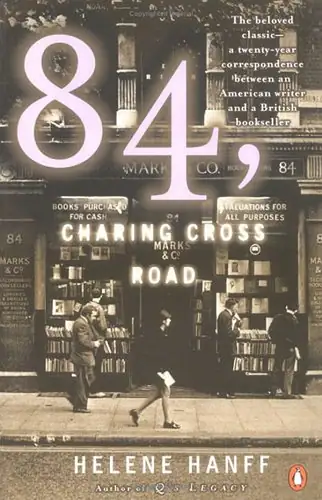
But then Helene hears about post-war rationing in England. Meat, eggs, sugar still scarce years after the war ended. She starts sending food. A ham. Canned tongue. Dried eggs. The shop employees pass the packages around. They write to thank her. A secretary, a bookkeeper, Frank’s wife. Helene asks about the weather, the neighbors, the bomb site next to the shop. Frank answers, always a little stiff, always grateful. Somewhere between book orders and food parcels, a friendship quietly takes shape across the Atlantic. It is not romantic. It is not dramatic. It is just two people who love books and do not know how to say that out loud.
“I write to you because I do not have anyone else to write to.” That is not a line from the book. It is a letter I once wrote to a teacher who had moved away. But it could be from any page of this correspondence. Hanff does not say she is lonely. She says “I am sending you a three-pound ham.” Doel does not say he is tired. He says “The shop is drafty this time of year.” They talk around the thing. That is how people used to write.
The book is short. You can read it in an afternoon. But it will sit on your shelf for years because you will want to come back to the letters. The ones where Hanff complains about bad translations. The ones where Doel apologizes for a stained cover. The ones where she learns that he has died. She found out months later. The shop closed. She never visited. She never even tried.
I first read this book in a used bookstore myself, sitting on a stool in the poetry section. I finished it and bought a copy for my mother. She read it in one night and called me the next morning. “This is how I feel about my pen pals,” she said. “I will never meet them. But I would miss them if they were gone.” That is the gift Hanff gives you. Permission to care about people you will never touch.
The last letter in the book is to a friend. Hanff writes: “The bookshop is gone. But I still have the books.” That is the whole point. The shop was only a building. The people began as names on a page. Yet the books were real. And so was the connection. You can hold it in your hands.
I finished it on a Wednesday, not a Sunday. I did not cry. I just looked at my own bookshelf. The copy of *1984* that a professor gave me. The dog-eared Jane Eyre from a friend who moved to Oregon. The Collected Poems I bought for a dollar at a library sale. I do not remember the faces of the people who sold me those books. But I remember them. That is the magic Hanff is writing about. Not the letters. The after.
If you want plot, read something else. If you want a quiet, funny, heartbreaking record of how two people became friends without ever shaking hands, read this. You will think about the last letter you never wrote. And for a moment, you may wonder whether it is still too late to send it.
