The only thing they kept was each other
My grandparents sold the house where my mother grew up about ten years ago. I had not lived there in decades. Still, when I heard the news, I felt something shift in my chest. Not grief, exactly. Just a quiet ache for a place I had no claim to.
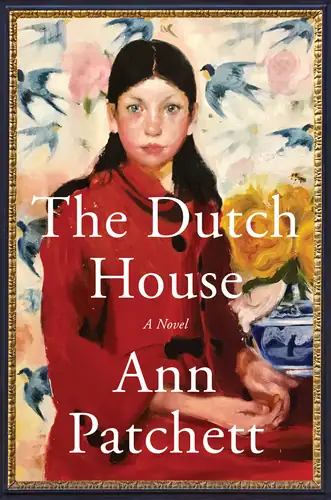
That is the feeling Ann Patchett spends 300 pages unpacking in The Dutch House. The house is gone, and the people who lived in it have left too. Yet the attachment remains—senseless, stubborn, like a toothache you can’t explain.
The sister who gave up everything
The Conroy siblings, Danny and Maeve, grow up in an absurdly grand mansion outside Philadelphia. Their father buys it after making a fortune in real estate. Their stepmother, Andrea, inherits it after their father dies. And Danny and Maeve get thrown out. That is the first fifty pages.
The rest of the book is about what happens after you are thrown out of the only home you have ever known.
Maeve is the heart of the book: sharp, witty, and quietly yet deeply angry. When their father died, she was twenty-one. She could have gone to college. She could have left. Instead, she stayed to raise Danny, who was ten. She worked at a department store. She read medical textbooks at night. She never complained. But she also never moved out of the shadow of that house. She drives by it almost every day to look at it. Danny calls it her “penance.”
I have a sister like that. Not in the grand, gothic way. Just in the way she gave up things for me without ever saying a word. I did not notice until I was older. That is what Patchett captures. The quiet, invisible sacrifice of the person who stays.
One line that struck me: “She was the one who remembered everything. That was her gift and her curse.”
The father who could not fix anything
The parents in this book are not evil. They are just absent in different ways. Their mother leaves when Danny is three. She walks away to serve as a missionary in India, and she never comes back.
Their father, Cyril, is a decent man who makes one terrible mistake: he marries Andrea, a woman who despises his children. He does not see it. Or he does not want to see it. When he dies, Andrea throws Danny and Maeve out of the house. Cyril left no will. There is nothing they can do.
I kept thinking about a friend whose father remarried a woman who slowly erased his childhood bedroom. Not with malice. Just with new curtains and a fresh coat of paint. The friend stopped visiting. The father never asked why. Patchett writes that kind of small, cumulative cruelty better than anyone.
The house that never leaves you
The novel spans five decades. Danny and Maeve get older. They get jobs. They get married. They have children. The house stays the same. New families move in. New wallpaper goes up. But Danny still drives by it. Maeve still stares at the windows. They are not trying to get the house back. They are trying to understand why it still hurts.
There is a scene near the end where Danny finally confronts Andrea. He does not yell. He just asks a question: “Why did you hate us?” Andrea does not answer. She does not have to. The question itself is the closure. That scene stayed with me for days. How many people do I owe a question like that? How many have I never asked?
One line that struck me: “We had no claim to the house. But the house had a claim to us.”
What I took from it
I finished The Dutch House on a quiet night, sitting on my own couch, in a house I do not own. I thought about the places I have lived. The apartment I shared with roommates. The rental house with the broken dishwasher. The house I grew up in, which my parents sold years ago. I do not miss the walls. I miss the people who were inside them.
Danny and Maeve spend decades confusing the house for the family. That is the mistake Patchett is writing about. The house is just a building. The family is what you carry.
If you want a fast-paced plot, this is not the book for you. But if you seek a quiet, sad, and generous novel about the debts we owe our family and ourselves, read it. You will see your own family in it. That is not a threat. It is a promise.
