I yelled at my child and immediately felt awful. Should parents apologize to their children after yelling? Last week, I found myself asking exactly that question.
I lost it over a juice box. My seven-year-old spilled it on the couch. Third time that morning. First time I said “it’s okay.” Second time I held my breath. Third time—orange juice running down the cushion—something just snapped.
I wasn’t just frustrated. I was loud. Harsh. Not fair at all. She froze, still holding the empty box. Then she walked to her room. Quietly.
I sat in the kitchen staring at that stain. Heart pounding. Kept seeing her face. That sick feeling in my stomach? Stayed for hours. That night I went to tuck her in. She turned over and didn’t look at me. Honestly? I cried a little in the hallway.
Why parents should apologize to children
A lot of us grew up thinking parents don’t say sorry. Like it makes you look weak. I used to think that too.
When you actually apologize to your kid? Something pretty cool happens. Child development experts often point out—basically, when a parent admits a mistake, it helps kids make sense of their own feelings. You’re not trying to be perfect. You’re just showing them that even good relationships get messy. And that’s okay.
A real apology also shows them what it looks like to own up to something. Kids learn far more from our behavior than from our lectures. What surprised me most? Apologizing actually seems to make them feel safer. When they know you can see your own screw-up and still love them? That bond feels stronger. Not weaker.

Does apologizing make kids disrespect parents?
Respect doesn’t come from fear. It comes from feeling safe. That’s why apologizing doesn’t weaken your authority—it strengthens trust.
I hear this one a lot from other parents. “If I say sorry, won’t my kid just think they can walk all over me?”
I once overheard two moms talking at a playground. One of them said, “I never apologize to my daughter. Otherwise how’s she gonna fear me?” I get why she’d think that. I used to wonder the same thing.
But here’s what I’ve learned from actually living it. When they see you admit you messed up? They don’t think less of you. They see someone who’s honest and brave enough to fix what got broken. And honestly? That kind of parent is way easier to respect in the long run. My own kids have never walked all over me because I apologized. If anything? They usually listen better after.
What children actually feel when parents don’t apologize
When I yell and don’t say sorry after? My daughter doesn’t think “wow, Mom’s so strong.” No. She probably thinks something like “I must be a really bad kid.” Or she just goes quiet. Stops talking.
I’ve seen this with my own kids and other families too. Kids get really confused when you act all mad and then pretend nothing happened. I remember one time when my son was younger—I lost it, walked away, came back to the living room like half an hour later. He was still sitting in the exact same spot. Holding a Lego. Not even building anything. Just sitting there.
That broke my heart a little. Sometimes kids don’t forget. They just don’t know how to bring it up. And over time? Some kids start to feel like their feelings aren’t safe to talk about. That’s a lot for a little person to carry. I don’t want my kids carrying that.
How to apologize to your child (step-by-step)
Here’s what’s actually worked for me. Especially after I’ve raised my voice.
Step 1: Regulate Yourself First
If I’m still really angry? My apology isn’t going to sound real. So I take a few deep breaths. Or step into the bathroom for a minute. One time I even looked at myself in the mirror and said three times: “I’m really mad right now, but I’m not going to talk from that mad place.” Sounds silly. But it helped.
Step 2: Name What You Did
“I’m sorry I yelled at you.” That’s it. No long speech. Trust me, I’ve tried the long explanation before—my kids checked out halfway through. Their eyes just glaze over.
Step 3: Acknowledge the Impact
“I raised my voice, and that wasn’t okay. You didn’t deserve that.” This part matters more than you’d think. It shows them you actually know what you did wrong.
Step 4: Reassure Safety
“I still love you. You are not a bad kid.” My daughter needs to hear this. I think my son does too. Even if he doesn’t say it.
Step 5: Reconnect
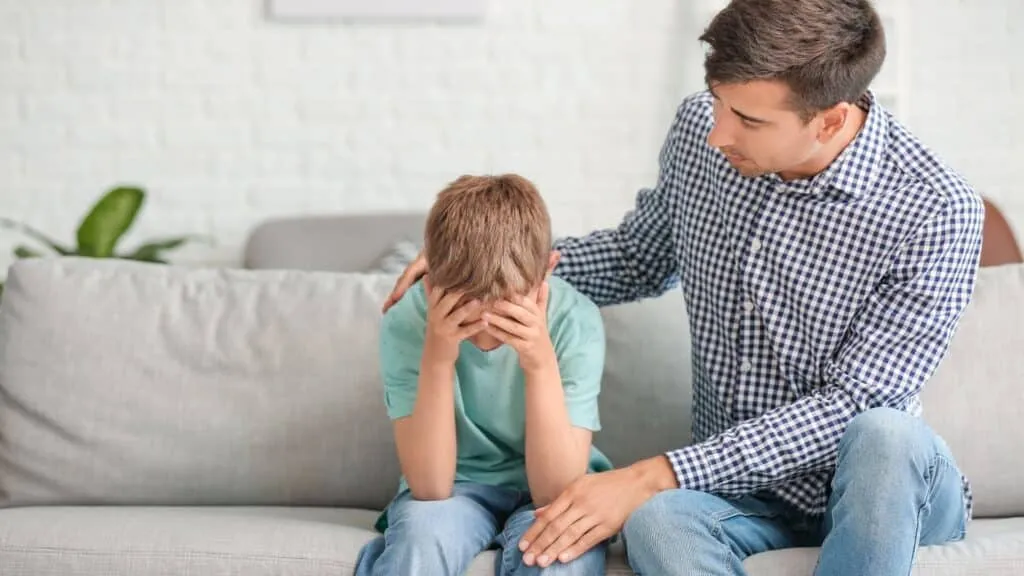
A hug if they want it. Or just sitting next to them quietly. I don’t force it. Sometimes my daughter doesn’t want a hug, so I say, “Then I’ll just sit next to you for a bit.” And we sit. That quiet time together? That’s where the real repair happens.
What NOT to do when apologizing
Don’t over-explain.
“I’m sorry I yelled, but you made me so tired…” That “but”? Pretty much wipes out the whole apology. Kids hear whatever comes after the “but.” And the “sorry” just vanishes. I’ve done this before. It doesn’t work.
Don’t shift blame.
Even if they did something wrong first? This apology is about what I did. Not what they did. I’ve heard parents say, “I’m sorry I yelled, but come on—if you hadn’t made such a mess, would I have yelled?” That’s not an apology. That’s just blaming them in a nicer voice. I try really hard not to do this.
Don’t demand forgiveness.
“Say you forgive me” puts a lot of pressure on a kid who might still be hurting. I let them get there on their own. Sometimes my daughter says, “I’m not ready to forgive you yet.” And I say, “Okay. I’ll wait.” And I mean it.
When apology is not enough
An apology is a good start. But let’s be real—it’s not always the whole answer. If I keep losing my temper every single week? Saying sorry starts to feel pretty hollow.
There was a stretch when I was stuck in that pattern myself. I’d yell. Feel terrible. Apologize. Then lose it again the next time. My son once said to me very calmly, “Mom, you always say sorry, but you always do it again.” That stung. I won’t lie. But he wasn’t wrong.
When that happens? It’s usually a sign that I need to work on myself. Maybe that means getting more sleep. Finding a better way to handle stress. Or even talking to someone about why I react so fast. Real repair takes time. Apologizing is part of it. But actually changing the pattern? That matters just as much. Maybe more.
Final takeaway
Look. Apologizing to your child doesn’t make you a weaker parent. It doesn’t lower your authority. What it does is fix something that got broken. It brings you back together. And honestly? That’s worth more than being right.
The next time you lose your temper, remember this: your child doesn’t need a perfect parent standing in front of them. They need a parent willing to come back, sit down, and say, “I’m sorry.” Sometimes those two words do more for a relationship than getting everything right in the first place.
Sources:
- Concepts drawn from the work of Dr. Dan Siegel and Dr. John Gottman
- Also reflected in developmental literature from Zero to Three and the National Scientific Council on the Developing Child