The first book I read in April was No Signposts in the Sea. When I first started reading, I didn’t understand what the author was trying to convey, yet it gave me a sense of hope bordering on despair—after realizing his life was entering its final countdown, Edmund embarked on this “endless” journey adrift at sea. Only after finishing the book did I realize that what it truly asks is: When all the beacons disappear, can you still set sail? When we shed the identities we’re familiar with, in what other ways can we continue to exist?
Laura and Edmund: Two Ways of Being
Laura is elegant to her very core. She understands life and people; she is impeccable as a friend and as a lover—yet you won’t find in her the kind of motherhood defined by conventional standards.
“Love really does play strange tricks on people.”
“Marriage is like those strands of hair floating in a basin of soapy water.”
Whether it’s love or marriage, both take away a part of one’s freedom. Laura envisions intimacy as mutual respect, with breathing room for each other. Therefore, a married couple should sleep in separate rooms; if the house is large enough, separate living quarters would be even better. Of course, financial independence is paramount. In Laura’s words, I sense the powerful charm of an intellectually independent woman, and I suddenly seem to understand why Edmund was so captivated by her.
And Edmund, the man whose life was entering its final countdown. How could anyone not be captivated by the female author’s interpretation of the male character’s perspective—devoid of condescension or belittlement, the text naturally exudes a deeper, more tender emotion. His caution is laced with passion; his pain is swept up in a torrent of thoughts. He does not force self-pity or expressions of love, but instead respects Laura’s womanhood, the necessity of marriage, and her free will in life… Even if it does not become love, a close friend is enough. Perfection is not about possession.
Laura and Edmund are both rational and emotionally rich, yet their relationship is a mismatch of reason and emotion—each miswired with the other—leading inevitably to a tragic conclusion. Such a relationship is perfectly suited to unfold on a ship, much like a life tossed by storms: beautiful, yet tinged with a faint sadness.
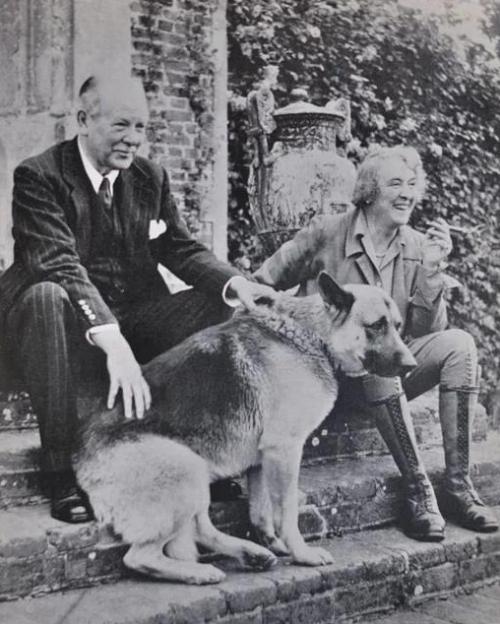
Vita’s Question: How Would You Spend the Last Few Months of Your Life?
Through the story of Laura and Edmund, Vita poses a question: If you had only a few months left to live, how would you choose to reshape your life? Like Siddhartha? Like Edmund?
Let go of all worldly possessions—wealth, fame, status—and ask only what your heart desires. Return to the simplest things: love, beauty, and innocence. When that day comes, you will discover that the only one who walks with you to the very end is yourself.
There are no beacons at sea, no tombstones at sea. The very absence of all things is the answer.
It seems Vita has also woven her own insights about a life without a compass into the story: perhaps it is the absence of a destination that is true freedom…
The Impossibility of Love and the Freedom of Love
Vita loved to write about the impossibility of love.
At sea, a ship is both a solitary island and a closed room. A ship’s crew is crammed together, with no escape from one another. You can only keep each other company and wear each other down—whether through love, hate, or estrangement; in the end, everyone must still close their own door alone.
Seek beauty, but this beauty lies not in wealth, nor in power, nor in a flurry of activities, but in the process of appreciating the simplest and most universal bonds of life with a trained, discerning, and sensitive eye. To feel, to express for the sake of feeling, or at the very least to understand how all the lovely things in nature express themselves, and how all the painful and sensitive parts of the human heart are revealed. I neither care nor know where I stand now. The sea is vast and boundless, with no beacon to guide me. Now, she seems even gentler toward me, and this forbidden love grows ever harder to bear.
The diary has been abandoned; the story, like those unfinished sentences, surges with the waves. The love, marriage, and death I once wrote about no longer ebb and flow—they are gradually settling into calm.
What, exactly, is freedom in love? Perhaps it isn’t something that must be shouted aloud, nor is it something to be clutched so tightly that one becomes consumed by anxiety over its loss. It is more like a backdrop—quietly laid out, requiring no constant reaffirmation, yet constantly nourishing one another. Precisely because it isn’t grasped so tightly, it becomes all the more resilient.
A small Spanish island and a sudden thunderstorm—as romanticism peels away the surface, a sorrowful undertone emerges. The love silently repeated in her heart a thousand times vanishes beneath the horizon, and the two of them, in reality, become even more solitary individuals. Gentle love, in fact, makes the word “taboo” seem somewhat tragic.
Yet Edmund’s departure is, in fact, the moment Vita left for the story—and for herself—that shimmers with the most light.
Reflections on Life and Death, From the Pages to the Real World
The appeal of this book lies not in the story itself. What is far more captivating is its reflection on life and death. I even suspect that one must have lived through certain experiences to find deeper resonance in Vita’s final novel. I also have a vague feeling that perhaps some books require a certain amount of life experience to truly grasp—in one’s sunny twenties, one may not need to think so deeply. After all, a life spent overthinking is a life that cannot be lived.
A colleague of mine passed away this past November. Amidst the grief and sorrow, I picked up this book once more and felt again that life is like a small boat adrift on the ocean, with no signposts to guide the way.
Perhaps by now, the overall tone of this piece seems rather gloomy. But that’s not the case at all; my heart is still brimming with positive energy. If life itself has no inherent meaning, then that only means we can let go of our fears and take bold risks to create our own meaning and find our own beacons. Meaning is something we construct; it is not something we simply think about or search for.
Vita’s Art of Writing
The book has no clear chapters, yet it never feels disjointed. Rich poetry and philosophical reflection replace the thread of time; scenery, characters, dialogue, memories, and emotions all advance together, allowing the reader to journey alongside the characters through a sea of words without a compass.
Vita’s prose is light, like a feather dropped by a lark. Yet this lightness is not ethereal; rather, it is grounded in reality, imbued with the essence of life. That is why reading Vita’s books always feels as though she is sitting beside me in an armchair, propping her chin with one hand as she gently recounts her stories to me, with the warm glow of a fireplace before us.
Ships will dock at their final port, characters will reach their conclusions, and lives will come to an abrupt end. The sea is vast and boundless, with no tombstones in sight, yet everything continues to flow in unseen realms—just as my reflections on the book and Laura’s memories of Edmund do. This small book is rich in content yet effortless to read; it captivates while bringing a sense of calm, making it a book worth reading time and again!
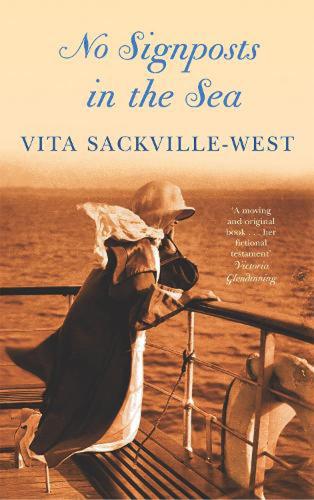
“The sea is vast, with no gravestones in sight.”
This voyage, intertwined with the unexpected, has no clear destination—not even a beacon. Wherever the sea takes them, there they go.
Let’s set sail; our lives are this vast ocean.
