At one o’clock in the morning, you were lying in bed. Obviously, you had got up and checked the alarm clock three times, but there was still a voice in your mind saying, “What if you didn’t set it? What if I’m late tomorrow?” You sighed and got up to check. The alarm clock was indeed on, the volume was the loudest, and the time was right. But after lying back for less than two minutes, you thought: Did you really see clearly just now? This is not the first time you have been like this.
On the other hand, your friend hasn’t been doing well recently. She is always worried. I’m worried about being fired if I don’t finish my work, and I’m worried about being scolded when I hand it in. It was hard to get up until I got off work, and I began to worry about whether tomorrow would be worse. She said to you, “I don’t know what I’m afraid of, but I just can’t stop.”

Both of you are in pain, but the pain is different.
Today, I will explain these two things thoroughly: what is the difference between OCD and anxiety loop? How can we really relieve it?
Two main differences
Think
The thinking patterns of OCD and anxiety loop are completely different. People with other anxiety loops often worry about something realistic and possible to happen, while people with OCD may be obsessed with unrealistic or impossible things. Generally speaking, the anxiety loop is more about the worries of the real world, and the object of anxiety is usually what is likely to happen; while OCD is related to the recurrence of unreasonable or uncontrollable thinking and behavior.
For example, OCD patients may think that “if I don’t go to the company in a specific order, it will lead to some disasters”. This idea has no realistic basis at all, but they will recall it repeatedly in their minds. And people with anxiety loop may be very worried that they will say the wrong thing, be misunderstood, or be embarrassed at the party when preparing to attend a social event.
Behaviour
There are significant differences in the behavior patterns of anxiety loop and OCD in terms of specific behaviors. People with anxiety loops will worry too much, but they will not reduce anxiety through compulsive behavior. However, OCD patients will repeat some useless behaviors in an attempt to counter the lingering compulsive thoughts in their minds. They usually know that their behavior is irrational.
For example, people with OCD may be very afraid of contracting a certain disease. In order to cope with this fear, they may wash their hands more than 100 times a day or deliberately avoid contact with others. In contrast, although people with anxiety loop may also be very worried about infectious diseases, they usually do not feel the need to wash their hands more frequently than “normal” to ensure personal hygiene. They may not mind shaking hands with others.
Common Symptoms and Relief Methods of OCD
1. Repeated inspection
The idea of “did not check well” repeatedly comes to my mind, such as “the door lock is not closed tightly”, “the gas is not turned off” and “the document is not signed”. If you don’t check, you will be extremely anxious. Even if you have checked it many times, you still can’t help but want to check it again. ——At this time, you can delay the inspection. After locking the door, I want to go back and have a look. Wait for a minute. Don’t cancel the inspection, just do it later. After that impulse, many times I don’t want to go back.
2. Repeated cleaning
I always feel that my hands or things are dirty. I touch the doorknob and wash my mobile phone. For example, if I wash my hands more than 20 times a day, the back of my hand is red and peeling all the year round. I think that “if I don’t wash it, those bacteria in my brain seem to be crawling” -——when you have this situation, you should learn to gradually downgrade. The original three times was changed to two times, and the original two minutes of rubbing was changed to one minute. You don’t need to be in place in one step, just drop a little at a time, so that the brain can adapt slowly.
Common Symptoms and Relief Methods of Anxiety Loop
1. Disastrophic imagination
When you encounter a small thing, you automatically think in the worst direction. For example, if the boss sends a report, but the boss doesn’t reply, he begins to think: “Is it not written well? Is the boss angry? Will I be fired?” -——Don’t worry, you can set the “worry time”. It is fixed for 15 minutes every day to worry. At other times, when you think of what you are worried about, write it down first and think about it when the time comes. You will find that at that time, there are many things you don’t want to worry about.
2. Repeated thinking
Repeatedly recalling the past, especially those scenes that make you embarrassed and regretful, such as saying “this plan can be thought about again” at the meeting last week. After the meeting, he repeatedly recalled: “Is my tone too rushed?” -——At this time, the most important thing is to distinguish between “what can be solved” and “what can’t be solved”. Take a piece of paper and write “what can I do” on the left and “I can do anything” on the right. Take action on the left and practice letting go on the right.
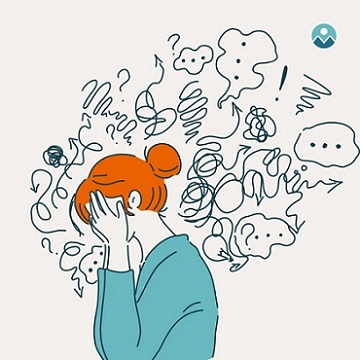
In Summary:
- OCD is relieved by “doing”, and the anxiety loop is prolonged by “thinking”. Don’t get confused.
- The method is not difficult. What is difficult is that every time the impulse comes, are you willing to carry those seconds more?
- Go to the doctor when you can’t bear it. It’s not embarrassing.
All right, go to bed. The door has been locked.