I often find myself stuck with a weird question that I’ve never really figured out. Without the ability to see, what would our world even look like? Honestly, I suddenly realized this question is way less abstract than it sounds. And that’s exactly why I picked up Blindness in the first place.
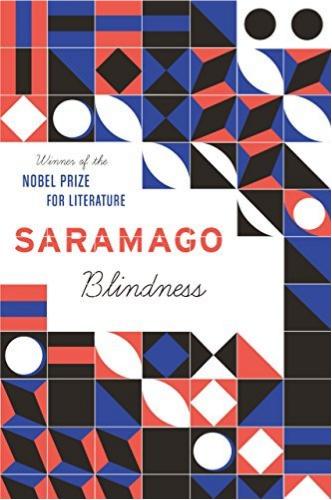
The setting of the story is pretty straightforward: a sudden blindness sweeps the whole city, and everyone suddenly can’t see. This isn’t regular darkness, though—it’s just endless, dazzling white light. People lose their sight, but here’s the thing: their real suffering isn’t just about being unable to see. It’s that all social order and rules slowly start to fall apart.
In the beginning, nobody became violent instantly, nor did society collapse all at once. Everybody was helping each other out, maintaining that very thin veneer of reason and morality. As the hours dragged on, however, this began to dissipate. Violence, apathy, and terror spread much more quickly than I had anticipated. With no sight, humanity degenerated into beings stranded alone on a deserted island—a place without laws or a moral compass, where only survival instincts remained.
While reading, I couldn’t stop asking myself: If all rules vanished out of nowhere, what would happen to our basic ethics, responsibilities and morals? What kind of people would we actually become? And deep down, what do our choices really say about us?
Is going blind actually the initial stage of a civilized society’s collapse?
Blindness taught me that the loss of vision isn’t always a straightforward physical process but also reveals the hidden dread and anxiety lying within humanity. The blindness in the novel not only deprives individuals of their visual perception of the external environment but also robs them of the illusion of control over their surroundings. Inevitably, the entire social hierarchy will crumble, with its complicated moral guidelines becoming mere formalities. Soon enough, humans will begin to fight to the death purely out of necessity and will steadily lose their capacity to empathize with other people. Perhaps the social order relies on personal discipline.
Blindness is way more than just not being able to see. Once people lose their sight, the stable order we live by can crash in a second, leaving all human good and evil, reason and raw impulse totally exposed.
Even surrounded by violence and cold indifference, you can still catch small sparks of human goodness.
Amid all the chaos in the story, there’s one character that honestly gave me a little bit of hope — the doctor’s wife. She’s the only one who never goes blind. She’s faced with nonstop hardships and huge survival pressure, but she still chooses to hold on. She’s not perfect, of course; she breaks down, doubts herself, and feels lost sometimes. But she never fully lets go of her reason and inner morality.
She made me think a lot: If everything around us is stripped away, will we still believe in what we believe in, even when it’s all darkness around us? Can human conscience be destroyed so easily?
One of my favorite lines from the book is:
I think we are not blind, I think we are blind; Blind but seeing; Blind people who can see but do not see.
For me, this phrase is almost like a key to some kind of deeper understanding of who we are. Blindness is not merely a loss of a particular sense; on the contrary, it affects the entire internal world. With blindness, you are no longer able to observe anything around you, yet at the same time, you see the best and the worst in yourself like never before.
In total madness, people reveal their true personalities.
Indeed, it is so striking to see how fragile the civilization that people have created is. After all, it does not exist in its true meaning without the choice made by each individual to be reasonable and follow certain principles of morality. Remove all of that, and society collapses quickly enough. We would probably quickly become mentally ill and lose our humanity. Total blindness turns out to be something like an alarm that prompts people to face their deepest, secret rules.
