If you used to be sixteen or seventeen years old, or you still have that sixteen or seventeen-year-old self in your heart, then tonight, you might as well open The Catcher in the Rye. Holden Caulfield will help you say what you have always wanted to say but dare not say, about this false world, about those things you try your best to keep but are destined not to keep in the end.
The story is actually very simple: sixteen-year-old Holden was expelled from school again, which is the fourth time. He didn’t dare to go home early, so he wandered around New York City alone for three days and two nights: staying in a cheap hotel, visiting nightclubs, meeting old classmates, and being beaten up. He sneaked home to see his sister, and finally fell ill. It’s really just that. But Salinger dug up the wounds of a whole generation with this matter, and the wound has not healed so far.
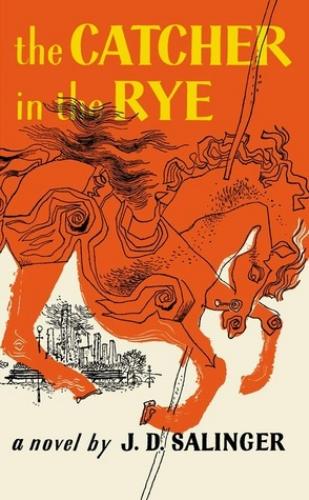
I used to think that this book was about rebellion, but later I found that it was not like that. Holden’s rebellion is not that he really wants to defy any rules. He skipped school, cursed, and went to find prostitutes, but he never felt how cool he was. His anger points to the indifference and hypocrisy of the world itself: the principal is full of educational ideals, but behind the scenes he only cares about the money donated by alumni; the movie is full of fake feelings; the men and women in the bar still wrap themselves up in those superficial truths. He hates all this, and he also hates himself who can lie and pretend. Therefore, his rebellion is not a fake, but more like an allergy – he is allergic to hypocrisy, numbness, and natural compromise in adult life.
And behind this sensitivity, what is hidden is his real core: a guardian doomed to fail.
Look at what he did: when he met a family crossing the road, the child walked on the side close to the lane, and he quietly walked to the child, pretending to be their brother, and protecting him to cross the road together. After that, he said, “I know it sounds silly, but as soon as I see the children, I can’t help but want to protect them.” He has been wearing the baseball gloves of his dead brother Allie, which are full of poems in green ink. Whenever he mentions Jane, the girl he likes, his voice will suddenly become softer, because Jane’s stepfather has done something unruly to her. He also remembered a student named James Castle, who was forced to jump off the building because he refused to take back an insult to himself, and finally lost his life. He talks about these things carelessly, but as you read them, you will find that his heart has been trembling inside all along.
What he is really afraid of is that those clean, pure and flawless things will eventually be crushed by this false world, and he can’t stop anything.
It was also because of this that he made up the famous fantasy: a large group of children were playing games in a large wheat field, and there was no adult around him, and he was the only one standing on the edge of the cliff. As long as a child runs too fast and is about to fall down, he will reach out and pull them back. In addition, he doesn’t want to do anything. He just wants to be a catcher in the rye.
What is the cliff? It is a chasm between childhood and the adult world. What Holden wants to hold on to is never a specific person or a specific thing, but the kind of innocence itself that has not learned to be hypocritical, not learned to compromise, and has not learned to turn a blind eye to ugliness.
What Holden wants to hold on to is never a specific person or a specific thing, but the kind of innocence itself that has not learned to be hypocritical, not learned to compromise, and has not learned to turn a blind eye to ugliness. It is the desire for unchanging and the fear of the future. He wanted to stop those children, but in fact he wanted to stop himself who would eventually fall into the cliff. But the problem is that he himself is slipping into that chasm.
“The mark of the immature man is that he wants to die nobly for a cause, while the mark of the mature man is that he wants to live humbly for one.”
In the whole book, what makes me most uncomfortable is the part where Holden went to the Natural History Museum. He said that he liked the things in the museum best because they would never change: for example, the scene of the Eskimo fishing was exactly the same every time he went to see it. The only thing that is changing is himself. He suddenly had an idea: “Some things should be kept as they are. You should put them in that big glass box and keep them there without touching them.” But it’s impossible at all. The younger sister Phoebe will grow up, Jane will marry that bastard, and one day he will wear a suit and necktie, and become the kind of false adult he hates the most. He knows all this in his heart, but he is just unwilling.
In the end, Holden didn’t hold on to anyone, and even he himself collapsed. But the famous sentence at the end of the book made me think for a long time: “Don’t say anything to anyone. As long as you say it, you will start to miss everyone.” This is not the wisdom of life. It’s just a lost teenager, leaving himself the last bit of decency. I don’t want to talk about them, because when I talk about them, I will miss them, and missing them means that I have never really let them go.
The Catcher in the RyeIn the end, has never been a book that teaches you how to resist. It is a book about failure. It tells the story of a teenager who tried his best to keep something, but in the end he could only watch those things slip away from his hands.
But miraculously, Holden did not become unlovable because of this failure. On the contrary, it is because he knows that he can’t hold on, but he is still willing to stand on the edge of the cliff that he has become the image that will never fade in the hearts of countless people.
Real maturity is not to become a false adult, nor to pretend to be invisible to the existence of the cliff, but to know that many things can’t be changed, but still insist on caring. The meaning of this book is probably to help us remember this care. While everyone was busy growing up, busy becoming cynical, and busy saying “what about that” to everything, Holden shouted for us: “No, I care.”
If you have ever felt that everything around you was so fake that you wanted to run away, then you must understand Holden. You don’t have to completely agree with him, or even like him. You just need to know that you are not the only one in this world who has felt this way. For this reason, this book is worth reading.
