Have you ever had such a moment: you didn’t do any heavy work all day, but after work, it was like you had just finished a boxing match, and you just wanted to collapse on the sofa like a stone? Or what’s more strange is that you specially set up a weekend to “rest” – sleep until noon, watch eight hours of short videos, and pile up the coffee table with takeaways. As a result, Sunday night is more tired and empty than when you get off work on Friday. You can’t even say what you watched in the eight hours just now. You only remember that your thumb was mechanically scratched on the ground, like a out-of-control machine.
We seem to have fallen into a strange paradox: the more we want to relax, the more we can’t relax. Either sprint at full speed, or crash completely. The state of “doing a small thing steadily without being in a hurry” is like a wrench left in the corner of the garage. I know it’s there, but I’m too lazy to pick it up.
Until I opened a book with a strange name – Zen and the Art of Motorcycle Maintenance. The title of the book is really strange. “Zen” and “motorcycle” don’t match no matter how you look at it. One talks about quiet practice, and the other is full of oil stains and loud noise. Can this be put together? But it’s this kind of “mismatch” that makes me read it.
A book, a ride, hides the most simple healing
The author of this book,Pirsig, wrote a cycling trip across the United States with his son. You may not believe it when you say it. This seemingly free ride is actually Pirsig’s way of self-redemption – he once fell into a mental breakdown because he was too persistent in exploring a philosophical concept and received electric shock treatment, and the son who was traveling with him was also said by the doctor that he had a sign of mental illness. During the journey, their motorcycles always broke down. If it were others, they might have been irritable and felt that these failures ruined the whole journey, but Pirsig did not. He did not panic to stop the car, disassemble the parts, and troubleshoot the problem. Even if a screw fell deep into the engine, he would not impatiently disassemble the whole machine, but calmly and slowly find a way.
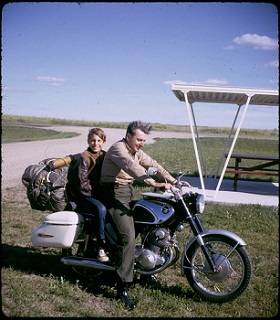
There is a particularly classic contrast in the book. Pirsig has a couple of friends who are particularly afraid of technology products. As soon as the motorcycle breaks down, they are at a loss. They would rather spend a lot of money to push it to the repair shop than touch the oil-stained engine by themselves. I really understand this mentality. Just like our current computers and mobile phones, once it gets stuck or something goes wrong, the first reaction is often “this thing is really annoying”, and then quickly find an expert to deal with it. Isn’t it our attitude of “getting rid of them quickly” towards trivial troubles in life – such as blocked sinks, broken doorknobs, and even a complicated dish? And Pirsig, with this faulty ride, slowly tells us that trouble is never a stumbling block to the journey, but a part of the journey itself.
Car repair is practice, and inner peace is hidden in ordinary little things
When reading this book, there is no obscurity of reading philosophy books. On the contrary, the more you read, the calmer it is. It’s like following Posig, sitting on the roadside repairing a car, blowing the wind. There is no anxiety, no impetuousness, only the present concentration.
Pirsig distinguishes between two people in the book. One is a “romanticist” who only likes to ride a motorcycle and enjoy the wind and freedom, but avoids the structure and faults of motorcycles; the other is a “classical” who only focuses on disassembly and maintenance but forgets the fun of riding itself. And what he wants to tell us is a balance – rational disassembly and emotional experience, which is never contradictory, just like car repair, which seems to be a cold mechanical operation, but in fact it hides the simplest Zen meaning.
Zen has never been a mysterious thing. It is not necessary to meditate and recite the scriptures, but to do the little things at hand well without distraction.
Just like I used to hate washing dishes. After reading this book, I tried to wash dishes. I didn’t want to work or do trivial things. I just focused on feeling the temperature of hot water and the fragrance of detergent, and watched the greasy plates become cleaner little by little. At that moment, I found that these ten minutes were the most empty and comfortable time of my day. Carve. The value of this book is never to teach us how to repair a car, but to teach us how to find the inner rhythm in impetuous days and find peace in trivialities and troubles.
May we all find our own rhythm in trivialities
In fact, each of us is a “rusher” written by Pirsig. We are always chasing high efficiency, always thinking about ending trouble quickly, watching videos at double speed, eating takeaways, and even pursuing “quick health return” when resting, but we forget that real relaxation is never completely messed up, but focusing on every little thing in the moment.
We are always anxious about the future, entangled in the past, and live our days in a hurry, but we ignore that the beauty of life is always hidden in those seemingly trivial moments – ten minutes of washing dishes, half an hour of tidying up the desk, and even the process of repairing small objects.
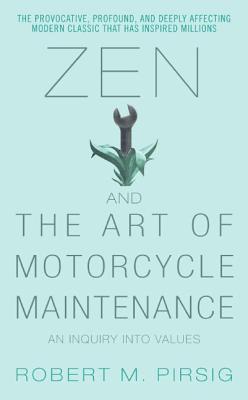
The book Zen and the Art of Motorcycle Maintenance is like a lamp that illuminates our impetuous daily life. It tells us that we don’t have to be in a hurry to achieve success or escape from trouble. Those trivialities that we hate and those dilemmas we are eager to get rid of are precisely opportunities for us to establish a connection with the world and reconcile with ourselves.
If you, like me, often feel tired and empty and can’t find inner peace, you might as well open this book and follow Pirsig to find your calm and comfortable self between oil and fireworks. You will find that doing a small thing well is the best practice.