Years ago, I spent a weekend alone in a cabin beside a small lake. No phone signal, no neighbors—just the sound of water knocking against the dock. By the second evening, I had started talking to the geese like they were old friends. That was how I understood Kya Clark before I ever opened the book.
People leave Kya one by one. Her mother walks out first. Then her brothers and sisters disappear. Eventually her father leaves too, abandoning a battered boat and a pile of unpaid bills. She is still a child when she learns to cook for herself over a fire. A few years later, she is trading mussels for gas money and teaching herself how to survive in the marsh. The town starts calling her “the Marsh Girl.”
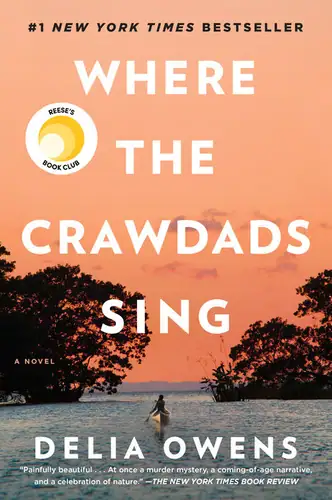
The marsh is the only thing that stays. It feeds her. It shelters her. Its rules make sense in a way people do not. Low tide reveals what is hidden; high tide covers it again. Nothing pretends to be kind.
Technically, the novel follows two storylines. One is the investigation into the death of Chase Andrews, the local golden boy found dead near an old fire tower. Because Kya is different and already feared by the town, suspicion falls on her almost immediately. But honestly, the murder trial is the less interesting part.
The stronger thread is watching her slowly piece together an education, a sense of self, and some understanding of love. Tate teaches her to read and opens the world for her, though he leaves too. Chase offers romance but brings cruelty with it. Neither relationship saves her. If anything, both teach her that people are unreliable.
What stays with Kya is what the marsh teaches her from the beginning: survival is possible alone.
I read most of this book during a rainy weekend, which felt appropriate. I have never lived near a swamp, and my childhood looked nothing like Kya’s. Still, I recognized the feeling of being watched from a distance and misunderstood before anyone even speaks to you.
When I transferred schools in eighth grade, I spent months eating lunch alone in a bathroom stall. No one bullied me directly. Nobody invited me over either. After a while, you stop expecting people to make room for you. Kya understands that feeling early.
Some parts of the novel drag, especially the courtroom scenes. Even the ending feels a little too carefully arranged. But I don’t think that’s why people love this book.
People remember the atmosphere. They remember Kya crouched in the marsh, studying feathers and shells as if they contain instructions for surviving life. They remember the loneliness running through every page. Delia Owens writes about the natural world with the precision of someone who has spent years observing it closely. The marsh never feels like background scenery. It feels alive, almost like another character watching over Kya when nobody else does.
What affected me most was how quietly Kya moves through pain. She does not spend pages asking why people abandoned her. She keeps going. She paints. She studies birds. She builds a life out of whatever is left in front of her.
By the time she publishes her nature guide, I was rooting for her the way you root for someone who has had to survive too much too young. Not because everything turns out perfectly, but because she never completely hardens.
Where the Crawdads Sing is not really a murder mystery to me. It is a novel about loneliness, survival, and the strange ways people learn to keep living after being left behind. Read it on a quiet afternoon when the weather turns gray and the world feels far away. It might remind you that solitude and brokenness are not always the same thing.
