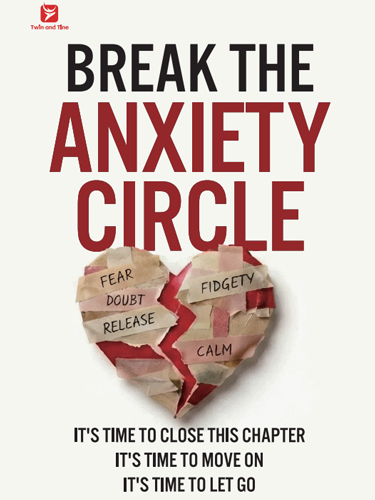
Have you ever had such a moment: your partner just went to the company to work overtime, but you couldn’t sit back. You couldn’t help sending a message every ten minutes, and even began to think nonsense – does he not love me anymore? Is she chatting with someone else? It was not until he replied that the stone in his heart dared to fall to the ground. Or, every time before parting, you will repeatedly confirm your partner’s itinerary and ask over and over again, “when will you come back?” “Will you forget me?” Even if your partner has said countless times, “I’ll be back soon, I’ve been thinking of you all the time”, but you still can’t feel at ease.
In fact, this is a manifestation of separation anxiety in love, which is a problem that many people will encounter in intimate relationships. Many times, because of this anxiety, we have conflicts with our partners, which makes a good relationship standstill. Therefore, I have summarized the common manifestations and coping methods of separation anxiety to share with you to help you relieve anxiety.
Separation anxiety can be manifested in many ways in love relationships. Being able to identify these signs will help you solve any problems that may lead to anxiety and ultimately build healthier and stronger connections and relationships.
Common manifestations of separation anxiety include:
1. When we are separated, we always think about the bad things.
As soon as the other party is on a business trip or not around, you start to play disaster movies automatically in your mind – will something happen to him? Doesn’t she want to come back? I know that there is a probability that nothing will happen, but I just can’t help thinking in the worst direction.
2. I feel uncomfortable as soon as I’m separated.
After being separated from each other, I began to have stomachache, headache, panic, chest tightness, and insomnia. I went to the hospital for examination, and there was no problem. But that kind of discomfort is real, not pretended. In fact, your body is shouting for you: “I’m so anxious!”

3. Decipher every message as a password.
He sent a “good” without an exclamation mark – what does it mean? Are you impatient? She didn’t reply for ten minutes – what did she do? Are you chatting with others? You broke down and analyzed every word he said, and you were half tired to death. As a result, he may just be busy or his mobile phone is out of power.
4. Always want to control each other’s itinerary.
“What time will you come back today?” Who are you having dinner with?” Can you come back early?” – If you ask once or twice, you will be concerned, and if you ask ten or eight times, it will become a post inspection. In fact, you don’t want to do this, but you panic if you don’t ask. To put it bluntly, I’m too afraid of losing this relationship.
If you get more than two, don’t be in a hurry to scold yourself. This can only show that you care about this relationship, but your “alarm” is too sensitive. Next, let’s talk about what to do.
Enhance your sense of independence
Having a strong sense of independence outside of love relationships can help you overcome separation anxiety. The more confident you can be alone, the less afraid you will be when you are separated from your partner.
In order to gain emotional stability and reduce dependence on your partner, you can try:
- Pursue personal interests: Set aside 20 minutes each day that belong entirely to you to do something purely enjoyable, such as playing the piano, drawing, doing a puzzle, or playing a game.
- Solo travel: Choose a weekend to take a bus you’ve never taken before, ride it to the last stop and back, or sit in a café in an unfamiliar neighborhood and watch people for an hour.
- Make your own decisions: From today, intentionally make three small decisions every day without asking anyone—such as what to eat for lunch, which route to take home, or whether to shower or read first in the evening.
Challenge the negative thinking pattern
Negative thinking patterns often stem from irrational fear. When you use logical reasoning and cognitive skills to challenge your own ideas, you can see the difference between the thinking pattern caused by anxiety and reality.

Effective ways to fight negative thoughts include asking yourself the following questions:
- What evidence do I have that this is true? Take a piece of paper and draw two columns: “Evidence” and “Counter-evidence.” For example, on the left you might write “My manager hasn’t replied to my message,” and on the right, force yourself to write at least two counterpoints. You’ll likely notice that the left column is often short and weak.
- If this situation is true, what is the worst that could happen? Ask yourself directly: how bad could it realistically get? Could I be fired? Broken up with? Become seriously ill? Then ask again: if all of that happened, could I survive it? Yes. Could I start over? Yes.
- What happened the last time I thought this way? Close your eyes and recall the last time you had a similar anxious thought—like “I’m definitely going to mess this up.” What happened afterward? Did it actually go wrong, or did it resolve smoothly? In most cases, you’ll realize those fears either never came true or passed without lasting consequences.
Practice mindfulness and emotional regulation
Mindfulness and meditation are effective ways to regulate emotions and overcome anxiety. Eventually, you will learn to coexist with this discomfort instead of letting it influence your mood.
Try the following ways to calm yourself down:
- Breathing exercise for anxiety relief: Find a comfortable sitting position. First, fully exhale through your mouth until your lungs are empty. Then inhale slowly through your nose for 4 seconds, hold your breath for 7 seconds, and slowly exhale through your mouth for 8 seconds.
- Mindfulness meditation: No need to sit in a specific posture or play music. Right now, pick up any object near you—a grape, a pen, your water cup. Spend one minute focusing only on it: observe its color carefully, feel its surface, notice its texture and smell.
- Journaling to ease anxiety: Take a notebook and set a 5-minute timer. During this time, only write sentences that begin with “At this moment, I feel ______.” For example: “At this moment, I feel tightness in my chest,” “At this moment, I feel like crying,” “At this moment, I feel very tired.”
In the future, you only need to do three things:
First, admit it. Next time anxiety comes, don’t scold yourself for “why is it like this”, but say “Oh, it’s here again”. With this sentence alone, you have already won half.
Second, separate it from the facts. The most terrifying story in your mind is probably not a fact in your hands. Write it down and compare it, and you will find that you are frightened by your imagination.
Third, give yourself a fulcrum. Even if it’s just a small thing. Make a cup of tea, play the guitar for ten minutes, and draw a fork on the calendar. As long as it is something you can control and do it yourself, it can help you change from “being led” to “stepping on the ground”.
Separation anxiety will not disappear completely. But as long as you care about someone, you can’t have no waves in your heart when you leave – which shows that you love seriously.
While you care about him, you should also care about yourself. While you miss her, you should also build a stable foundation for yourself.