Have you ever had such a moment? At a party, you talk to someone you don’t know well. Although everything he says is very decent, you always feel that something is wrong with his attitude. Or, when your colleague is explaining the progress of the work to you, his eyes are always uncertain, which makes you involuntarily begin to doubt: “Is he hiding something?” We interact with people every day, and occasionally we have an intuition that some words are wrong. This intuition is often some details that we unconsciously observe from the psychological level.
Next, I have summarized several practical techniques of psychological observation to share with you to help you understand others from the details.
1. Observe body language
Core content: Body language occupies a large part of our communication. By observing a person’s body language, you can get a lot of clues about his inner state.

You are discussing a project with your colleague. Although he is talking, he is holding his arms and leaning back, which may mean that he does not fully agree with what you said, or he feels uncomfortable. On the contrary, if a person often ndds, leans forward and focuses on his eyes, it means that he may be interested in what you are saying and is in a positive state of communication.
If you are introducing the product to a customer, you notice that the other person clenched his hands, bent his elbows slightly, and leaned back slightly. This posture usually reflects that he may be in a state of psychological guard or doubt, may have doubts about your product, or he may be uncertain about the decision to make. On the contrary, if the customer leans forward slightly, does not cross his hands, and nods or makes positive facial expressions from time to time, then he may be interested in your product and willing to learn more about it.
2. Pay attention to the change of eyes.
Core content: Eyes are an important window for emotional expression. By observing a person’s eyes, you can tell whether he is lying, feeling nervous or avoiding certain topics.
When your friend is talking about someone he doesn’t like very much, he may usually avoid looking directly at you, his eyes drift, or blink frequently, which is usually a sign of nervousness or avoidance. And if a person talks to you with clear eyes and does not avoid it, it means that he feels comfortable on this topic.
Or, when you discuss the work schedule for the next quarter with your boss, you find that he always turns his eyes quickly to one side when talking about a specific project, and his words are a little vague. It may be that he doesn’t want to disclose some information or is uncertain about the implementation of the project. You can capture his true attitude towards the project through this detail, and you may even need to take the initiative to discuss more details in the next exchange to determine whether there are potential problems with the project.
3. Observe the details in the words
Core content: Words are not only a tool for information transmission, but also reveal a person’s emotions, attitudes and true thoughts. By listening carefully to the details of other people’s words, you can understand their psychological state.
For example, when discussing a team project, a team member always says “I don’t think this idea will work” instead of “we should try this idea”. This may be a hint that he has no confidence in the project or that he has doubts about certain decisions.
For example, in a team meeting, you notice that your colleague Xiao Li always adds “I’m not sure, but…” when discussing problems, which often makes team members feel uneasy. Through repeated observation, you will find that Xiao Li will use this uncertain tone whenever he faces high-pressure tasks or decision-making, which indicates that he may lack confidence or lack confidence in his ability, and may need more active support and encouragement to enhance his confidence in decision-making.
4. Analyze facial expressions
Core content: Facial expressions are often an intuitive response to our emotions. By observing the changes in a person’s expression, you can understand his current emotional state.
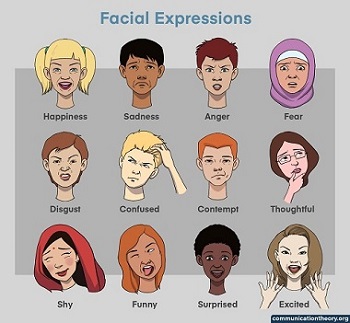
When you are talking to someone, he suddenly smiles, but the amplitude of the smile does not match the expression of his eyes. This may be a manifestation of “fake smile”, indicating that he may not really agree with what you said, or be dissatisfied with the current situation. On the contrary, a sincere smile usually relaxes the facial muscles naturally, and the eyes will be slightly narrowed.
Or after you signed a contract with a client, you saw the corners of his mouth slightly raised, but there was no smile in his eyes. This may be a wary signal that he may not have fully relaxed and may have doubts about some terms of the contract. You can judge whether he is dissatisfied with certain details by carefully observing his facial expressions, and clarify or explain in a timely manner to avoid misunderstandings in the future.
5.Listen to intonat and speed of speech
Core content: People’s intonation and speed of speech can also reflect their emotions and psychological state. By listening carefully, it can help you understand the emotional fluctuations of the other party.
For example, when a person discusses an important project, his speech speeds up and his voice increases, which may mean that he is excited or anxious about the topic. If a person speaks in a low voice and slows down, it may mean that he is hesitating, thinking, or expressing reluctance.
Suppose when you are discussing a new work plan with your manager, the manager’s speech speed begins to become unusually slow and his voice gradually becomes lower. You can notice that every time he talks about the details, his tone slows down significantly. This is usually when he is thinking or weighing different options. This may mean that he has doubts about the plan or is not fully ready to make a final decision.
Finally, I want to remind you that the observer also needs a scale. I will provide you with three lines for you to measure by yourself.
- The first line: Observers are for screening, not for trial.
You saw that his eyes fluttered, and you didn’t have to conclude on the spot that “he was lying to me”. You just need to make a mark in your heart: this person’s eyes are not stable. I’ll take a look.
- The second line: The observer should look at the whole, and don’t hold on to a detail.
You can never define a person because of a detail. You should put body language, eyes, words, expressions and intonation together.
- The third line: The observer should look at himself first.
If you are in a bad mood today, everyone you see will look “wrong”. So, before you say “there is something wrong with this person”, ask yourself: am I not in good shape today, or is there really something wrong with him?