Let me start with a creepy question. One day you wake up and realize you’re the last person left on earth. Not the kind where you’re fighting zombies and leveling up. The quiet kind. Where every person and every animal has turned to stone. Only you can still breathe. How long could you last? Days? Months? Years?
Marlen Haushofer’s The Wall is written for you.
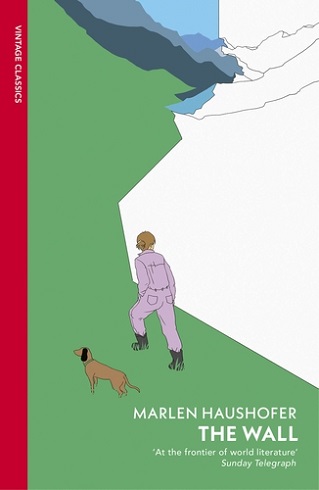
A nameless woman gets trapped in the Alps by an invisible wall. Everything outside is frozen solid. Inside: just her, a dog, a cow, and a few cats. No conversation. No rescue. No cavalry showing up at the last minute. You follow her as she chops wood, milks the cow, plants potatoes, and flips the calendar page by page — until one day she stops flipping.
This book reads like the quietest voice in your head at 3 a.m. when you can’t sleep. It asks: When everything familiar is gone — who the hell are you?
A woman with no name, A survival story no one will ever see
There are no complicated characters in this book. Honestly, there’s barely any other human at all. Only one living person speaks from start to finish. The main character doesn’t even have a name. She’s just “I.”
She went to the mountains for a vacation with her cousin and her husband. Then she woke up, and they were gone. The path down the mountain was blocked by a invisible wall. The people on the other side were all petrified — frozen in their last living moments. Someone was drinking water. Someone was walking. Someone was sitting in their doorway, soaking up the sun. None of them would ever move again.
Haushofer does something even stranger than letting the dead speak — she makes a living person unable to find anyone to talk to. The only thing the woman can talk to is a hunting dog she names Lynx. She talks to the dog. The dog never talks back.
Three years pass like this. She writes a report that no one will ever read, keeping a record for herself: how she learned to tell edible mushrooms from poisonous ones, how to help a cow give birth, how to survive the winter blizzards, how to drag herself back from the edge of madness caused by pure, empty loneliness.
The biggest mystery in this book is never “Where did the wall come from?” That question never gets answered. The answer belongs to a different question: When no one is watching, does a person still look like a “human being”? You’ll find the answer in this book. But afterward, you might just sit there in silence for a long time.
Cold as a scalpel. Still as a grave
There’s no unnecessary decoration in Haushofer’s writing. She doesn’t make despair into a drama. No scenes of a woman screaming into an empty valley. Instead, she lays everything out with a calmness that’s almost terrifying: wake up, milk the cow, gather firewood, weed the garden, fix a leak in the roof, brush the dog’s fur.
As you read, you realize — this kind of boring repetition sends a chill down your spine way more than any thriller could. She’s telling you: this is what living is. When all social connections, identity labels, and other people’s expectations are stripped away, what’s left is the raw fight. Body against nature. Will against exhaustion. Time against everything.
Some readers call this book “the doomsday version of Walden.” Thoreau walked into the woods by choice. She didn’t. She’s the most passive person you could imagine — and yet inside that passivity, she finds a strange kind of freedom. There’s one passage I’ve read over and over:
“The less I resist, the more I can bear it.”
That’s not giving up. It goes deeper than giving up. She starts to forget the difference between “enduring” and “living.”
You actually live inside this wall every day
Think about it. You scroll your phone for hours. You nod and smile at coworkers. You tell your family “I’m fine.” You think you’re free.
This book calls you out: you’re boxed in by the costume of a “normal person.” Caged by what other people expect. Stranded in a loneliness you won’t even admit to yourself.
The main character dares to face her ugliest thoughts inside that wall. She says she feels more sympathy for animals than for people — because people have enough reason to resist the natural flow of things, and that very reason is what makes them evil and desperate. That sounds harsh. But after you read it, you realize she’s talking about herself. And about you.
What I can’t forget is the ending. A man suddenly appears in her valley and kills her dog and her cow. She shoots him dead. You think this is a rescue? No. What arrives is a human being carrying violence and possessiveness. The author uses this one scene to tell you why she’d rather spend the rest of her life alone behind that wall than stay with human beings any longer.
The Wall will make you lean against a wall one night and suddenly notice the silence inside you — the one you’ve been drowning out for years. And from that silence, a question will rise:
If no one is watching you tomorrow — will you still do the things you’re doing today?