Some people work their entire lives. Still broke. Other people barely seem to try. Money finds them. And here’s the weird one — a lot of those rich people? Not really happy.
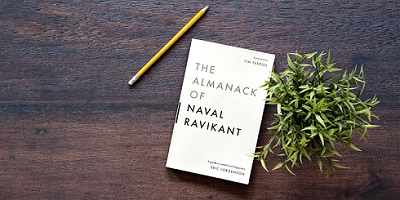
The Almanack of Naval Ravikant: A Guide to Wealth and Happiness answers both questions.The book is compiled by Eric Jorgenson, but the wisdom comes from Naval Ravikant.
Naval grew up poor. Indian immigrant. Then became a top Silicon Valley investor.He backed Twitter. He backed Uber. Made a ton.
This is not a stock-picking book.This is what Naval figured out in forty-plus years:How to get rich.And how to be happy.
Getting rich doesn’t require grinding. It requires leverage.
Naval says one thing most people don’t want to hear: You will never get rich renting out your time.Doctors bill by the hour. Lawyers. Consultants.You have 24 hours a day. That’s the ceiling.What actually makes you rich? Leverage.Three kinds.
- One: Labor leverage. Other people working for you. That’s a company. Employees. But managing humans is a headache. Not for everyone.
- Two: Capital leverage. Other people’s money. Fund managers. Venture capitalists. Works great — but first you need credibility.
- Three: This one’s the best. Code and media.Write a piece of code. The whole world can use it.Record a video. Wake up with a million views.No permission needed. No startup money. Just a laptop.
Naval did it himself.He wrote thoughts on Twitter. For years. Gained millions of followers.Eric Jorgenson compiled the tweets into a book. The one you’re holding.Naval sold the same hour of work — thousands of times — using media leverage.
Here’s the sentence Naval is famous for: Do what you’re good at.If you do something ten times easier than everyone else, and the result is ten times better — that’s your thing. Find it. Then apply leverage.
Happiness is a decision you make.
This is the second part that hit me.Naval doesn’t say happiness is winning the lottery.He says happiness is a choice.
His phrase: Lower your identity.You don’t need to be better than someone to be happy.You don’t need more stuff.You just need to sit still and look at what you already have.
Sounds like old wisdom. But he gives a real method.Shut off the voice in your head.That voice is always comparing. Who earns more. Who lives better. Whose kid got into the better school.That voice will never make you happy. There’s always someone ahead.
Naval’s trick:
Wake up one hour early. Don’t touch your phone.Sit. Look out the window.Walk.Let your brain go quiet.
Happiness, he says, is when that voice gets smaller and smaller.
He also talks about health. Not gym-sculpted abs health.Sleep-well, digest-food, calm-mood health.He ranks health before wealth and happiness. Without it, the other two don’t exist.
This is not a fast-food read.
First time I read it, I was almost disappointed.Too short. 200-something pages. Big margins. Lots of white space.I thought, This isn’t a real book.
Then I got it.The book doesn’t need to be thick. Naval distilled fifteen years of thinking into single sentences. Each sentence could fill a chapter in another book.One example. On making decisions:If you’re torn between two choices, the answer is no.The very fact that you’re torn means the other option isn’t good enough to make you certain.
You won’t agree with everything Naval says. Some takes are extreme.Don’t go to meetings. Don’t read the news. Don’t spend time on anything that doesn’t grow you.That’s exhausting. Most people can’t live that way.
But that’s not the point.
The book is like a smart friend sitting down and talking. He’s not telling you what to do. He’s telling you how he thinks. Take what works. Leave the rest on the table.
I used to wake up and immediately check news. Social media.Naval said: give yourself one hour first. No input.I tried it for a week.The effect was weird. My head got quieter. Less anxiety.
Not because problems disappeared. Because I stopped looking at so many other people’s lives.