I opened The Plague on a sick weekend. My temperature wasn’t high, but I was too lazy to get out of bed. So I casually grabbed an unread Camus from the shelf. Sick, reading a book about illness. At the time, I just wanted something to take my mind off myself.
Camus doesn’t write heroic epics. After the closure of the city of Oran, the most painful thing isn’t death. It’s that you’ll never see the people outside the city again. You can’t send letters, and the phones are always busy. Reading that, I remembered a time I lived alone in a strange city for three months, no friends or family, walking the same route every day. That feeling wasn’t exactly painful, but it slowly hollowed you out.
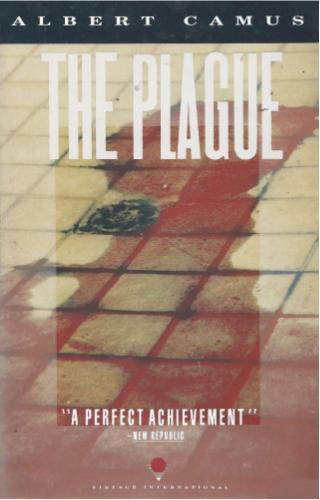
Someone asks Dr. Rieux what he thinks of the plague. He says the only way is to do his job well. At that moment I thought to myself, that’s all? But I kept reading and eventually found the weight of that sentence. Rieux doesn’t keep a diary or talk about his tears. He just tracks the numbers. Forty-two deaths that day. If I were him, there’d be no room for tears. Either keep working or collapse. This isn’t heroism, just survival.
Take Grand, a minor civil servant. He changes the first sentence of his novel every day, and no matter how many times he rewrites it, he’s never satisfied. His epidemic prevention work is all statistics, forms, and errands, but he never stops. I remember spending three months on a paper, revising it over a dozen times, and finally sending it to my advisor. He said it was “okay.” That drained but slightly satisfied feeling? Probably what Grand felt, staring at that first sentence he kept rewriting.Then there’s Rambert, a reporter. After the lockdown, he desperately wanted to escape and see his girlfriend, but finally he stayed. Not because he’d become noble, but because he realized that other people’s pain had gotten mixed up with his own happiness, and he couldn’t pretend not to see it. Sometimes you don’t actively choose to stay. You try to leave, but your conscience won’t let you go.
Tarrou organizes a volunteer team and eventually dies of the plague. Camus writes his death very plainly. He just fails, slowly, alone. Reading that, I suddenly felt scared. Not of dying, but of whether I’d have the same courage in his place. I’m not sure. Probably I wouldn’t organize any volunteer team. Maybe I’d do some trivial things like Grand, then tell myself I’d tried my best.
On the day the plague ends, the whole city sets off fireworks. Rieux sits alone by the window, thinking of his dead wife and Tarrou. He knows the plague won’t really disappear. The germ will hide in some cellar and run out again decades later. Victory is temporary. But he still goes downstairs and walks into the celebrating crowd. When I read that, my fever had subsided, and it was getting dark outside my own window. I wondered why he went downstairs. If it were me, I might keep sitting by the window, feeling that celebration is meaningless. But Rieux goes. I used to think that remembering pain was how you respected the dead, but that’s not what Camus writes. Continuing to live, including celebration and happiness, is also a form of resistance.
Lying there with the fever gone, staring at the ceiling, I felt that my previous understanding of bravery might have been off. I always thought bravery was dramatic, charging to the front lines. Rieux showed me something else. You just keep doing what you’re supposed to do while everyone else panics. Don’t exaggerate. Don’t give up. And there’s no point pretending to win. This kind of bravery isn’t spectacular, but it can hold up one person and one city. Those days of fever didn’t seem so hard anymore. It’s not that Camus gave me any comfort. He just let me confirm one thing: a person can often do very little, but doing that little thing well, that’s everything.
Later I recommended this book to a friend, and he said it was too frustrating. After thinking it over, I’d say no. It just doesn’t lie to you. Camus doesn’t lie and say you’ll win if you work hard, and he doesn’t lie that disaster has a meaning. He just says you’ll lose, but you still have to do it. And that “still have to do it” is everything.
