When you sit at your desk, your mind is in a mess, full of the pressure of work and the triviality of life. The more you think about it, the more irritable you are, and you can’t even sit down. Lying in bed at night, you can’t sleep. “There are still a lot of things to do” and “what if you can’t do well” in your mind. The more you think about it, the more anxious you are, even if you are so tired. , and can’t be calm. If you also want to relieve these anxieties, start exercising! After all, moving is much more useful than “thinking about it”.
The following are four exercises that I have summarized that are beneficial to relieve anxiety. I hope they will help you!
The first one: walk slowly
This is the most gentle and unpicky exercise. There is no need to deliberately pursue speed and consume too much physical energy. As long as you walk slowly and let your body move, you can promote the body’s secretion of endorphins and get rid of internal consumption of thinking.
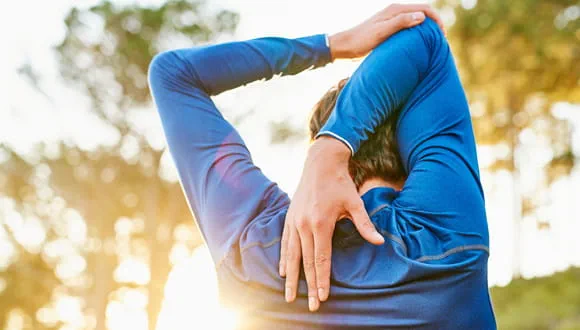
For example, when you go to work in the afternoon, the busier you are, the more anxious you are. Your chest is stuffy and you can’t concentrate. At this time, you don’t have to carry it hard. Put down the work at hand, get up and go downstairs to the company and walk slowly in the community. Don’t walk too fast, keep the speed of “speaking normally and not panting”, raise your head and straighten your chest, look at the scenery in front of you, and focus on your steps when walking. If you keep walking for 15 minutes, you will find that your anxiety has been reduced by more than half.
For example, insomnia and anxiety at night, don’t lie in bed to brush your mobile phone, put on slippers, walk slowly in the room, or walk slowly on the balcony, don’t turn on the light too bright, keep the light, walk slowly, breathe slowly, walk for 20 minutes, your body will slowly relax, and your thoughts will no longer float, slowly Sleepiness is more as useful than taking sleeping pills.
The second type: stretching
Stretching can relieve the stiff shoulders and the tightness of the neck, and then relieve psychological anxiety. No need for high-intensity movements, the key is to relax muscles, stretch the body, and let the body switch to a relaxed state.
For example, if you come home after work at night and feel so anxious that you feel uncomfortable, you can do full-body stretching on the yoga mat (without a yoga mat, you can do it in bed), put your hands and knees on the ground, look up and collapse your waist, feel the stretching of your back, hold it for 10 seconds, then bow your head, feel the contraction of your back, hold it for 10 seconds, and repeat 5 times. The whole stretching process does not need to be too fast, so that the body is not tense, and the anxiety in the heart will be reduced.
And after getting up in the morning, many people will be anxious because they have a lot of things to do in a day. At this time, you can spend 5 minutes stretching, stretch your whole body, so that your body can slowly wake up, calm down your anxiety, and start a good mood for the day.
The third type: jogging
Jogging is suitable for people with moderate anxiety. When jogging, the body will sweat a lot, which can not only promote blood circulation, but also release the irritation, anxiety and stress in the heart through exercise.
If you are anxious every day because of the high pressure of work, can’t sleep at night and have no energy during the day, you can go jogging in the community or the park around 7 o’clock every night. At the beginning, you don’t need to run for too long. Run for 10 minutes first, keep the speed of jogging, breathe evenly (such as running two steps to inhale, run two steps to exhale), and follow your own pace. Feel the feeling of sweat flowing down from your forehead, and release the irritation and pressure in your heart with sweat.
And on weekends, you can go jogging outdoors, such as by the lake or in the park. While jogging, you can enjoy the scenery and breathe fresh air, which can not only relieve anxiety, but also feel the beauty of nature and make your mood more comfortable.
Fourth: Yoga
The core of yoga is “breathing + movement”, which focuses on the connection of body and mind, which is suitable for people with severe anxiety. Most of the yoga movements are relatively gentle, combined with even breathing, which can relax the body and calm down.
For example, when you suddenly have a sudden emotional breakdown and anxiety to cry, you don’t have to bear it. You can immediately find a quiet place, sit down and do abdominal breathing for 5 minutes. With a simple baby style, slowly inhale and exhale, and focus on your physical feelings. You don’t have to think about “why are you anxious”, and you don’t have to blame yourself. Slowly, you will gradually get out of the broken feelings.
However, it is best to practice yoga before going to bed or early in the morning. During these two periods, the body is more relaxed, easier to enter the state, and the effect of relieving anxiety is also better.
3 misunderstandings about exercise in anxiety
Misconception 1: The more anxious you are, the more you should do high-intensity exercise – many people think that high-intensity exercise can “vent” anxiety. In fact, high-intensity exercise will only make the nerves more tense and aggravate anxiety. It will even make anxiety stronger because of fatigue after exercise. To relieve anxiety, low-intensity exercise is the key;
Misconception 2: Exercise must be persisted for a long time or reach a certain intensity to be effective – in fact, it is not. Even if you only exercise for 10 or 15 minutes a day, as long as you focus on the present and relax, you can relieve anxiety. You don’t have to force yourself, you should do it step by step;
Misconception 3: Thinking nonsense while exercising, thinking about annoying things while exercising – this is equivalent to white exercise. The core of exercise to relieve anxiety is to “focus on the present”. Focus on the body’s feelings, breathing and steps, so as to get rid of internal consumption and achieve the effect of relaxation.
After reading this article, you can do one thing: stand up now and walk slowly in place for two minutes. No need to change shoes, no need to go out, just in your current room. Put down your mobile phone when you leave and pay attention to the contact between the soles of your feet and the ground.
After two minutes, you may find that you are indeed a little more comfortable than just now. It turns out that you don’t need any complicated plans to relieve anxiety. Remember these four exercise methods. Next time you feel anxious, choose one from it that you can do and do it for ten minutes.
Don’t think too much, move first. This is your best answer to anxiety.