When my daughter came back from school last week, she didn’t put down her schoolbag. She rushed straight into the bedroom and smashed the door.
Fifteen minutes later, she came out with red eyes, but she didn’t cry. She said, “I’m so sad that Lily wronged me of cheating. I want to be alone for a while.
At that moment, I was stunned – when I was wronged by my boss in my thirties, I was still hiding in the toilet and crying. She already knows that “I need to be alone for a while”.
I began to seriously think about a question: how to help children learn to control their emotions? It’s not to let them not cry or get angry, but to know what to do when they are emotional.
Later, I checked a lot of information and asked a few friends who do children’s psychology. More importantly, I tried what I learned on my children over and over again. There are some that are useful, and there are also some that step on the pit.
The following three methods are the ones that I have tried and are really useful. I will share them with you!
Give a name to the emotion
When the child found that a part was missing from Lego, he pushed the blocks all over the floor, and his face was red and he didn’t say anything.
How to deal with it: Squat down and look at him, don’t ask “what’s wrong with you”, and give two options directly: “Do you feel ‘annoyed’ or ‘unfair’ now?” He thought about it and said “unfair”. I said, “It’s really unfair. The instruction manual says yes.” He nodded, and his mood was half relieved. What if he was willing to continue talking?
Your child lost the game with his children, threw away all the cards, and said, “I won’t play again.”
Handling method: Walk over and pick up a card, and ask casually, “Was it ‘angry’ or ‘humiliated’ just now?” She was stunned and said, “Shame on you.” I said, “It’s really a bit embarrassing to lose, and so do I.” She didn’t throw it away. After a while, she picked up the card by herself.

When the child was said something unpleasant by his classmates, he went straight into the room and locked the door.
How to deal with it: At this time, you knock on the door and say slowly, “Mom, guess, are you ‘aggrieved’ or ‘hate’ now?” She opened the crack of the door and said “aggrieved”. I said, “You can tell me if you are wronged. Don’t close the door.” She opened the door, sat on the sofa and began to talk about what had happened.
Draw it and take it out
She was ostracized by her classmates for two weeks. When she went home and asked, she didn’t say anything. She only said “It’s okay”, but she cried secretly at night.
Solution: Don’t ask. Take a piece of white paper and a box of colored pens on the table and said, “Just draw a ‘today’s you’. Don’t talk. You can put it at my door after drawing.” She drew a very small person standing at the bottom of the paper with a large gray cloud above her head. She folded it and put it at my door. At night, she said, “That piece of paper helped me hold a part of my sadness.”
When your child is angry, he is used to throwing things around. He has thrown away remote controls and pillows. He has said many times that he will not change.
Solution: Find an old shoe box and write “Angry Box” on a piece of paper. Say to him, “Next time you get angry, it’s better to draw the anger and throw it into the box than to throw a toy. If the toy is broken, you still have to spend money on it. Later, he drew a black bump and threw it in, saying, “It’s comfortable to throw it in,” and never threw toys anymore.
The child said she was scared before going to bed. She tossed and turned and couldn’t sleep, but couldn’t say clearly when asked what she was afraid of.
Solution: Give her a piece of paper: “Draw what you are afraid of, fold it after drawing, and put it in the drawer and lock it.” She drew a black shadow, folded it and stuffed it into the drawer, and took a key to pretend to lock it. She said, “I’m not afraid if it’s locked.” She turned over and fell asleep.
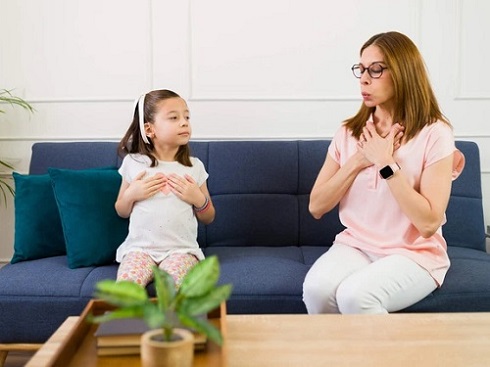
Practice in advance
Every time I write the last line of homework and find that I have written something wrong, I will be anxious. Twice I directly knead the notebook into a ball.
Try this: Discuss with him when you are in a good mood on the weekend: “Next time you write the penultimate line, first click on the corner of the notebook, and then stand up to drink saliva. Come back and write the last line after drinking. He agreed. I forgot several times in the first week, and one day in the second week, I ran over and said, “Mom! I wrote it wrong just now, but I didn’t rub the notebook! I’m going to drink water!” Those ten seconds of drinking water broke the chain of “writing wrong → anxious”.
Every time he said, “It’s time to collect the toys”, he began to cry and play tricks, making the family a fuss.
Try this: Make an appointment in advance: “Next time mom says ‘there are five minutes left’, and then count down five. Every time you count one, you will receive a toy. Five, four, three, two, one.” After trying a few times, he really followed the rhythm of counting and looked up at me, as if he was waiting for praise. Crying is at least 80% less.
He was laughed at by his classmates at school and was anxious. Once he almost hit someone, and the teacher called.
Try this: role-playing at home, I make fun of his classmates. Agreed: “Next time you are laughed at, put your hand in your pocket and pinch it three times, and then say to the teacher, ‘I’m going to the toilet’, stay in the toilet for a minute and come back.” He practiced several times. Later, the teacher told me that he really used this trick. He didn’t hit anyone. He went to the toilet by himself and was fine when he came back.
Write at the end
Yesterday, my daughter slammed the door again. This time, the painting she had painted all afternoon was damaged by her brother, and the paint was everywhere. She stayed in the room for about ten minutes, and then came out with a piece of paper in her hand. There is a cracked heart on the paper, and it is written crookedly next to it: “My mood today is: sad and angry. I need a hug.”
I hugged her. Then I asked her where the method came from. She said, “You taught me. You can draw it when you say you are angry.
At that moment, I was glad that I really helped her.
We can’t give them a world that will never be hurt. But we can give you a toolbox. I have tried each of the above three methods and nine scenes myself.
You can choose a scene that most looks like your child and start trying. No more, one is enough.