Many parents start wondering how to develop curiosity in their children. This usually happens when they notice their child gradually stops asking questions. A few years ago, their child asked about everything.
Why do worms come out after rain? Why does the moon seem to follow the car? Why do birds suddenly go quiet before a storm? Then, little by little, those questions fade into “I don’t know.”
In many cases, children are still curious. They’ve simply become more focused on getting the “right” answer, afraid of being wrong, or too used to adults answering quickly.The good news is that curiosity often grows when we give children more space to wonder, explore, and think for themselves.
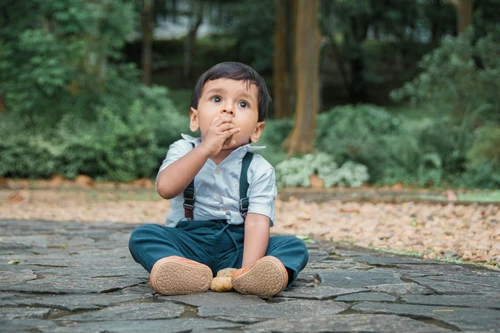
Don’t Rush to Answer Your Child’s Questions
Children become less curious when they feel every question has only one correct answer.
Many parents unintentionally dim their children’s natural curiosity.
Signs Your Child’s Curiosity Is Being Suppressed
• They stop asking follow-up questions
• They become overly focused on getting the “right” answer
• They say “I don’t know” quickly
• They avoid guessing or exploring ideas aloud
I once saw a little boy squatting by the roadside watching earthworms after the rain. “Why do they all come out when it rains?” he asked his dad. Without looking up from his phone, the father replied, “Because the ground’s wet.” The boy quietly said okay and soon lost interest.
By the time adults notice a child has stopped asking questions, that shift has often been happening for a while.
Developmental psychologist Alison Gopnik argues that children learn through guessing, observing and testing ideas — not simply receiving answers.
So rather than explaining right away, try these approaches:
· Ask what they think the reason might be
· Encourage them to share their guesses freely
· Turn questions into exploration, not a quiz
Examples: “Why do you think earthworms only come out when it rains?” “Let’s check again next time it rains, shall we?”
Children become more curious when conversations feel open-ended instead of constantly corrected.
Most kids stop asking questions. It’s not because they lose curiosity. It’s because they feel adults have little patience for their endless “whys.”
A gentle note: True curiosity often sparks in moments adults deem trivial.
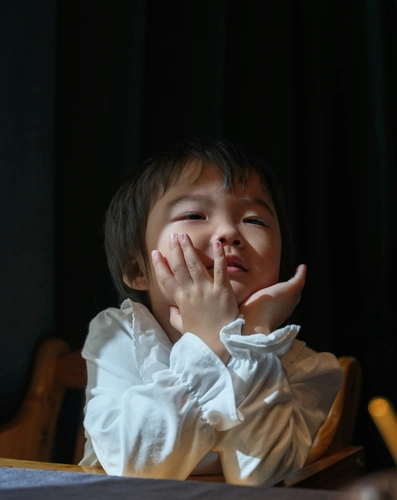
Turn Daily Life into a Game of Discovery
Curiosity grows faster in ordinary conversations than in carefully planned lessons.
Not long ago, I overheard a girl at the supermarket asking why milk was always placed at the back shelf. Her mum brushed the question aside and hurried her forward. It reminded me how often children’s curiosity disappears in ordinary moments.
Many parents think curiosity needs big activities. They believe it only comes from science experiments, museum trips, or expensive classes. In truth, it thrives in everyday moments. Curious children are usually not the ones with the most answers. They are the ones who keep noticing things other people ignore.
Child psychologist Jean Piaget believed children learn best by exploring and figuring things out themselves. When adults explain everything too quickly, kids have less space to wonder and think on their own.
When questions come up, send them back to your child instead of answering immediately. For instance: “Why do you think supermarkets put candy right by the checkout?” “Why is the ground wet here but dry over there?” “Why do birds seem to sing less before it rains?”
You do not need to know every answer. Sometimes saying, “I’m not sure either. What do you reckon?” will keep them thinking.
Over time, I’ve noticed that the most curious children are not always the ones with the most knowledge. They are simply those who keep observing, keep asking, and never get shut down for having too many questions.
A gentle note: Curiosity rarely grows in overly formal, lesson-like settings. It flourishes in relaxed, natural conversations where kids feel free to speak their minds.
Don’t Cut Short a Child’s Interest — Deep Learning Begins with Passion
Deep curiosity usually begins with one intense interest, not many shallow ones.
Last winter, I had dinner at a friend’s house. Her seven-year-old son had become utterly obsessed with subways back then.
It was more than a casual liking. He spent time figuring out why some subway seats run sideways and why different lines have different colours. Over dinner, he rambled about subway routes and analysed which lines offered the fastest transfers.
Halfway through his talk, his dad laughed and interrupted him. “Why do you go on about subways all the time?” The boy froze, stared down at his rice, and barely said another word for the rest of the meal.
This moment stayed with me. Many adults become uncomfortable when children obsess over one topic for too long. But deep curiosity often begins exactly this way. Howard Gardner argued that strong interests help children sustain attention — and sustained attention is the foundation of deep learning.
Real curiosity often starts with one strong interest, not lots of shallow ones. A child who talks endlessly about trains may be learning far more than adults realize.
Instead of steering them away from their hobbies, build on their interests.
· If your child loves insects, watch ants together and see if they move their nests before rain.
· If they are fascinated by dinosaurs, look up fun questions like why T. rexes have such tiny forelimbs.
· If they draw cats nonstop, chat about why cats suddenly race around the house at night.
These seemingly unimportant topics are often when kids engage in the most active learning.
Children almost never lose curiosity because they like something too much. What happens far more often is that they stop sharing their passions after repeatedly hearing, “Stop wasting time on this stuff.”
A gentle note: Hobbies and interests are not distractions from learning. They are windows through which children understand the world.

Final thoughts
Many children haven’t lost their curiosity. They’ve simply grown used to a world that prioritizes right answers over questions with no clear solution.
Kids are born curious about the world. They’ll suddenly kneel down to watch ants, or lie awake pondering questions adults see as pointless.
You don’t have to have all the answers ready.
Sometimes a simple line like: “That’s an interesting thought. What do you make of it?” is more than enough.
Research & Expert Insights
- Alison Gopnik — Research on children’s learning, exploration, and curiosity
- Jean Piaget — Cognitive development theory and learning through exploration
- Howard Gardner — Research on interests, motivation, and deep learning
FAQ
What causes a child to lose curiosity?
Many children do not actually lose curiosity. More often, they stop expressing it after being interrupted too often, rushed toward correct answers, or made to feel their questions are unimportant.
Can too much screen time reduce curiosity?
It can, especially when children spend more time consuming than exploring. Curiosity usually grows through observation, conversation, imagination, and hands-on experiences.
What if my child rarely asks questions anymore?
That does not always mean they are uninterested. Some children stop asking questions because they fear sounding wrong or feel adults are too busy to listen.
