Last week, I took my daughter to a birthday party. The other kids ran in right away and started playing with balloons and chasing each other. But she held my hand tightly and stood by the wall watching for nearly twenty minutes. Another mom next to me whispered, “Is she a little shy?” I nodded, but inside I was thinking, “She’s not like this at home.” To be honest, my heart sank a little. Not because I was upset with her, but because I started worrying — will she always be like this?
I am sure many parents have had similar experiences. Your child is lively and outgoing in familiar settings but becomes quiet and withdrawn in new places. You might wonder: Is there something wrong with my child’s social skills? How will he ever make friends?
These concerns are very common. Shy children can learn to socialize successfully, but they usually need smaller, lower-pressure opportunities to build confidence first.
Is It Normal for Children to Be Shy?
Common Signs of Shyness in Young Children
Many parents notice that their child sometimes hangs back or hesitates when meeting new people. This is fairly common in young children.
Some kids go to a new playground and stand aside and watch for a while before they feel safe enough to play. Others are talkative at home but go quiet once they step outside. These behaviors are not necessarily problems. Rather, they often reflect a child’s cautious approach to the world around them.
Observations in child development suggest that a significant number of young children go through such phases, which are linked to how their brains mature and how they naturally respond to uncertainty.
The Difference Between Shyness and Introversion
I often hear friends say, “My child is too introverted, what should I do?” But shyness and introversion are not the same thing. The table below can help you tell them apart quickly:
| Aspect | Shy Child | Introverted Child |
| Core Characteristic | Wants to participate but feels nervous or afraid | Does not need much social interaction; feels more at ease alone |
| Social Desire | Genuinely wants to make friends, but anxiety gets in the way | Not particularly eager to socialize; feels drained afterward |
| Energy Source | No strong preference; mostly depleted by nervousness | Gains energy from quiet time and being alone |
| How to Support | Needs practice and low-pressure opportunities to reduce anxiety | Does not need “fixing” — only needs respect for their natural rhythm |
In simple terms, introversion is more about preference, while shyness involves wanting to connect but feeling blocked by fear.
Understanding this difference matters because helping a truly introverted child often means respecting their social rhythm, whereas helping a shy child usually involves easing that specific tension around social entry.
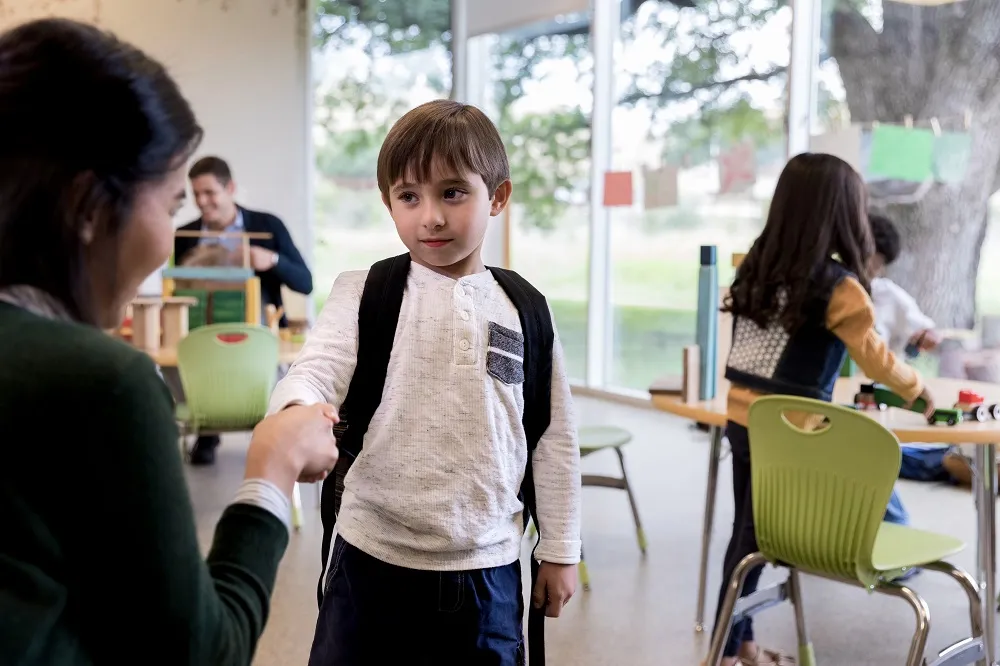
Why Do Some Kids Struggle Socially
I’ve asked myself this so many times. Here’s what I’ve learned from watching my daughter and talking to other parents.
Every kid is different. But a few things come up again and again.
Natural temperament. Some kids are just wired to react strongly to new things. My daughter was like that as a baby — she cried when someone new held her. That didn’t go away. It just showed up differently as she got older.
Lack of practice. If a kid spends most of their time with family, being suddenly placed in a group of same-age kids can feel overwhelming. Social skills need practice. Just like riding a bike.
Fear of messing up. Some kids worry about saying the wrong thing or getting rejected. I once heard my daughter whisper to herself, “What if they say no?” That’s when I got it — she wasn’t unwilling to play. She was afraid of being rejected.
The good news? None of this means something is “wrong” with your kid. It just means they need a slightly different path.
Signs Your Child Needs Help Socializing
Some children are shy but still slowly engage over time. Others show signs that they may need extra support in social situations.
Common signs include:
- Avoids peers every day
- Watches other children but never joins in
- Wants to make friends but feels scared or hesitant
- Gets upset or anxious before social events
If these patterns continue over time, it may be a sign that your child needs more structured support to build social confidence.
When Shyness Becomes a Concern
Most shy children are simply slow to warm up. They may observe first, feel unsure at the beginning, but eventually join in once they feel safe.
This is usually part of normal development and does not require concern.
However, it becomes more important to pay attention when a child:
- Avoids most social interaction over a long period
- Rarely or never engages with peers even in familiar settings
- Shows emotional distress such as fear, frustration, or withdrawal in social situations
The key question is not whether a child is shy, but whether shyness is interfering with daily life.
If a child is able to participate gradually and shows curiosity toward others, they usually just need time and gentle encouragement. If they feel stuck or distressed, additional support may be helpful.
How to Help a Shy Child Socialize (Main Focus)
Helping a shy child does not require complicated techniques. The key is getting the direction right. Below are three main strategies.
Start with Low-Pressure Social Opportunities
1. Start with low-pressure social opportunities
Pushing a shy kid into a loud birthday party right away? Don’t do it. It usually makes things worse.
What worked for us:
We started with one-on-one playdates. Just one other kid. At our house, where my daughter felt safe.
I also learned to let her watch first. She was really scared of a new art class. I was pretty anxious too, honestly. But I held back. Instead of dropping her off directly, I asked a neighbor’s kid she already knew to go with her. When we got there, I let her stand at the door and watch for fifteen minutes. I didn’t push. I didn’t say “go play.”
Later, she walked over on her own and sat next to that kid. She painted a picture that afternoon. On the way home, she said, “I want to go again.” I felt so relieved.
If one-on-one still feels like too much:
Try “parallel play.” Two kids in the same room, playing separately. No pressure to interact. A lot of preschool teachers use this. It works.
2. Practice social skills at home
This was a game-changer for us.
Here’s what I learned — if a kid practices a skill at home with zero pressure, it feels way less scary when they need to use it for real.
Our favorite trick — role-playing:
My daughter and I play “let’s pretend we’re meeting for the first time.” She pretends to be a new kid. I pretend to be another kid. We practice saying: “Hi, my name is… Can I play with you?”
The first few times, she whispered it. I could barely hear her. But I smiled and said, “You did it!” After a few rounds, she got louder. Then one day at the park, she walked up to a girl playing in the sandbox and said those exact words. The girl said yes. They played for half an hour. I stood there watching, and honestly, my eyes got a little teary.
Other small ways to practice:
- Have your kid say “thank you” at the grocery store checkout
- Let them ask a park attendant for a map
- Practice “excuse me” when someone’s in the way
Keep it tiny: Pick one skill per week. Just greetings. Just saying “thanks.” Once they get it, move to the next one.
3. Build confidence, not perfect performance
This was the hardest lesson for me.
I used to watch how my daughter did — did she say the right thing? Did she make a friend? I was focused on the outcome.
What I learned to do instead — focus on whether she tried.
If she said “hi” in a tiny voice? That counts. If she stood near another kid for two minutes without running away? That counts.
Praising the attempt changes everything. Your kid starts to believe that trying is a win by itself.
Another thing that works — use their interests:
I know a mom whose son wouldn’t speak in group activities. But he loved dinosaurs. She was pretty worried at first. Then she came up with an idea. She set up a playdate with another boy who also loved dinosaurs.
They talked for an entire afternoon about dinosaur toys. She told me that night her son lay in bed and said, “Mom, I guess I can talk to other kids just fine.” She said she almost cried.
Set tiny goals that are almost guaranteed to succeed:
- Today’s goal: Make eye contact with one kid and smile
- This week’s goal: Stay at the playground for ten minutes without hiding behind me
Small wins add up. I’ve seen it happen.
A simple way to apply everything above is to start small. Begin with one-on-one playdates in a safe environment. Practice simple social phrases at home through role-play. During social situations, focus on effort rather than outcome. After each experience, gently acknowledge small steps your child took. Over time, gradually increase social complexity by adding more children or new environments. Progress may be slow, but consistency builds confidence.
Common Mistakes Parents Should Avoid
1. Labeling the child as shy in front of others
Parents sometimes say “my child is shy” with good intentions, perhaps to explain why their child is hesitant. But children overhear this and may internalize the label, which can make it harder to change. I later realized that every time I explained for her in front of others, she was listening.
2. Forcing social interaction
Pushing a child to greet someone or insisting they join a game may seem helpful in the moment, but it often increases their anxiety about social situations. I used to urge her, “Go on, go play!” But she only shrank back more. So I stopped.
3. Overprotection
Some parents, feeling bad for their child, step in and handle every social conversation — for example, asking another child directly, “Can you play with my child?” While this relieves immediate awkwardness, it also takes away the child’s chance to practice. I admit I did this too, but later I realized she wasn’t learning anything.
A better approach is to stay nearby for support while leaving the initiative with the child. You can encourage them with a look or a gesture, or agree on a “help signal” beforehand — a way for the child to safely step back when they feel overwhelmed.
When Professional Help Might Be Needed
If a child’s shyness has reached a point where it significantly interferes with daily functioning — such as refusing to go to school because of social fears, having no peer interactions for an extended period, or experiencing frequent physical complaints like stomachaches or headaches — then seeking a professional opinion is reasonable.
Another situation is when shyness comes with obvious distress, such as a child who cries or throws a tantrum for a long time before every group activity.
Perspectives within child mental health suggest that when social avoidance behaviors persist for a long time and clearly go beyond what is typical for a child’s age, parents can consider talking to a pediatrician or a child psychology professional. This does not mean something is “wrong” with the child. It simply means they may benefit from support that is more specifically tailored to their needs. Getting help early often makes it easier for children to make social progress.
Frequently Asked Questions
Q: My child is shy and won’t play with others. Should I be worried?
A: Not necessarily. A lot of young kids go through this. If your kid eventually warms up and seems generally happy, they’re probably fine. If they’re really upset or avoiding all social contact for a long time, that’s when you might want to look into getting some support.
Q: How can I help my shy child make friends?
A: Start small. One kid. One hour. At your house. Practice simple social scripts at home first. Praise attempts, not outcomes. Use your kid’s interests — a shared love of dinosaurs or trucks can open doors that social skills can’t.
Q: How do I help my shy child join group activities?
A: Don’t start with a big group. Start with observation. Let them stand on the sidelines and watch. Then try a very small group of familiar kids. Gradually increase the size and the newness of the setting. Go at their pace, not yours.
Q: What are some social skill strategies for shy but capable kids?
A: Role-play at home. Break skills into tiny pieces — just greetings this week, just asking for a turn next week. Use parallel play as a bridge. Set very small goals that are almost guaranteed to succeed. And always praise the effort, not the result.
Q: Why is my child shy around other kids but not at home?
A: This happens to a lot of parents, even if they don’t always talk about it. Home feels safe. There are no unknowns. Other kids are unpredictable. Your kid might worry about being rejected or not knowing what to say. This doesn’t mean something is wrong. It just means they need more practice in low-stakes settings.
Q: What parenting mistakes should I avoid with a shy child?
A: Three big ones — labeling them as shy in front of others, forcing them to interact before they’re ready, and stepping in to do the social work for them. Instead, offer support from nearby and let them take small risks on their own.
Final Thoughts
Shyness isn’t a lack of ability.
Some of the kindest, most thoughtful kids I know are shy. They notice things other kids miss. They care about how other people feel.
Back to the question you started with — my kid is shy and won’t play with others. What should I do?
Here’s my answer after years of trial and error. Use safe, small, interest-based steps. Let your kid go at their own pace. Praise the trying, not the outcome.
Your patience matters more than any trick or technique.
That small step you help them take today? That might be the beginning of a lot of bigger steps tomorrow.