Quickly Answer: When a teenager is struggling academically, the natural instinct may be to push harder. But most of the time, what helps most is stepping back, listening first and then addressing the real issue underneath—not just the grades.
If you’re reading this, chances are you’ve noticed something shift. Your teenager used to keep up with assignments, more or less. Now grades are slipping, homework sits unfinished, and every conversation about school seems to end in frustration.
Maybe you’re watching a teenager struggling in school and feeling stuck. You’re not alone. Many parents find themselves navigating this with a teen struggling academically, watching a teenager getting bad grades or a teenager falling behind in school—and wondering where they went wrong.
Here’s what I’ve learned from parenting (and from watching friends and family go through the same thing): most teenagers don’t want to fail. When a previously capable student starts slipping, something else is usually going on underneath.
Why Is My Teenager Struggling in School?
If you’ve been asking why your teenager is struggling in school, you’ve probably also wondered why is my teen failing school or why is my teenager getting bad grades. Some parents even ask, why has my teenager stopped caring about school—because that’s often what it looks like from the outside.
The honest answer? It’s rarely one thing. Here are some common reasons a teenager falling behind in school may be having trouble.
Academic pressure
Many teens feel crushed by expectations—their own, yours, or the school’s. Instead of motivating them, that pressure can sometimes freeze them. They stop trying because trying and still falling short feels worse than not trying at all.
School anxiety
For some teens, school becomes a source of genuine fear. Worries about tests, speaking in class, or social situations can make getting through a school day exhausting. Anxiety doesn’t always look like worry; often it looks like avoidance, irritation, or physical complaints like stomachaches.
Depression
Depression in teenagers often shows up as low energy, lack of interest, and difficulty concentrating—all of which directly affect school. When a teen seems “lazy” or “checked out,” it’s worth considering whether something deeper is going on.
ADHD or learning difficulties
Some teens have managed to compensate for undiagnosed ADHD or a learning difference for years. Then school demands increase—more complex reading, longer-term projects, independent organization—and suddenly they can’t keep up.
Social challenges
Friendship struggles, bullying, or feeling isolated can make school feel unbearable. When a teen is spending all their emotional energy just getting through the social parts of the day, academics often slip.
Burnout and lack of motivation
Teens today are often overscheduled and exhausted. After years of pushing, some simply burn out. What looks like a teenager not motivated in school may actually be a teenager who has run out of steam.
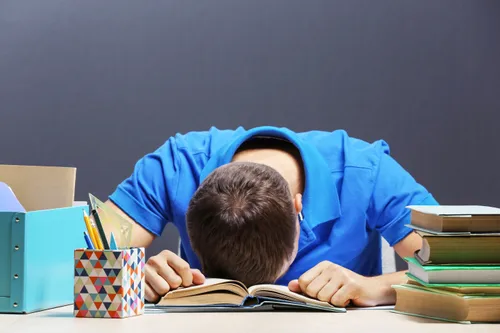
Signs Your Teen May Be Struggling in School
It’s not always obvious. Some signs your teenager is struggling in school are easy to spot, but others are quieter. Here’s what to watch for if you’re noticing signs that a teen is falling behind academically — or if you‘re looking for general warning signs of a struggling student.
- Declining grades – Especially if the drop happens across multiple subjects rather than just one.
- Missing assignments – More zeros in the gradebook than completed work.
- Avoiding school – Frequent requests to stay home, nurse’s office visits, or “forgetting” materials.
- Increased irritability – Snapping when you ask about homework or school.
- Trouble concentrating – Taking much longer than usual to finish basic tasks.
- Sleep changes – Either sleeping much more than usual or having trouble sleeping at all.
If several of these sound familiar, it may be time to step in—gently.
How to Help a Teenager Struggling in School
This is the part parents really want: how to help a teenager struggling in school in a way that actually works.
Start with Understanding, Not Criticism
If you’ve been trying to figure out how to talk to a struggling teenager, the single most important thing is to approach them with curiosity, not judgment.
Try something like: “I’ve noticed school seems harder lately. I’m not here to yell at you. I just want to understand what’s going on.”
That small shift changes everything. When you’re learning how to help a teenager who hates school, remember that hate is almost never the real problem. It’s usually fear, exhaustion, or feeling stuck.
Identify the Root Cause
You can’t fix what you don’t understand. If you‘re asking why your teenager has no motivation for school, the answer might be different than you think.
One parent I know assumed her son was being lazy. It turned out he couldn’t read the grade-level texts—not because he wasn’t smart, but because no one had ever identified his dyslexia.
For a teenager not motivated in school, start by ruling out the invisible barriers: vision or hearing problems, learning differences, anxiety, depression, or sleep disorders. A conversation with your teen’s pediatrician or school counselor can help narrow things down.
Create Small, Achievable Goals
Big problems feel overwhelming. Motivating a teenager who‘s struggling in school often comes down to making the task feel smaller.
Instead of “bring up your grades,” try: “let’s pick one missing assignment to finish this week.” Instead of “pay attention in class,” try: “write down one thing you learned today.”
Small wins build momentum. When you’re figuring out how to get a teenager back on track in school, start so small it almost feels silly. That’s often where real progress begins.

Support Healthy Habits That Improve School Performance
You’ve probably heard this before, but it’s worth saying again: Improving a teenager‘s academic performance isn’t always about studying harder. Sometimes it’s about the basics.
Sleep – Most teens need 8–10 hours. Almost none get it. Chronic sleep loss affects memory, focus, and mood. You can’t out-study bad sleep.
Screen time – Phones and social media are designed to be distracting. Simple boundaries (no phone in the bedroom overnight, phone in another room during homework) can make a real difference.
Study routines – Not all teens know how to study effectively. Many need to be taught basic skills: breaking tasks into chunks, using a planner, starting early instead of cramming.
Exercise – Movement helps regulate mood and improves focus. Even a 15-minute walk can shift a teen’s mindset before homework.
Stress management – Healthy habits for students include knowing how to take breaks, how to say no to overscheduling, and how to ask for help before things spiral.
These aren’t magic fixes. But they build a foundation that makes helping teens succeed in school much more possible.
What Parents Should Avoid
It helps to know what not to do. Many parents ask, should I punish my teenager for bad grades? Generally, punishment for grades alone tends to backfire.
Constant criticism – Pointing out every low score or missed assignment usually increases shame and decreases effort.
Comparing siblings – Even subtle comparisons (“your sister never had this problem”) can damage motivation and trust.
Over-focusing on grades – When the only feedback a teen hears is about the letter grade, they may stop seeing school as a place to learn and start seeing it as a place to perform.
Assuming laziness – When a teenager doesn’t care about school, it’s easy to assume they’re just being difficult. But most teens care more than they show. What looks like apathy is often self-protection.
So what should you avoid when responding to poor grades? Avoid lectures, threats, and taking away everything they enjoy. Those approaches may produce short-term compliance, but they rarely create lasting change.
There’s no perfect formula. If you do one thing today, put down the criticism and really listen. Take it slow—change rarely happens overnight.
Sources:
National Association of School Psychologists – information on academic stress and mental health
American Academy of Pediatrics – guidance on teen sleep, screen time, and school performance
Child Mind Institute – resources on learning differences, ADHD, and anxiety in school settings