“I sat in the waiting room, holding a small paper cup of water. The girl next to me was flipping through her resume-loud enough to hear every page turn Across from her, someone talked on the phone. Not loud, but I could hear every word. Then my heartbeat grew louder in my ears. One thought kept looping: What if I freeze up in there?
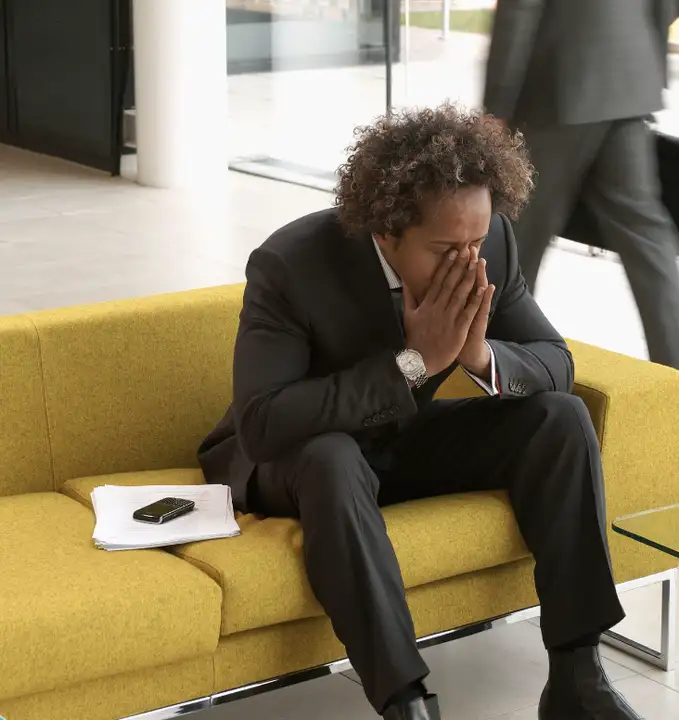
If you’ve ever felt that way, this one’s for you.
The methods below are broken into three layers. Action. Script. Mindset. You put them together, and you’ll find out you don’t need to overcome anxiety. You just need to move your body, say the right words, and think the right thoughts.
Method One: Feet on the Ground
You’re sitting in the waiting area. The person before you just got called in. You’re next. Your hands go cold. The horror movie starts playing in your head.
Action:
Put both feet flat on the floor. Feel where the soles of your feet meet your shoes. Place your hands flat on your thighs, palms pressing lightly against the fabric. Notice the texture. Slowly straighten your back, as if a string is pulling you up from the crown of your head.
Script:
Say to yourself: “I’m ready.” You don’t have to say it out loud-just loudenough for yourself to hear. No “should be.” No “maybe.” Just those two words.
Mindset:
I don’t have to be calm. I just have to sit up straight. Sitting up straight is something I can do anytime. It doesn’t take courage.
Method Two: Repeat the Question
The interviewer asks something you never prepared for. Your mind goes
blank-you can’t think of a single word.

Action:
Take your hands off your knees. Interlace your fingers and rest them gently on the table. Tilt your head slightly and look up at a fixed point, like the corner of the ceiling. Hold for three seconds.
Script:
“Let me think about that for a second.” Pause two seconds. Then say: “If I understand correctly, you’re asking about…” and repeat the question in your own words. “Is that right?” If you truly don’t know, say: “I don’t have a good answer for that right now. But I’ll look into it and send you a follow up email.”
Mindset:
The interviewer isn’t trying to stump me. They’re watching how I handle not knowing something. The moment I say “let me think about that,” I’m already showing a mature way to respond.
Method Three: Start with a Buffer Sentence
The interviewer says, “Tell me about yourself.” You open your mouth, say the first word, and your voice shakes.
Action:
After the first three words of your first sentence, pause briefly. Swallow naturally. Place one hand gently on your stomach. Feel your belly push against your hand as you breathe.
Script:
Use a fixed opening line: “Sure. Let me give you a quick overview of my background.” Say that first. Then go into your prepared answer.
Mindset:
My goal is to finish this sentence, not to impress anyone. Impress and finish are two different targets. Impress makes me nervous. Finish is concrete. Doable.
Method Four: Close the Loop
The interviewer says, “That’s all we have for today. Do you have any questions for us?” Your mind goes completely blank. You have no idea what to ask.
Action:
Lean forward just a little. Take your hands off the table and put them back on your thighs. Breathe in slowly through your nose. As you breathe out, nod your head once.
Script:
“Could you walk me through the next steps I should prepare for?” You don’t need any special knowledge for this question. You don’t need to prepare it ahead of time. It works in any interview.
Mindset:
I don’t need to ask a brilliant question. A normal question is fine. They’re not testing me. They’re handing me a chance to earn extra points. Any job-related question gets me that point.
People sometimes ask me, ‘Do you still get nervous before interviews?Yes. My feet still go cold before I walk in. The first sentence of my self-introduction still shakes. But after using these methods, those feelings stopped being alarms. They became background noise.
Next time you walk into the waiting area, finish that cup of water. Stand up with your feet planted firmly,and walk in. Your body will know what to do.
The nerves accompanied you the entire way-but they never took the wheel.