I’m writing this right after pulling my thirteen-year-old son away from his iPad for dinner. The way he looked at me — like I just canceled his birthday.
I know what you’re thinking. Another parent complaining about screen time. But stay with me — I’m not here to tell you how to turn off the router. I’m here to say something we all know but almost no one says out loud:
The real impact of screen time on teens isn’t just about the hours spent staring at a screen.
First, the effects. It blurs the line between being bored and being anxious.
It’s not just about bad eyesight or short attention spans. One of the real effects of screen time on teens is that they don’t know how to be bored anymore — because the second the screen goes dark, the voice inside starts: You’re not good enough. Your friends are laughing at you in another group chat. Your life hasn’t even started and you’re already falling behind.
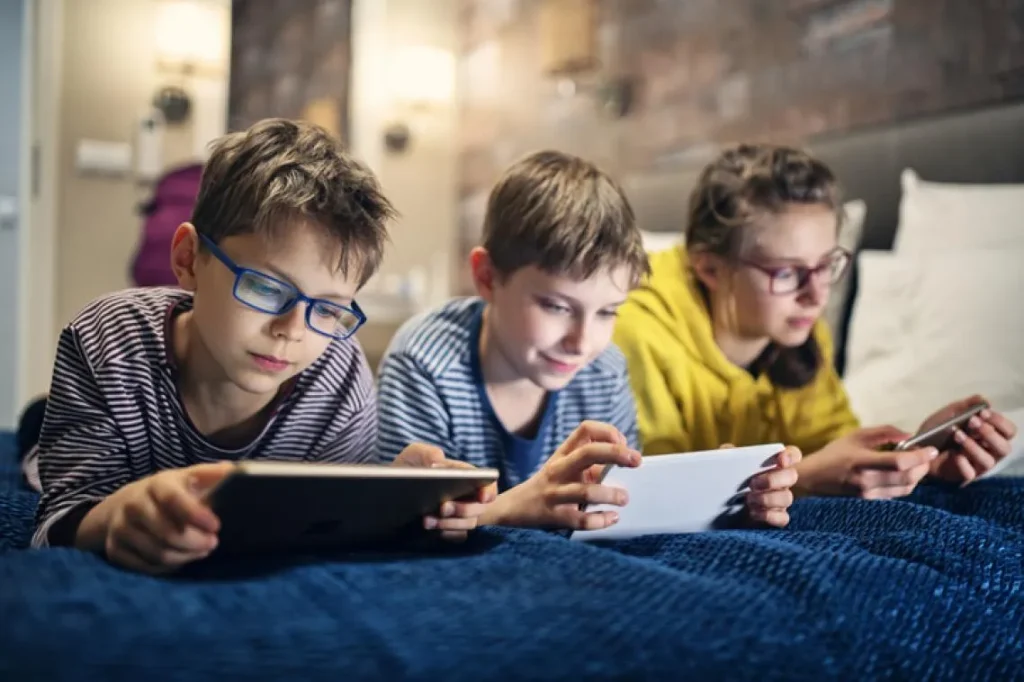
Over the past three years, I sat down with seventeen teenagers in Ohio. No parents in the room. They listened. They opened up. And what they told me: the screen isn’t what’s making them slow. The screen is their band-aid.
A fifteen-year-old girl said: “Three hours on TikTok — I know it’s stupid. But when I’m not scrolling, I have to sit with the noise in my head.”A freshman boy said he stays up playing games until 2 a.m. “Not because the games are fun. Because it’s the only place where I don’t have to think about who I’m supposed to pretend to be tomorrow.”
The second effect is quieter.They’ve lost the ability to slowly realize they don’t like something.
Remember being fifteen? You tried guitar for three weeks, realized you didn’t like it, and dropped it. That process was clumsy but crucial. You needed time to figure out I don’t actually like this.Screen time takes that away. A fourteen-year-old told me: “I watch everything at 2x speed. If something doesn’t grab me in the first five minutes, I feel like it’s wasting my time.”
You hear the problem? They’re not consuming content. They’re rushing through it. Another effect of screen time on teens: it’s not just shorter attention spans. It’s losing the patience to slowly figure out whether something matters. And that patience — that slow feeling-out — is the only thing that helps you, as an adult, know what you love, who you want, what work actually fits.
Why?
Not because phones are too fun. Because adults built a world and dropped kids into it — then expected them to act like they were never thrown.
Teenagers get judged for seven hours a day at school. Grades. Rankings. The look in a teacher’s eyes. The sideways glances from classmates. When they come home, the screen is the only place left where no one is grading them. You think they’re escaping reality? Think again. They’re looking for something reality doesn’t give them: a stretch of time where they don’t have to prove themselves.

And here’s the part that might sting: we adults don’t know how to handle boredom either.
You’re on the couch, scrolling. You tell yourself just five minutes. Forty minutes later you look up and say why are you still on your phone — what do you think your kid just learned? The real issue with screen time — our own adult fear of empty space, of sitting still — has spread to them like a cold.
So what do you do?
I’m not giving you a ten-step manual. Just one thing. One.
If you do only one thing tonight: put your own phone in the middle of the table, in a basket. Then look at your kid and tell them the truth:”I can’t control it either. Let’s try no screens after 7 p.m. together. Not because screens are bad. Because I want to know what we talk about when we’re not looking at them.”
The effects of screen time on teens won’t disappear tonight because you unplugged the router. But if you put your own screen down first — even just for one meal — you’re telling him something more important than any parenting article:
This is hard for me too. But I want to try it with you.
That matters more than a hundred guides on “how to control your kid’s screen time.”
Trust me. That’s where it starts.