When your child was anxious about the school exam, did you hear his voice with fear: “I can’t do it, what should I do?” There are also children who obviously want to attend the family party, but they feel uneasy because of the strange environment and the conversation of adults. As soon as they get home, they lock the door and hide themselves in a safe space. Anxious children are often more susceptible to the external environment. As parents, we may not know how to help them, and sometimes we even inadvertently do things that make them more anxious.
I have summarized five things not to do here to help you better understand how to deal with your child’s anxiety.
Don’t ignore children’s emotions
Don’t treat children’s anxiety as “making a big big off”. That’s their real feelings and troubles.Many parents tend to ignore their children’s anxiety signals, which will make children feel that their feelings are not valued and understood, and then close their hearts and are no longer willing to express their emotions, which will eventually lead to the aggravation of anxiety.
You can do this:
For example, if a child says, “I don’t want to go to school, I’m afraid.” Don’t casually say “Don’t be pretentious, go quickly”. You can squat down and say to him, “I know you’re afraid. Tell mom, are you afraid of the exam or getting along with your classmates?” ; When the child is silent in tears and doesn’t say anything, don’t pretend not to see it, hand over a tissue, sit next to him and say, “I’m with you, say it if you want.”
Don’t use “it’s okay” and “don’t think too much” to deny your child’s emotions. Even if you feel that your emotions are very small, you should see and accept them first.
Don’t deal with anxiety through punishment
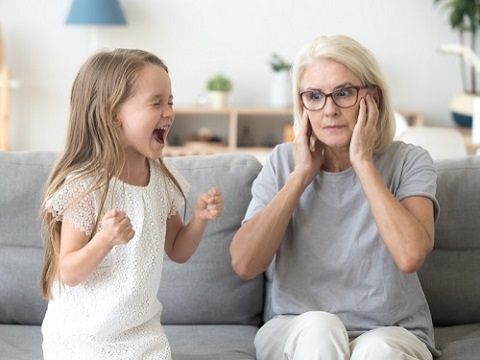
Children’s anxious behaviors, such as biting fingers and skipping school, are essentially ways for them to vent their inner anxiety and seek a sense of security. Many parents will use punishment to forcibly stop these behaviors out of impatience, but this will cause children to have self-denial, aggravate anxiety, and even more extreme evasion.
You can do this:
For example, if a child bites his finger and bleeds because of anxiety, don’t scold him for “I’ll hit you again”, and don’t force him to stop him. Instead, take his hand and say, “Mom, I know you’re nervous. Let’s take a deep breath together, or play with toys for a while to divert our attention, okay?” ; Or if the child skips school, don’t punish him from watching TV. First, ask “is there anything that scares you in school”.
Punishment will only make children escape from emotions, but instead strengthen anxiety behavior. The key is to find the cause of anxiety behind the behavior and guide it patiently.
Don’t overprotect your children
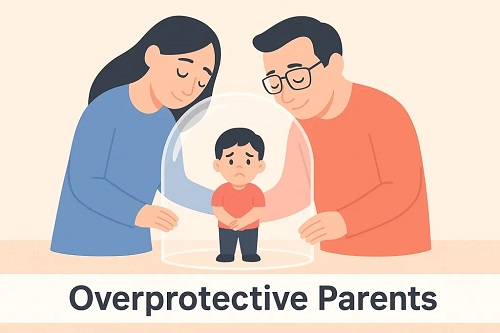
Over-protection will make children lose the opportunity to face difficulties and cope with anxiety, and fail to cultivate problem-solving ability and psychological resilience. In the long run, they will become more timid and vulnerable. In the face of a little setback, they will fall into anxiety, and even unable to deal with small things in life independently.
You can do this:
For example, children are afraid of buying things by themselves, don’t.Don’t always buy for him, but accompany him and say, “Let’s go together. You try to say something to the cashier first, and mom is by your side”; The child is afraid of making mistakes in his homework. Don’t help him write it directly, but say, “Let’s read the questions together. You try to do it first. If you make a mistake, mom will correct it with you.”
Over-protection is not love, but depriving children of the opportunity to grow up. Let go appropriately and let children try slowly to cultivate their courage and resilience.
Don’t criticize children’s emotional expression
There are many ways for children to express anxiety, which may be crying and retreating, or silence and complaining. These are normal ways for them to release their emotions and ask for help. At this time, criticism will make them feel that their emotions are wrong, and then hide their emotions and aggravate the psychological burden.
You can do this;
For example, if a child cries because of anxiety, don’t scold him for “no hope” or “crying for such a little thing”, but hug him and say, “It doesn’t matter if you cry. Mom knows that you’re having a hard time”; the child says “I can’t do it, I’m useless”, don’t criticize him for “you’re just too timid”, but say “it doesn’t matter, let’s take our time, you’re already brave. Dare”.
There is no right or wrong in emotions. Only by allowing children to express their anxiety without criticizing or blaming can they dare to face their emotions.
Don’t blame the anxiety on the child’s own weakness
Anxiety is an emotional reaction, which has nothing to do with the quality of a child’s personality. Parents’ arbitrary labeling and heavy words will seriously damage children’s self-confidence and self-esteem, make them fall into self-doubt, and make it more difficult to get out of anxiety.
You can do this:
For example, if a child tells you that you dare not speak in class, don’t say “you are too timid and hopeless”, but say “Mom knows that you are a little nervous, it doesn’t matter, let’s practice at home first, and it will get better slowly”; the child is afraid of the strange environment, don’t say “why are you so cowardly, you don’t even have this courage”, but say “陌 The living environment is a little stressful. Let’s get used to it slowly together.
Don’t label children as “timid” and “cowardly”. Anxiety is not children’s fault, but they need help and guidance.
Now you should know how to help an anxious child, right? The answer is hidden in your “no”: don’t ignore, don’t punish, don’t overprotect, don’t criticize, don’t label.
Which of these five things are you doing? Even if you only do one thing, it’s worth stopping and giving yourself a thumbs up. Because you work harder than anyone else to take care of an anxious child, but you never say it.
Today, I want to say something to you on behalf of that child:
“Thank you not for turning around and leaving when I was anxious.”