Last Saturday, I stayed up late to watch a drama. I stared at my phone’s black screen for a while, as if I had lost something important. My mind felt blank about everything else.
Later, I figured it out: we develop real emotional attachment to TV characters essentially because our brains can’t tell the difference between “people on the screen” and “people who keep us company.”
Today, I want to talk to you about this. Becoming emotionally attached to TV characters happens for a few key reasons.
Reason 1: Role Substitution
A while ago, I was in a very bad state. I got shot down at work, and my friends were all busy. I had no one to talk to about it. During that time, I was hooked on This Is Us. Every time I saw Jack Pearson — always steady, always supportive — I felt grounded.It’s not that the plot is that good. It’s that I was missing someone in my heart who “will have my back no matter what.” Jack Pearson happened to be sitting in that empty seat.

Benefit: A character can give you a feeling of being accompanied when you’re at your loneliest — but see this companionship as “recharging,” not as a substitute. You can feel healed after watching an episode, but make plans to have dinner with real friends the next day. The character is a crutch — once your feet heal, you need to walk on your own.
Harm: You might unconsciously use the character as a ruler to measure real people around you. Please remember this: a character is written by a screenwriter. A real person is lived and imperfect. The character has never squeezed toothpaste with you, paid your water and electricity bills, or gotten up in the middle of the night to take care of you when you were sick. It’s unfair to compare a script with real life.
Reason 2: Substitute Healing
Jesse Pinkman in Breaking Bad messed up from beginning to end. But in the last episode, he drove away with a big smile on his face. That wasn’t a victory — it was “I finally don’t have to listen to anyone.”My college classmate, who was laid off, said he had watched that clip more than a dozen times. “Jesse Pinkman screamed the ‘enough’ that I couldn’t scream for myself.”
Benefit: This kind of vicarious healing feels very real and offers a gentle kind of strength. When you see the character get better, take a little of that strength and bring it into your own life. Ask yourself, “What’s one small thing I can do today?” It doesn’t need to be big. The character crawls out of the pit. You can just go outside and take a walk.
Harm: The biggest pitfall is “over-immersion” — to the point where you start imitating negative behaviors. Set a boundary. If you find that a show doesn’t lift you up but instead drags you down, turn it off — and call a real person instead. A character can cry with you, but he can’t go to the hospital for you.
Reason 3: Habit Formation
A friend of mine lives alone. She once told me that she spends more time with the six people on Friends than with her own brother. Her brother lives in another state, so she only sees him twice a year. She “meets” Rachel Green and Monica Geller for five hours a week.She said, “I know it sounds strange, but sometimes I just stretch out on the sofa and listen to their voices, and it keeps me from panicking.”
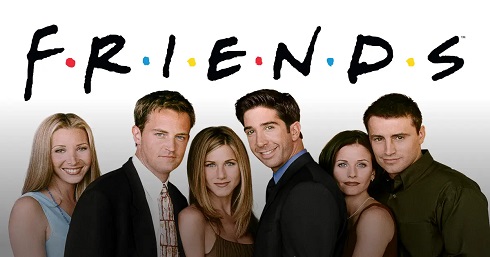
Benefit: This kind of companionship gives you a sense of stability — that “the world hasn’t changed.” Treat this as your “late-night backup plan.” Normally, you should prioritize real-life friends. But when you really have no one to talk to, the show can keep you company for those ten minutes.
Harm: You begin to replace all real-life social interaction with characters. Set a firm red line: real human contact. For example: have a meal with a real person at least once a week, and make a phone call that lasts more than ten minutes. You can watch the show, but don’t go three days in a row without leaving the house. A character is an analgesic, not a nutritious meal.
Finally, I want to tell you a few truths.
None of what I’ve written above is copied from a book.
I was the one who stared at the black screen in a daze in the middle of the night. I was the one who survived with a TV show after getting kicked off a team. I’m also the person who used a character as a crutch — and later got so lost in it that it even affected my relationship with my husband.
I’m not telling you that “this is right” or “this is wrong.” I just want to say: if you’re also crying for someone who doesn’t exist, don’t feel weird. Your brain is just looking for an outlet. If you can feel deeply for fictional things, it means there’s still a tender place in your heart.
Just don’t forget that after you turn off the screen, there are people in the real world worth turning to. Even if there’s only one. Even if it’s just the cashier at the convenience store downstairs who says to you, “Pretty cold today, isn’t it?”
A character will walk with you through the dark. But when dawn comes, you have to step outside on your own.