That sudden shriek from a two-year-old can stop you mid-sentence every single time. I’ve been there many times myself. Then I came across a book called The Whole-Brain Child. It helped me see that most toddler screaming isn’t random—it’s communication. In this article, we’ll walk through why toddlers scream and what you can actually do about it.
Why Toddlers Scream
Physical reasons: hunger, fatigue, teething. When a toddler is hungry, tired, or teething, their ability to cope declines quickly. My own kids were like this—low blood sugar or lack of sleep often showed up first as whining, then as full-volume screaming. It’s not misbehavior; it’s a signal.
Emotional reasons: frustration, attention needs, anxiety. Frustration is huge at this age. They know what they want but can’t always say it. They might scream because a tower of blocks fell, because you’re on the phone, or simply because they feel anxious in a new place. Child development experts say that outbursts are one of the few ways young children can express big feelings before they have the words.
Behavioral reasons: learning control, testing limits. Toddlers are also learning cause and effect. They test limits partly to figure out how the world works. A scream might get a reaction from you—and that reaction teaches them something. I’m not saying they plan it out, but over time, they notice patterns.
Different Types of Toddler Screaming
| Type of Screaming | Typical Meaning / Cause |
| Excited screaming | Excitement, joy, or sensory play |
| Angry | Frustration or disappointment |
| Attention-seeking | Parents are busy |
| Bedtime screaming | Overtiredness or separation anxiety |
What Your Toddler’s Screaming Is Trying to Tell You
- It might be saying, “My body feels off.”
A lot of screaming is simply a physical alarm. If it’s been a long time since the last meal or nap, the scream is probably saying their body is running low on energy. Offering a snack or moving to a quiet spot often works better than any reasoning.
- It might also be saying, “I want that but can’t say it.”
When a child points at a toy on top of the shelf and screams, they’re not being unreasonable—they’re expressing a need the only way they can. Language hasn’t caught up yet, but the desire is already strong. That gap itself is a source of screaming.
- Another possibility is, “I need you to see me.”
Some screams happen when you’re busiest—cooking, on the phone, caring for another child. In those moments, your child may be hoping to reconnect with you. Even a brief eye contact or a simple “I hear you, give me thirty seconds” can sometimes bring the volume down.
- Or it might be saying, “I’m overwhelmed.”
New places, too many people, loud noises, long waits—all of these can overload a toddler’s sensory system. When they can’t process all that input, screaming becomes an emergency exit. This doesn’t always mean you need to “fix” something. Sometimes it just means taking them to a quiet corner for a few minutes.
How to Calm a Screaming Toddler
Immediate calming techniques for toddler screams
When the screaming starts, first check the basics: hunger, diaper, temperature. A lot of screaming stops on its own after a snack, a clean diaper, or moving to a quieter room.
My daughter screamed non-stop during a grocery trip, but after I whispered and offered a snack, she calmed in 2 minutes.
Then try lowering your own voice to a near-whisper. Toddlers often pause their shrieking just to hear you. You can also simply describe what’s happening: “You’re mad because you can’t reach that toy.” Hearing an adult simply acknowledge their feelings helps some children calm down.
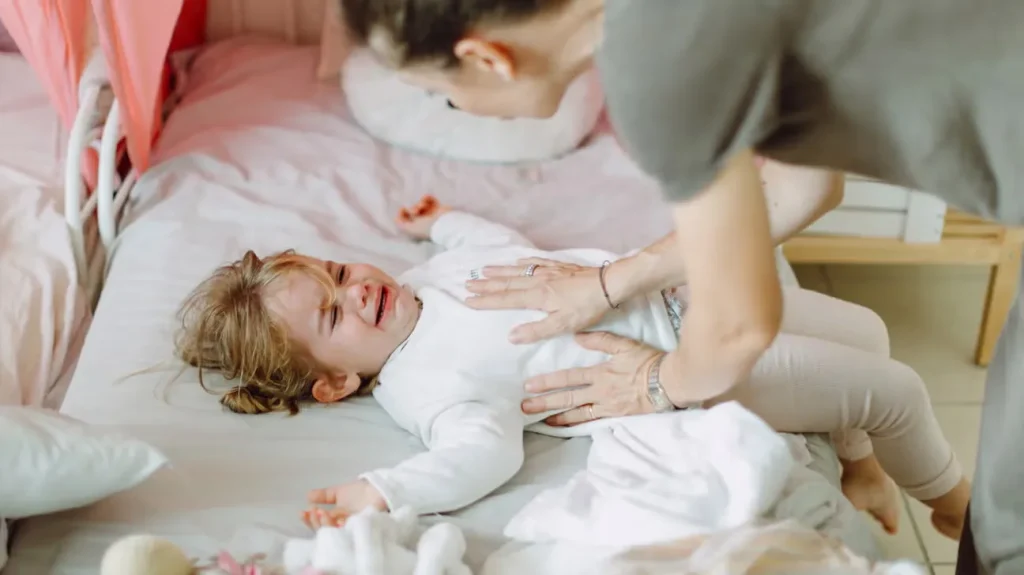
Physical contact helps too—a firm hug or sitting with them on the floor. Sometimes no words are needed. Just placing a hand gently on their back so they know you’re there can be enough.
Distraction works like magic at this age. “Oh look, a bird outside” or pointing to something unexpected can shift their focus enough to let the scream dissolve. But remember, distraction works best when the screaming is just starting. If they’re already too upset, this method may not help as much.
When you meet their need in that moment, you help them feel safe. Over time, that reduces the urge to use screaming to express discomfort.
Behavioral training methods to reduce toddler screaming
Catch them being quiet. When they express a want without screaming—even a small gesture or a single word—respond quickly and warmly. For example, if your child points to their cup and says “water,” you can say “Okay, thank you for telling me nicely” and hand it to them.
This doesn’t mean ignoring the screams. It means giving most of your energy to the behavior you want to see more of. Unless your child is in physical pain, try to give little reaction to screaming. Instead, give your full attention to calm communication. Over time, most toddlers will adjust.
Setting gentle limits also matters: “I can’t understand you when you scream. Show me with your hand.” The first time you say it, they might still scream. But after several tries—combined with you consistently not responding to screaming and only responding to calm communication—they’ll start to get the rule.
Here’s a small tip: play a “pretend screaming” game during calm moments. You pretend to scream, then let your child teach you how to “ask nicely.” Things learned through play are often easier to remember when a real tantrum hits.
Predictable routines to prevent toddler screaming
A predictable routine can prevent a huge number of meltdowns from happening in the first place. Hunger and tiredness build up slowly; a regular snack and nap schedule keeps those triggers away. I’ve learned from experience that if naptime is just half an hour late, the whole afternoon feels off.
You can also teach basic emotion words during calm moments. When they struggle with a toy, say “You look frustrated.” Or point to a character’s face in a picture book and ask “How does he feel?” Over weeks and months, they start recognizing their own feelings earlier—and screaming becomes less necessary.
Giving a heads-up also helps a lot. “We have five more minutes, then we’re putting the toys away.” Then remind them every minute. Many screams happen because you suddenly tell them to stop doing something enjoyable. A warning gives them a mental cushion.
Also, pay attention to when the screaming tends to happen. Does it happen every time you go to the grocery store? Every time you leave the park? Once you spot a pattern, either adjust the plan (like not going to the store when they’re hungry) or prepare ahead (“Before we go into the store, let’s agree: you point to what you want, no screaming”).
When you build these habits into daily life, you’re giving your child a better tool than screaming for handling big feelings.
When Toddler Screaming May Be a Sign of Something More
Most toddler screaming is completely normal.
However, consider talking to your pediatrician if your child:
- screams and rarely uses words after age 2
- frequently hurts themselves while screaming
- suddenly loses language skills
- seems extremely distressed for long periods
- has concerns with hearing or responding to sounds
This does not necessarily mean autism or another developmental issue. It simply means a professional evaluation can help rule out underlying concerns.
FAQ
Is it normal for a toddler to scream all the time?
Yes, within certain phases—especially between 12 months and 3 years. Most toddlers go through this. If screaming happens constantly throughout the day, or continues past the toddler years without changing, mention it to your pediatrician.
At what age do toddlers stop screaming?
There’s no set age, but most children gradually scream less as language improves, typically between 3 and 4 years old. Some children take a bit more time. If screaming is still the main way they communicate past age 4 or 5, a chat with a child development specialist may help.
Why does my toddler scream instead of talking?
Because talking is harder. Speech takes time—muscle control, vocabulary, sentence structure. Screaming is easier and gets an immediate reaction. As their language catches up, screaming usually drops off. Simple words or signs like “help” or “more” can bridge the gap.
Can screaming be a sign of autism?
Screaming alone is not a sign of autism. Many typically developing toddlers scream just as much. But if screaming comes with avoiding eye contact, not responding to their name, unusual repetitive movements, or delayed babbling, bring it up with your pediatrician.
Understanding the reasons behind the screaming—physical, emotional, behavioral—can move you from the exhaustion of “he’s doing this on purpose” to being more of a calm observer. You don’t need to be perfect. If the screaming is constant, affects eating or sleeping, or you just have a gut feeling that something isn’t right, reaching out to your pediatrician or a child psychologist is a smart, caring step.
Sources:
The Whole-Brain Child
American Academy of Pediatrics – Toddler behavior and development
Zero to Three – Understanding tantrums and emotional regulation in young children