When a war is brushed aside with the casual phrase “all quiet,” do we still ask where those who vanished have gone? All Quiet on the Western Front is precisely the kind of novel that cannot be read lightly. The title appears calm, but behind it lies the destruction of an entire generation of young people. In just a few words, it obscures the end of countless vibrant lives and reveals the cruelest truth in war narratives: death can be simplified, even ignored.
The plot of this book is actually quite simple. Paul Bäumer, nineteen years old, enlists in the army alongside his classmates at the urging of his teacher. Before leaving, they even felt a touch of excitement and a vision of “honor.” But once they reached the front lines, everything changed. There were no heroes. There were no miracles. Only the daily grind of the trenches: dodging shells, starving, fighting rats for food, stripping wearable boots from the dead, and waiting in pain for results in the hospital. The time that should have belonged to their youth was gradually consumed by fear and numbness.
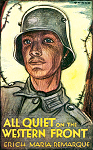
There is a famous exchange in the book. Paul and his comrades discuss: a German farmer and a French worker, who had no prior enmity, are now forced to kill one another on the battlefield?
“We are here to defend our homeland. But the French are here to defend theirs as well. So, who is in the right?”
What is the answer? There is no answer.
“On some desk lies a document signed by someone we’ll never know. And so, an evil that should be despised by all becomes our supreme goal for years on end.”
They gradually realize that this war was not their choice. But those who decide on war have never been in the trenches. When I read this, I suddenly fell silent. Because this isn’t just a question from the book; it seems to have always existed. A hundred years have passed; shells have been replaced by missiles, and trenches by drone control stations, but that question has never changed: Who exactly decides to send one group of people to kill another group of strangers they’ve never met? So perhaps what the author truly wanted to say is: Don’t let the next generation repeat the foolishness of our own.
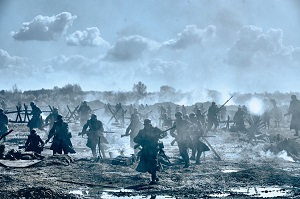
Paul died a month before the war ended. The war report read, “All Quiet on the Western Front.” That day, the front lines were indeed quiet—no artillery fire, no charges. He was simply taken by a bullet that came from nowhere in the midst of that silence. It was meaningless; there was no heroic fall, and no one wrote a poem for him. The war in All Quiet on the Western Front is not a tale of heroism; it is a story of nineteen-year-old boys being sent into a meat grinder. If we merely stand by as spectators, or simply post a sigh of prayer on social media, and then do nothing to change the situation—then we, too, are part of that wall. This reminds us that peace is never a given. This book is not merely a record of World War I; it is an indictment of all wars and a profound reflection on humanity, life, and peace. It tells us that youth should not be crushed by artillery fire, nor should life be devoured by war. Cherishing the peace we have today and honoring every life is the best way to comfort those departed souls.