Let me be straight with you — this is not a warm story about family, loyalty, or keeping promises. Not even close. It’s about how one simple, plain dying wish turns into an absurd, stinking nightmare.
I picked it up thinking I’d read a sad tale about a family carrying out a mother’s last wish. What I actually got was way more brutal — and way more brilliant — than that.
William Faulkner doesn’t sugarcoat anything. He just throws you headfirst into the swamp of human selfishness, grief, and pointlessness — and makes you remember your own ugly moments. All those promises you made and then quietly brushed aside with some excuse.
A funeral road paved with “me first”
The plot is simple: before the poor farm woman Addie Bundren dies, she has one wish — to be buried back in her hometown of Jefferson. Her husband Anse and their kids load up the wagon and start a forty-mile funeral trip.
Sounds respectful, right? Wrong.
Along the way, floods and fires block their path. The mule pulling the coffin drowns. And the body inside starts to smell. Things just keep getting worse.
But here’s what really gets me — every single family member has their own hidden reason for making the trip. “I’ll take you home” becomes nothing more than an excuse to serve their own little agendas. Read a few pages and you’ll see: this funeral was never about the dead. It was always about the living’s schemes.
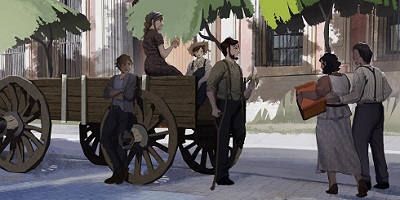
The oldest son Cash builds the coffin right next to his mother while she’s still breathing. He’s obsessed with the angles and measurements of the wood. He loves her, sure — but that love comes out looking like cold, inhuman craftsmanship.
The daughter Dewey Dell isn’t mourning. She’s desperate to find a pharmacy in Jefferson her pregnancyr.
The father Anse keeps shouting “I gave my word to Addie” — but really, he’s thinking: once we get to town, I can finally buy myself some new teeth. Maybe find a new wife while I’m at it.
Everyone is using this journey for their own benefit. Nobody’s a complete villain. But nobody’s purely good either. Faulkner doesn’t judge them. He just shoves you inside each person’s head so you can hear their truest voices — those selfish, shameful, even cruel thoughts we never say out loud.
How fragile a promise really is
After reading this, something hit me. Faulkner does one brutally honest thing from start to finish: he tears off the polite mask, layer by layer, and shows you the truth. A promise is as light and disposable as a used napkin. You use it. You toss it. It’s not worth examining.
The dead woman Addie already saw through human nature a long time ago. There’s a passage where she says something that stopped me cold:
“That was when I learned that words are no good; that words don’t ever fit even what they are trying to say at. He had a word, too. Love, he called it. But I had been used to words for a long time. I knew that that word was like the others: just a shape to fill a lack; that when the right time came, you wouldn’t need a word for that any more than for pride or fear.”
When I read that, I had to put the book down for a second. And I thought — how many promises have I made without really meaning them? “I’ll always be there. I’ll never change.” The words come out all serious, and for a moment they almost feel real. But the second they leave your mouth, life just sweeps them away.
It’s so easy to make a promise. And so casual to turn your back on it. Most promises are just a flash of emotion — the sincerity never actually lands anywhere.
This is the rarest kind of honesty in literature. It tears open the decent little lies of the adult world and makes you understand: don’t put too much weight on easy promises, and don’t underestimate how flaky people can be. Instead of clinging to sweet words, learn to watch what people actually do.
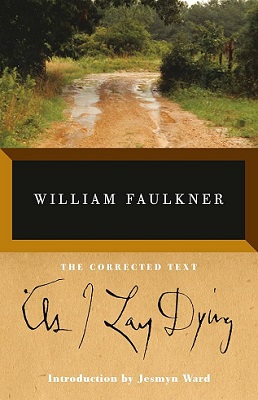
After reading this, you’ll look in the mirror
You might think this book sounds too depressing. A family buries their dead, goes half-crazy, barely survives — and at the end, the father calmly walks off with new teeth and a new wife. No “we came out stronger after all that suffering.”
But I still think you should read it. Because it shows you something clear: behind every noble story there’s a bunch of petty, self-serving little calculations.
The next time you say “I promise,” you’ll pause for a few extra seconds. And that pause — that alone — is worth it.
Faulkner spent nearly three hundred pages just to give you that little hesitation. He doesn’t want you to be a saint. He just wants you to be honest. With the people in front of you, and with yourself.