I realized I rarely think seriously about aging. Not because I don’t want to—but because I don’t dare. It’s like an old coat shoved to the back of a closet, y’know? You know it’s there, but you never reach for it. Sometimes, a news story about a 104-year-old in Florida makes it feel distant, like it doesn’t concern me at all. Other times, when I hear friends talk about their parents’ hospital stays, I’ll freeze for a second—and then quickly look away, like if I don’t acknowledge it, it won’t happen.
Atul Gawande’s Being Mortal is that coat—pulled out and held up to the light. It’s not trying to frighten you, exactly. It’s just making you sit down and look at it, piece by piece, no frills attached.
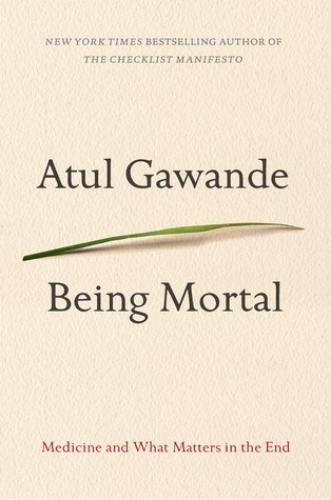
There’s no dramatic plot here, not really. Gawande’s a surgeon, but don’t go expecting stories of miraculous recoveries or “beating death.” Instead, he writes about what happens when medicine can’t fix things anymore when older patients cycle in and out of hospitals, when chemo does more damage than the cancer itself. And he asks this simple, kind of unsettling question: what do patients really want? Not the doctors, not the family—the person in the hospital bed. What does “living well” even mean to them?
One story stuck with me, in particular. A nursing home in Oregon changed up its routines,letting residents decide when to wake up, keep pets, even lock their own doors. The results? Striking. Fewer medications, lower mortality rates.Turns out, what those residents wanted wasn’t fancy machines or high-tech treatments. It was just a little bit of control. Even if all that control boiled down to was a single key.
We’re not great at talking about this stuff in the U.S., if I’m being honest. In my circle, health updates are always “doing fine” or “just the usual problems”, nothing too heavy. The real conversations, the ones that matter, like whether to intubate someone or move them to the ICU, those usually happen at the bedside, when fear’s already taken over. Gawande calls that a bad farewell. A good one? It happens in advance, calmly, honestly. You admit the ending’s coming. You talk about it before panic sets in.
He writes about his own dad, too, and it’s one of the quietest, most affecting parts of the book. When a spinal tumor was found, his family asked him: how much pain are you willing to go through for a few more months? Where do you want to spend your final days? Hard questions, almost unbearable ones, but once they were out there, the path got clear. His dad chose to go home, stop treatment, and spend his remaining time quietly. Gawande describes the sun shining through the backyard trees, the hum of neighborhood life. No drama, no big speeches. Just quiet moments—and I found myself pausing over that passage for a long time, just letting it sink in.
I’ll admit, this book isn’t an easy read. Not because the language is hard—it’s not. It’s because it forces you to face the stuff you’ve been avoiding, head-on. I’d never seriously asked my parents about their final wishes—not because I didn’t care, but because even bringing it up felt like admitting it would really happen. After reading this book, though, I finally got it: the last part of life should be lived on the person’s own terms, not stuffed with machines and tubes.
Gawande shows all kinds of endings. Some people fight until the very last breath. Others go home. Some spend their final hours alone in an ICU. He doesn’t tell you which one’s right. The point, really, is just this: you have to ask the person themselves.
After finishing Being Mortal, I did a small thing—I called my parents. We talked for half an hour, nothing too deep. I didn’t bring up the heavy stuff directly, but when we hung up, I reminded them to keep up with their check-ups. I didn’t confront death, not really, but I stopped avoiding it completely. And maybe that’s the real gift of this book: it didn’t make me braver, not exactly. But it made me less afraid to reach back into that closet and pull out that old coat, and really look at it.
