To be honest, I really didn’t expect it when I opened Beneath the Wheel for the first time. I thought to myself: What can German novels more than a hundred years ago have to do with me? As a result, I felt bad halfway through reading. The feeling of being chased by the score and crushed by the expectation is so familiar. I was so familiar with it that I couldn’t help asking myself: Isn’t this my story?
When excellence becomes a disease
Hans, the protagonist of the story, has been the kind of child who makes your parents sigh and say, “Look at them.” But it seems that no one has asked him: Are you happy? Hans stayed up late to study hard for the exam, and even the most ordinary pleasures of fishing and walking became a “waste of time”. He panicked because of a drop in his grades, as if his life had been declared a failure in advance. How did his once curious face become numb, empty little by little, and only anxiety about the score?
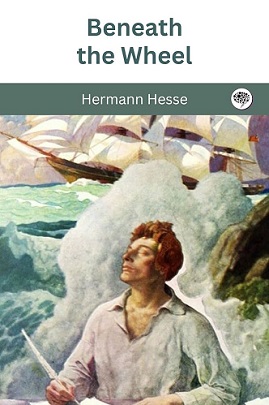
But what’s more worrying is that Hans has actually been trying to cooperate with this system. He didn’t rebel or resist. He was just “good” until he suffocated himself to death. After reading the rest, you will have a very complicated feeling: you feel sorry for him and angry why he didn’t resist, but come to think of it, isn’t this the road that many people have walked? Since we were young, we have been indoctrinated that “life will be over if we don’t do well in the exam”, so we took the initiative to stick our necks into the noose called “excellent” and felt that we were progressing.
There is a character in the book that I particularly like, which is Hans’s friend Pistorius. He is simply Hans’s control group: when everyone is racing, he looks at the clouds on the roadside; when others recite Latin grammar, he talks about poetry and soul. The author did not write Pistorius as a perfect savior, but let him become the only breathable window in Hans’s dark life with an almost innocent persistence. You can clearly feel that he represents a lifestyle that is excluded by the whole system. Don’t compete, don’t compare, and don’t live according to other people’s clocks. And this kind of lifestyle is exactly what Hans yearns for most in his heart but dares not touch.
The wheel runs over, but the fire is not extinguished
The title of the book “Under the Wheel”, the author is really excellent. It’s not just that the big machine of education has run over Hans, but also about something more common: social discipline, secular standards, expectations of others… When all these things like wheels, do you choose to lie down and be crushed, or run wildly to try not to be thrown away? Hans chose to run until he collapsed.
However, I think the best thing about this book is that the author has buried a very thin line in Hans’s story: even in the most depressing environment, people’s desire for freedom and truth has never really extinguished. Those moments when Hans was alone in a daze, those moments when he was moved by the natural scenery, and those moments when his eyes lit up when he and Pistolius talked about literature – are all the sparks of awakening.
It’s just that the kindling is too weak, so weak that there is almost no possibility of winning in front of the huge wheel. But it is also because of the weakness that it is more heartbreaking and makes people want to grab something.
To all those who are trapped by “should”
Back to the original question, this is an education problem in Germany in the 19th century. What does it have to do with us?
In other words, the process of reading Beneath the Wheel is a bit like suddenly opening the window on a sultry summer night. What comes in is not a cool breeze, but a dusty air that makes people sober. It won’t give you the answer or tell you “what to do it right”, but it will make you stop and think about it: what I’m chasing desperately now, is it really what I want? Or is it just that I subconsciously ran with the chariot when it ran over?

If you are a student and are fluttering in the sea of questions, reading this book will be like someone suddenly getting you out of the water and making you take a breath. If you are a teacher or a parent, this book is a gentle slap in the face. It reminds you that your expectations for your child may sometimes be the last straw that crushes him. If you have been working for many years, but you always feel like you are living in some kind of “should” rather than what you really want, then you should turn over. Hans’s tragedy is not only the tragedy of students, but also the tragedy of all people who have been or are being “standardized”.
It will let you know that as early as a hundred years ago, someone saw through all this and cried out for you.