That day, I was shivering in the office again. My male colleagues said that the temperature was just right. I silently added the third piece of clothing, and a thought flashed in my mind: Am I too weak?
This is my real state before I opened Invisible Women. When I encounter those indescribable discomforts, my first reaction is not to doubt the environment, but to doubt myself.
This book took me out of self-doubt. It uses a large number of data and cases to tell me that you feel cold not because you are abnormal, but because of the temperature standard of the office air conditioner, which comes from a 40-year-old, 75-kilogram man in the 1960s. This standard is regarded as neutral, universal and natural, and has been used to this day. Most women wear summer clothes and have lower resting metabolic rate, which is not considered from the beginning.
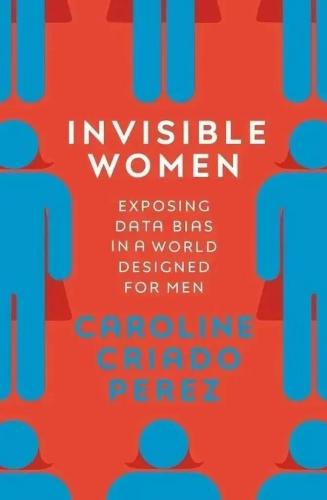
There is a sentence in the book that stunned me for a moment: “Excluding women from research and design is not to protect them. On the contrary, this puts them in danger.” Air conditioning is just uncomfortable, but ignoring similar designs has become a fatal thing in other places. For example, the long-term use of male-sized dummies in car crash tests makes women 47% more likely to be injured and die in car accidents than men. For example, the snow-sweeping case mentioned in the book: a Swedish study found that 69% of the injured in winter pedestrian injuries were women. It’s not because women walk unsteadily, but because women undertake 75% of the world’s unpaid care work, and the travel mode is more complicated – sending children, taking the elderly to see a doctor, shopping on the way – they walk more and take more public transportation. The snowplow always sweeps the motor lane first, and the sidewalk is at the end. You see, even snow is seen earlier than women.
When I read this, I remembered everyone’s reaction when I and my colleagues said that the air conditioner was too cold. No one denies that it’s cold, but everyone is saying: there’s nothing we can do. The air conditioner in the building is like this. That tone makes people feel that temperature is an unchangeable natural phenomenon, not a design choice that can be questioned.
The greatest power of this book is to break this “acquiescent acceptance”. It made me see clearly that “invisible women” is not rhetoric, but a real thinking habit. When we say “human”, we mostly refer to men. Women’s body, women’s travel habits, women’s unpaid labor, and women’s drug response have not been systematically collected into the data. Therefore, women, who account for half of the population, have become a “minority”.
There is another case in the book that impressed me: the size of the piano keyboard is based on the width of the male hand, which makes female pianists much more likely to suffer from repetitive strain than men. These examples came one after another, and my initial grievances slowly turned into a clear understanding: the problem was not me, but the designer never asked me if I needed to be considered.
I admit that I was somewhat resistant when I first came into contact with this kind of view. As a woman, I doubted whether I was too sensitive. The book quotes Virginia Woolf’s 1929 sentence is still to the point: “Critics consider it an important book because it involves war. Critics think it is an irrelevant book because it describes women’s feelings in the living room.” Women’s experience, even if it’s just the temperature in the living room, has long been classified as “unimportant”.
This book didn’t make me so angry that I didn’t want to read it. At the end of reading, I had a kind of peace with hope. The problem is clearly revealed, and the first step of change is taken. Knowing that the temperature of the air conditioner is not “like this”, I will not add the third piece of clothing silently. Knowing that the lack of data is not a neutral fact, but a bias that can be corrected, I will ask more when I hear “this is a standard design” next time: who you have considered this standard?
Invisible Women is not a frustrating book. It is more like a mirror. It also illuminates the origin of my self-doubt in those years and a world that can be redesigned. In that world, cold is no longer the default setting. Snow will sweep on the sidewalk at the same time, the piano keyboard will be one more size, and I will no longer reflexively doubt my body as soon as I walk into the office.
