Last Friday night, I worked overtime until ten o’clock. When I walked out of the company building, I took out my mobile phone and looked through the address book. I found that there was no phone to dial out.
It’s not that I don’t know anyone. There are hundreds of numbers stored in the mobile phone, dozens of contacts on the social platform, and there is always someone around you to talk. But do you know that feeling? There are all people around, but my heart is empty. We have the most “social” but the least “connection”.

Until I opened the book Cannery Row, it was about a group of people living on a shabby street in Monterey Bay, California during the Great Depression in the 1930s – homeless people, prostitutes, gamblers and poor merchants. By any standard, they are all at the bottom of society. No money, no house, no decent job, no future. But they have one thing that we who live in high-rise buildings have been missing for a long time:
They care about each other.
The dilapidated streets hide the purest paradise
There is no “protagonist” in the traditional sense of this book. If you have to say that there are, it should be two people. One is a “doctor”. A marine biologist lives in an old warehouse at the end of Canning Factory Street. Every day, he goes to the tide pool to pick up starfish, octopuses and sea urchins and sell them to the laboratory to make some money. The other one is Mack. A smart tramp lived in a dilapidated tin house with several friends who also had no jobs. They named the place “Palame Palace Hotel”. There was no irony in his tone. He really thought it was good.
It sounds miserable, doesn’t it? But the way these people get along with each other will make you feel that they are the most sober people.
Once, Mack wanted to hold a surprise party for the doctor to thank him for taking care of everyone. He and his brothers went to work, catch frogs and sell them, and tried to find ways to make money everywhere. It was hard to make up for it. As a result, the party was completely messed up – he drank too much, made a fuss, and made a mess of the doctor’s laboratory. Guess what the doctor’s reaction was? He didn’t get angry, didn’t blame, and didn’t even frown. He stood in a mess, looked at the group of “cowss” who were depressed and felt that they had messed up everything, and smiled. Because he knows that the intentions of this group of people are true. A messed up true heart is ten thousand times more precious than a hundred just the right perfunctory.
This is the life on the street of the canning factory. Prostitutes will take turns to take care of their sick neighbors. If a homeless man is drunk on the street, someone will carry him home instead of throwing him on the roadside. Li Zhongming, who runs a grocery store, knows that creditovers will never get paid, but he will still hand over the food. No one asks you “do you deserve help”, because in this street, there is no need for a reason to help.
Anti-mainstream redemption, redefining the appearance of “success”
When reading this book, don’t misunderstand that Steinbeck is addicating that “poverty is beautiful”. He didn’t. He wrote very clearly – the people on the street of the canning factory are really miserable. They don’t have medical insurance. It’s so cold in winter, and sometimes they really go hungry. But what he wants to say is something else: poverty is one thing, and the barren soul is another thing; and there is no necessary connection between the two. There is a doctor’s monologue in the book. He said:
“I have always felt strange that in our society, why do the qualities we really appreciate – kindness, generosity, openness, honesty, understanding and compassion always appear with failure? And those qualities we hate, such as sharpness, greed, possessiveness, stinginess and self-centeredness, are often the companions of success. While people say they appreciate the former, they desperately pursue the results of the latter.
Do you think so? We have been educated to be “kind” and “sincere” since childhood. However, when I grew up, I found that these qualities in the workplace and in the social jungle seemed to not only not help, but also became a burden. Good people are easy to be taken advantage of and ignored, and they are not easy to become “winners”. So many people have changed slowly. I began to calculate my defenses and began to take “what’s the benefit of this matter to me” as the first sentence before making any decision.
And the gang of people on the street of the canning factory has never changed. It’s not because they are noble, but because they have no room for “change” at all – they are so poor that all cover-ups and disguises have lost their meaning. So they are too lazy to pretend, so they simply follow their own work. What’s the result? They have become the richest people in the whole book. The value of this reading is to help us break out of worldly prejudices and see the essence of life again.
May we all keep the purity and kindness of our hearts
In fact, each of us lives in the kidnapping of “worldly success”: staying up late and working overtime to make money, being careful for fame and fortune, slowly becoming selfish and indifferent, forgetting how to treat people sincerely, forgetting how to love and give purely, and sometimes we even feel that kindness is a kind of “weakness” and sincerity is a kind of “stupidity”. .
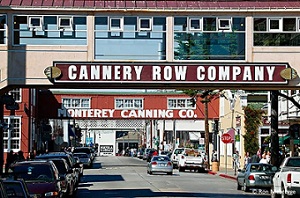
But Cannery Row tells us that this is not the case. Those people on the street of the canning factory, although they have nothing, live better than anyone else and happier than anyone else, because they keep their inner goodwill and are not held hostage by worldly greed. We may not have to live a poor life like them, but we can keep our original intention, not to be attached to the situation, and not to fight. In this impetuous world, we should have more sincerity and more kindness.
If you are also kidnapped by worldly success, feel tired and confused, and if you also miss that pure kindness, I sincerely recommend that you read this book. It won’t teach you how to make money. It won’t give you inspirational quotes. It won’t even tell you “where to go”. But it will say softly in your ear: Hey, you don’t have to be the “successful” person in the eyes of others. You can just be a good person, and then you will find that’s enough.
On the canning factory street, that’s enough. Maybe it’s the same in our world.