Hey, honey.
I stayed up all night reading this book. Not because it’s scary or complicated. But because it slapped me in the face — like a mirror I didn’t ask for.
You know how it is. By day, you’re the “good one.” Nod at your boss. Smile at your family. Post a nice little quote on social media about how peaceful life is. Then late at night? The weird thoughts creep in. You hate the rules. You want to break something. That version of you feels just as real — maybe even more real.
Hermann Hesse’s Demian is about that split. About the sickness of pretending you only have one face.
I’ll be honest with you — and a little mean too, to myself and to you.
First cut: peeling off the “bright” skin
Little Emil Sinclair starts off living in a clean glass jar. Warm home. Loving parents. Gentle prayers. He calls it the “bright world.”
But right on the other side of the house? There’s the “dark world.” Drunks. Lies. Blood. The cruel part? He realizes he belongs there too. When a bully named Kromer blackmails him, Sinclair feels fear and shame — and also, for the first time, a strange little thrill.
It’s like when you first felt jealous of your best friend. First time you lied to your parents. First time you broke a rule just because you could. It made you sick, sure. But it also felt kind of good, didn’t it?
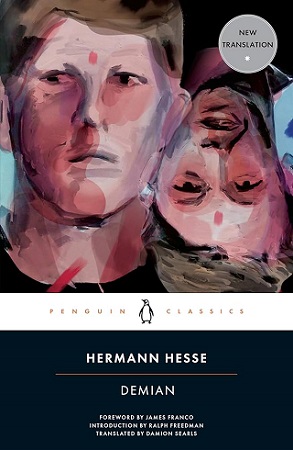
We think growing up means pulling out those bad weeds. Hesse says: no. Those weeds are part of your soil.
Second cut: is Demian an angel or a devil?
Then Max Demian shows up. Transfer student. The kind of kid you want to avoid the second you meet him — because his eyes see right through you.
He doesn’t lecture. He quietly flips your world. Says Cain might not have been evil — just strong, so weaker people smeared his name. Tells Sinclair: “The bird inside you has to peck through the eggshell to be born. And that eggshell is the whole world.”
Demian isn’t a savior. He’s more like a ghost — the ghost of Sinclair’s buried self.
Reading this gave me chills because I thought of my own Demian. Maybe yours is a friend who once pulled you out of a safe, boring routine. Maybe it’s just a sentence in a book. But at that moment, something wakes up. And you stop sleepwalking with everyone else.
Third cut: Abraxas — hug the monster inside
Here’s what shocked me most. This book isn’t about overcoming darkness. It’s about defying the light.
Hesse introduces a god named Abraxas. Not good. Not evil. Both divine and demonic.
What that means is: you don’t have to cut off your wild parts just to fit into the world.
If you feel lonely — go be lonely. Because in loneliness, you can finally hear yourself. If you have crazy desires — don’t kill them with guilt right away. Look at them. They’re also your life force.
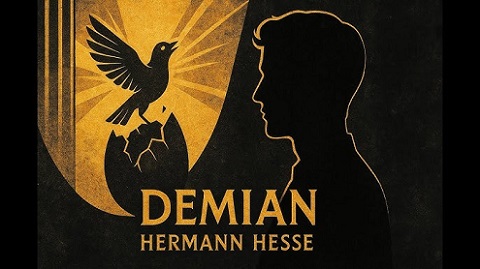
Reading Demian felt like taking off all my clothes and dancing in a late-night rainstorm. It lets you be unfinished. Not a polished product. Just a real person.
Fourth cut: go to yourself, even if you have to go alone
So why should you read Demian?
Because the world can’t wait to sand down your rough edges. This book says: you don’t have to be normal to be real.
I’m not telling you to be bad. I’m telling you to be honest.
We’re so good at writing “team player” on our résumés, saying “I do” at weddings, playing the “good child” for our parents — that we’ve forgotten what we actually look like.
Hesse wrote: “Everyone has only one real duty — to find themselves.”
This isn’t a novel. It’s a therapy session. Just you and your real self, sitting across from each other.
You might not become successful after reading it. But you might become whole.
So open it. Go meet your buried Demian — the one that’s a little dangerous.
Because the moment you stop performing for others?
That’s when you finally start to live.