The first time I opened this book, I wondered how audacious it was to title it Ecce Homo. The title sounds like someone standing center stage, shouting at the whole room, “Look at me.”
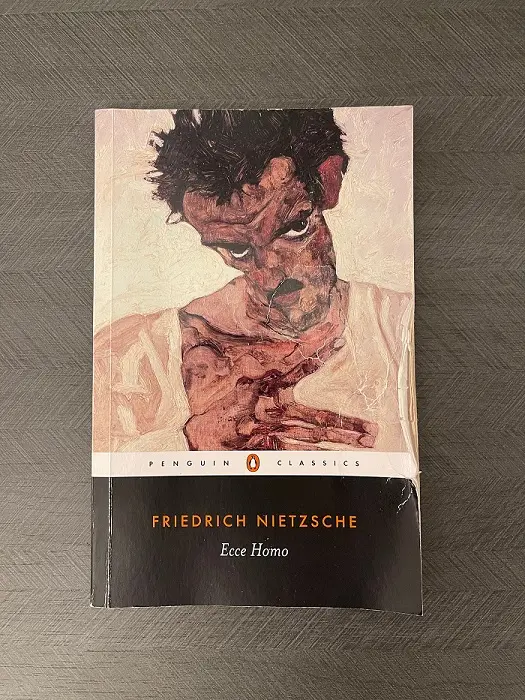
I initially thought Nietzsche was overly arrogant. After finishing, I realized the truth. He had been misjudged all his life, until he decided to speak for himself. He tells the world they have misunderstood him and proceeds to clarify every book, every thought, every instance the world turned its back on him.
That kind of honesty is more unsettling than any confession. He does not beg for understanding; he simply states, this is who I am.
One man against the world a quiet confession
Nietzsche wrote this as his last book, right before his mind completely broke down. By then, the world had already labeled him insane. His books weren’t selling. Friends kept leaving. His body got worse every day. But what he wrote wasn’t some tragic story. It was something closer to terrifying clarity.
He walks through his own work, telling you what each one really meant. He calls Christian morality a slow poison: gentle, yet sapping people’s strength. He says modern culture is fake and weak, with people dressing up mediocrity in pretty words. He says: let’s rethink everything. Turn over everything they call truth and look at the other side. Today, that might not sound so scary. But back then, over a hundred years ago? That was throwing a bomb into a crowd.
Reading this book, you keep thinking about all the people history got wrong. Nietzsche wasn’t the first. He won’t be the last. But he’s one of the few who wrote down, page by page, the whole process of being misunderstood.
What doesn’t kill me turns me into me
What moved me most in this book wasn’t the grand critiques. It was the small details of how Nietzsche kept himself alive.
He talks about having no appetite, so he figured out what food worked best for him. He found Germany’s weather too depressing, so he moved to the sea in the south. He couldn’t sleep, so he searched for ways to learn how to sleep again.
He seems less like a philosopher and more like an ordinary man caring for himself. But he connects these small things to his philosophy: if you can’t take care of yourself first, what gives you the right to talk about changing the world?
What doesn’t kill me makes me stronger. That line comes from this book. I used to think it was some motivational poster slogan. Now I know: he really was someone who came back from the edge of being destroyed.
The atmosphere of this book is strange. It’s not the kind of light reading that relaxes you. It’s more like a conversation that goes on for hours. The person on the other side is sometimes gentle, sometimes irritable, sometimes talking to himself, and every once in a while he throws out a dry joke that makes you laugh. When you close it, you might not agree with a single thing Nietzsche said. But you’ll feel like you met a real person. Someone who was sick, lonely, angry — but who never once thought about shutting up.
The misjudged ones always find each other
This book isn’t for everyone. If you like quiet books that leave you feeling good afterward, this one probably won’t be your taste. It’s like an unsparing mirror that shows you the corners of yourself you’d rather not face.
But if you’ve ever felt out of step with everyone around you, if you’ve ever wondered whether the things everyone says are good are actually any good at all, if you’ve ever lain awake at night and thought, maybe I’m the crazy one, not them, then you should read this book. Nietzsche won’t give you warm comfort. He might even laugh at you. But he’ll let you know one thing: you’re not alone. One man, standing in nineteenth-century Europe, fired a single shot at the whole era’s pretense. That bullet flew for over a hundred years — and it can still hit you, sitting in your room today.
I closed this book, and one thought kept spinning in my head: what does it actually cost to become yourself? Nietzsche spent his whole life answering that question. His answer: whatever it costs, it’s worth it. Because he beheld the man. That man was Nietzsche, and, in a sense, every person still searching for themselves.