I recently came across a news story about TB patients in some countries struggling to complete treatment even after diagnosis. The report caught me off guard. As a kid, I pictured TB as a disease of the past, an old term only found in textbooks or black-and-white historical photos. I realized through further research that TB is still a major global killer. It remains one of the world’s deadliest infectious illnesses, killing over a million people every year. Curious about this ongoing crisis, I picked up John Green’s Everything Is Tuberculosis.
Its title makes it easy to mistake the book for plain medical popular science. In reality, it covers far more than the illness itself. Using tuberculosis as a starting point, the author unfolds how poverty, resource gaps, social structures and human fate intertwine closely.
Much of the story centers on one young TB patient. Through his struggles, Green circles back to a key question: why does a treatable disease still claim countless lives worldwide?
Gradually, I understood tuberculosis is never just a medical issue.
TB, historically dubbed the ‘White Plague,’ devastated countless artists, writers and ordinary households. Antibiotics helped wealthy nations curb its spread. Yet in under-resourced regions, patients still battle late diagnosis, scarce medication and disrupted long-term care.
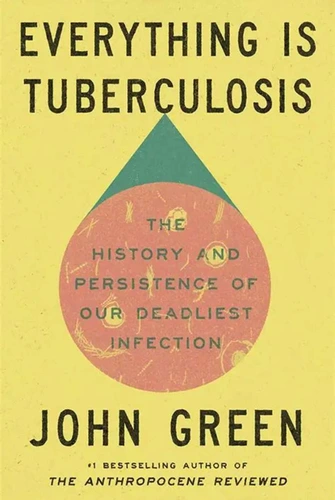
One argument stuck with me long after reading. Green stresses illness does not strike evenly across populations. Though germs spread indiscriminately, infections expose deep gaps in housing, income, healthcare access and resource distribution.
This reminded me of reports from past global health crises.
Faced with the same threat, some worked safely from home while others crowded onto public transit daily. Some got quick medical help, and others waited endlessly for care. Disease appears impartial on the surface, yet real-world risks split sharply along social lines.
What makes Green’s writing stand out is his refusal to turn the book into a lifeless collection of statistics.
He lists data, but always anchors numbers to real people. He documents medical history alongside patients’ fears and fragile hopes.
Big public health figures often feel cold and distant on paper. Phrases like “millions of cases” fail to spark empathy. Green pulls readers back to individual lives and puts human warmth back into dry statistics.
He quotes a well-known line:
“The world is what it is because we make it so.”
Not the book’s core thesis, the quote neatly sums up his outlook. Most related crises are solvable; they simply lack consistent global attention.
The book does have its reading hurdles. It dives deep into medical history, public health policies and international health issues. Readers used to fiction may find certain chapters information-heavy, and Green writes from an obvious socially conscious viewpoint. These features elevate it above ordinary medical popular science.
After finishing the book, I recall no complicated medical jargon or exact statistical figures.
What stays with me is a powerful realization: an illness we thought obsolete still shapes millions of lives every single day.
We usually view sickness as individual bad luck. Everything Is Tuberculosis offers another lens: disease works like a mirror. It shows how a society treats vulnerable groups, shares its resources and takes responsibility for strangers’ lives.
That gives the book’s title its lasting meaning. Green never claims all global problems stem from tuberculosis. Instead, he prompts readers to dig deeper behind an illness, where we uncover tangled social bonds far beyond medicine alone.
Green’s work reminds us that TB is never just a medical issue — it mirrors the societal structures and inequities around it.
