I have been thinking a lot about what it feels like to reach out and find absolutely nothing there. Just that heavy, quiet realization that nobody is going to take your hand. You say something into a room and it just stays there, completely unanswered. It is less about the dramatic horror of horror stories, and more about that specific, dull ache of standing outside a window, watching other people live their lives while you are cold.
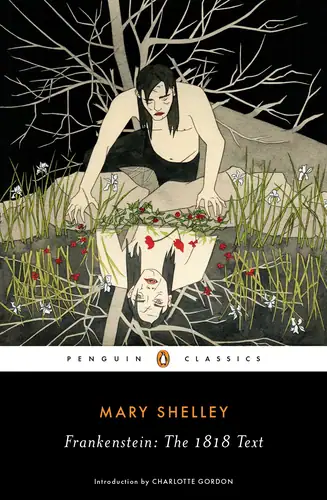
Mary Shelley’s Frankenstein is not really about a scientist who builds a monster. It is about that exact feeling.
Pop culture really did this book a disservice. We all grow up with the Hollywood image, the green skin, the bolts in the neck, the grunting dummy that can barely walk. But Mary Shelley’s creature is nothing like that. Hers is articulate. Heartbroken. He actually speaks in these long, exhausting monologues that make you feel uncomfortable because of how deeply he understands his own misery. You finish the story and feel like you’ve been sitting in a dark room without realizing the lights were off.
The whole 1818 Geneva backstory always gets brought up, but here is what actually matters: She was only eighteen. Spending a rainy summer in Geneva with Lord Byron and Percy Shelley, reading ghost stories because the weather was too terrible to go outside. Byron dared everyone to write a horror tale. Mary had this waking dream of a student kneeling next to a thing he had put together from pillaged graves, and that was the spark. It took her a year to finish the whole thing.
The plot itself is simple enough on the surface, but the way it unfolds is a mess of bad decisions. Victor Frankenstein is this brilliant, reckless student who creates a giant humanoid and somehow brings it to life. But the second the creature opens its eyes, Victor just panics. He runs away because the thing looks terrifying. He leaves it completely alone.
The creature wanders into the countryside, completely lost, trying to find anyone who won’t scream at him. He ends up spending months hiding in a hovel attached to a cottage, watching a poor family through a crack in the wall. He just sits there in the dark, day after day, trying to learn how humans talk and how they love each other. It’s kind of pathetic, honestly, how much effort he puts into just watching them through a hole in the wood. Then he saves a little girl from drowning and gets shot by her father. Eventually, he loses all hope and tracks Victor down, begging for a companion. When Victor refuses, the creature kills everyone Victor cares about, his brother, his best friend, his bride. It turns into this frantic, miserable chase across the Arctic ice.
The actual soul of this novel lives in the middle section, where the creature finally gets to speak. What stays with you isn’t the violence. The middle section of the book is where the creature tells his own story to Victor, and that is where the real weight of the novel lives. The contrast between his inner mind and his outer appearance is brutal. He tells Victor about watching that family through the wall, learning their language syllable by syllable, thinking that if he could just speak well enough, they might look past his face.
There is that line everyone underlines: “I am malicious because I am miserable.”
But the moments that linger are the smaller ones. Right after the creation, Victor runs to his bedroom to hide. The creature follows him. He pulls back the bed curtains, reaches out a hand to Victor, and makes some kind of sound. And Victor just flees into the night.
I keep coming back to that part where he follows him to the bed. Because at that point, the creature isn’t trying to hurt anyone. He just wants warmth, I think. He wants a conversation. He wants someone who is willing to just sit in the room with him for five minutes without running away. He is basically like a giant, terrifying newborn baby reaching out for its dad, and his dad just bolts. The violence and the murders and the burning down of cottages, all of that comes much later, but it only happens because every single time he stretched his hand out, people threw rocks at him or shot him.
Victor never feels like a calculated villain to me. His failure is way more ordinary than that. I read this book for the first time back in college, and then I picked it up again recently. The second time felt entirely different. When you are younger, you focus on the science and the ambition. But after you live a few more years and watch the ways people get cast out for things they cannot control, the creature’s isolation starts to feel very close to home.
What makes Victor unbearable is how ordinary his failure is. He creates this incredibly difficult, complicated situation, completely panics, and just leaves the room. He goes to sleep. He hopes the problem will just go away if he doesn’t look at it. He spends the rest of the book whining and shifting the blame onto fate, which feels terribly, painfully human. He is just a coward who couldn’t bear the sight of his own mistake, and honestly, it makes you want to shake him.
My honest verdict on the slow patches, and why the ending still hits so hard: The book does have some slow patches. The letters at the beginning from the Arctic explorer drag on for too long, and you have to wade through a lot of Victor’s self-pity before anything happens. He just goes on and on about his ruined peace and his ruined life, and after a while, you just want him to shut up and take responsibility for the monster he left wandering around the woods. But the monster’s monologues make up for all of it.
By the end, I kept thinking about how much of a person depends on being recognized early. Not admired. Just accepted long enough to become someone softer.
Hollywood’s flat-headed monster doesn’t exist in these pages. If you go back to the original text, you meet someone who is smart, completely shattered, and terrifying because of how much you end up understanding him.
