“We often regard familiarity as safety, even if that kind of familiarity is painful.”
This sentence is the first underlined sentence after I opened Good Morning, Monster. It made me stunned for a long time. Because I remember that I have made many choices, not for happiness, but for familiarity. Even if that kind of familiarity is unresponsive, is neglected, and shrinks itself very small.
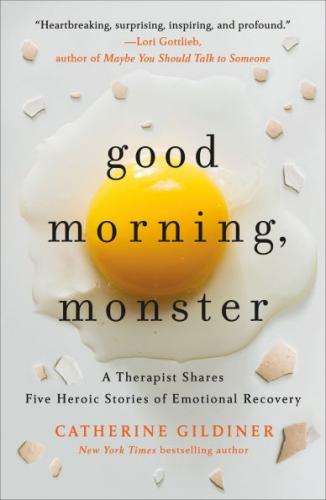
There is a girl named Laura in the book who has taken care of her alcoholic mother since she was a child. At the age of six, she heated milk by herself. At the age of eight, she asked for leave for her mother. At the age of ten, she could keep smiling at school and go home to help her drunken mother to bed. No one hugged her, and no one asked her if she was happy today. She has been an adult since she was six years old. I put down the book when I read this, and my heart felt heavy. This is not an inspirational story, but a person desperately growing a thick shell.
This kind of person is called a monster in the book. But as you read it, you will find that a monster is not a fierce creature with fangs, but a child growing up tough and alone in quiet corners.
The method is very stupid: bite whoever approaches. Like an animal that has been injured for too long, you reach out to help it, and it will pounce on you and bite you. It’s not that it’s bad; it’s that it’s too painful. It hurts so much that it can’t tell whether it’s a hand or a stick.
I think of the most bad-tempered and difficult people in life, and there may be such a child hidden under them. This thought made me feel uncomfortable for a while.
The therapist in the book was not in a hurry to get Laura to open up. She sat there first, got bitten a few times, and didn’t leave. This is what moves me the most in the whole book. Someone is sitting there steadily, and she won’t run no matter how hard you struggle. It’s not that she is not afraid of pain, but that she understood one thing: All aggressive acts with thorns are actually silent cries for help.
When I read this, I thought to myself: If only someone had sat next to me like this back then. Don’t help me solve the problem, just don’t leave.
In the process of reading this book, I have been thinking: are those who are the most screwy and difficult to deal with shouting the same sentence in the wrong way? Don’t go, don’t want me. I’m already in pain. Don’t make me hurt more. But they can’t say it. They can only push people away, and then verify the conclusion by themselves: Look, no one will stay. I think it’s the same in my relationship. Push people away first, and then be sad alone. It turns out that I’m not bad, I’m afraid.
When Laura grew up, she fell in love, picked indifferent people, tried her best to please, and then was dumped. It’s not that she doesn’t want love, but that she is too familiar with the feeling of not being responded to. Familiarity becomes safety, even if that kind of security is painful. That powerful line in the book hit me again: we often regard familiarity as safety, even if that kind of familiarity is painful. Many times, people are not pursuing happiness, but familiarity. When I was a child, I was used to being ignored. When I grew up, I would unconsciously copy that kind of relationship. It’s not abuse; it’s that kind of pattern engraved in the bones. If you change to a warm one, I feel something is wrong. How ridiculous. But this is the truth that many people live. I was embarrassed and relieved at that time.
The therapist later said something to Laura, which was not complicated, but many people owe themselves this sentence. It’s not your fault. You don’t have to be responsible for your mother’s alcoholism. You don’t have to be responsible for your father’s absence. You don’t have to be responsible for an adult’s rotten life. My eyes welled up. This sentence is not just for her. Many people have been carrying other people’s debts all their lives in their hearts and never thought that they could let go. What is the debt I’m carrying? I thought about it for a long time. I probably always felt that it was my fault that my parents quarreled when I was a child. The sentence in the book is like a hand, taking off the weight I had been carrying on my shoulders for so long.
Those responsibilities that were forced onto them when they were young turned into self-punishment when they grew up. I feel that I am not good enough, so I deserve to be ignored. I feel that I don’t deserve it, so I try my best to please him. The root cause is one sentence: Most people have never been allowed to simply be a vulnerable child.
I closed the book, leaned on the back of the chair and closed my eyes for a while. It’s not sad, it’s a kind of late grievance.
This book does not portray healing as a gorgeous transformation. There is no moment of epiphany, and there is no fairy-tale happy ending. The scar will not disappear, but from severe pain to dull pain, from dull pain to occasional thoughts. The people in the book didn’t become super normal people. They just learned to stop before they wanted to bite people, and then try to say: I’m scared now. This is amazing. For people who have not been allowed to express vulnerability since childhood, saying this sentence is equivalent to tearing down half of the wall. I meditated three times in my heart. The first time was awkward, the second time was a little loose, and the third time I wanted to cry a little.
The therapist worked with them for a long time, not to erase the past, but to help them see clearly: what was added to you was not your choice, and you did not deserve it.
One morning, you can push open the window and say good morning to a world that is not beautiful but quiet. Good morning, monster. When you say that, the monster is not a monster.
What those strange-looking people in the book never lack is not reason – what they lack is someone willing to sit down and listen to them.
