You need to meet a man named Jean Valjean.
He is strong as an ox, awkward in manner, yet unexpectedly tender-hearted. He spent nineteen years in prison for stealing a loaf of bread. After his release, the whole world spat on him.
An old bishop gave him a meal and a bed for the night. Jean Valjean repaid that kindness by stealing the bishop’s silver. The police dragged him back. The bishop told the officers that the silver was a gift. Then he pressed a silver candlestick into Jean Valjean’s hands and told him to use it to become an honest man.
In that single moment, Hugo shatters every simple judgment you ever had about good people and bad people. Does society have the right to brand a person forever over one mistake? After receiving so much cruelty, can a human heart still carry kindness? These questions do not need answers. They will stay with you long after you’ve finished the book, and years later you still cannot pull them out.
The Light That Emerges from Broken Places
Jean Valjean later becomes a factory owner and a mayor. He adopts a miserable girl named Cosette. A police inspector named Javert hunts him for decades.
Javert believes only in order. The law is his god. Every good deed Jean Valjean performs puts another crack in Javert’s world. Hugo’s greatest strength is turning these two men into night and day chasing each other, then suddenly swapping places.
But what truly stays with me is not Jean Valjean’s suffering. It is the silence of that era under Hugo’s pen. Poor people had no chance to cry out. Women had no right to defend themselves. Children died without even a tombstone. Hugo shouted for them. He used over a thousand pages to piece back the lives that history had crushed.
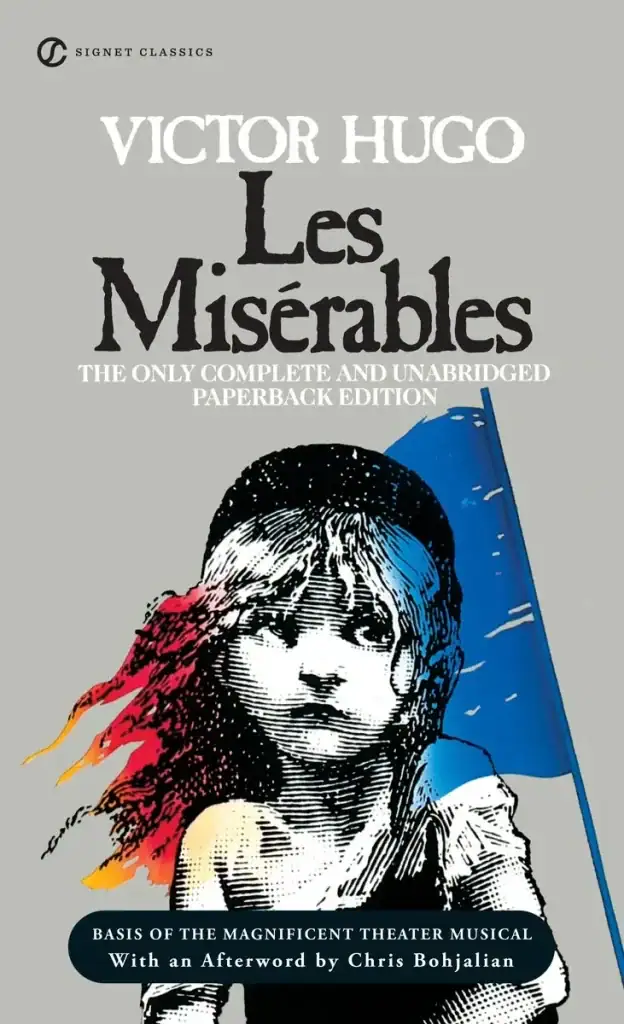
You will close the book and take a deep breath the night Javert jumps into the Seine River. You will understand that real redemption does not happen inside a church. It happens in the small hours of the night when a person’s conscience wrestles with reality.
The Tension Between the Grand and the Small
Hugo spends an entire volume describing a sewer escape. He spends dozens of pages on the Battle of Waterloo. He is not afraid of boring you because he wants you to smell the filth of that era, to feel the cold stone walls, to hear the sound of poor people’s bones breaking under carriage wheels.
But here is the fascinating part. Just when he pulls the lens back to show all of French society, he suddenly zooms in again. He makes you stare at half a loaf of bread in a child’s hand, or a woman’s fallen hair. This shifting perspective makes you dizzy, but it also makes you see clearly. History moves in waves, but Hugo never lets us forget the individuals within it.
Gavroche lives inside a giant elephant statue. He is thin as a stick of firewood, yet he shares his bread with smaller children. He sings while dying behind a barricade. Fantine sells her hair and her teeth to support her daughter, then coughs up blood and dies. The student revolutionaries behind the barricade know they will die, but they raise the red flag anyway. All these people together say one thing. The world gives you despair. Hope is what you choose for yourself.
Your Shadow and Mine Live Inside This Book
I often stop reading and just stare at the wall when I pick up this book.
Every time Jean Valjean chooses kindness, it is not because kindness comes easily. It is because he knows the other path would feel much easier. He could have stayed mayor. He could have kept everyone’s respect. Instead he stands up in a courtroom and shouts “I am Jean Valjean,” throwing away his freedom and his status.
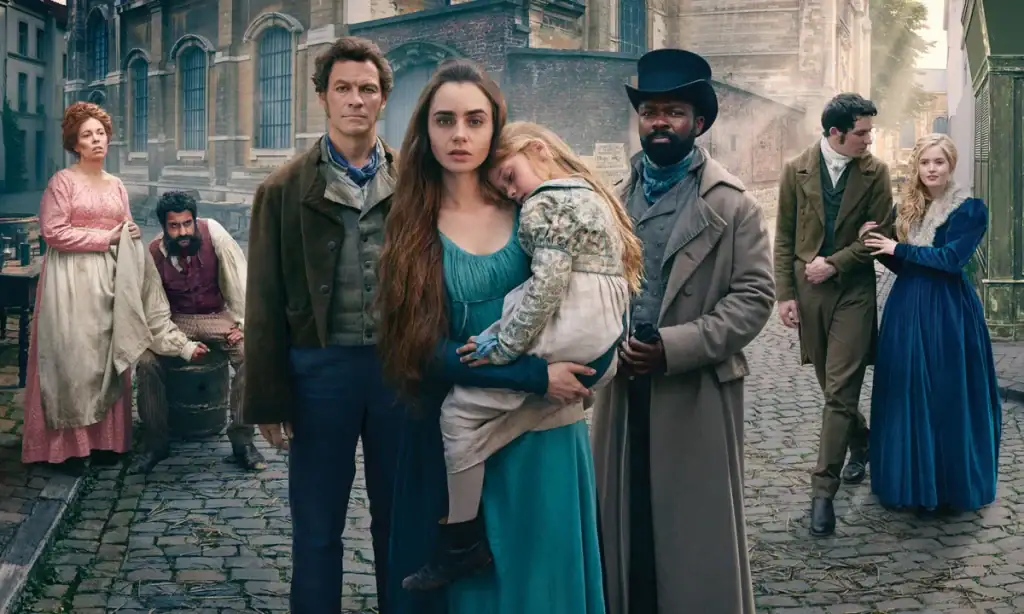
I ask myself what I would do in his place. Keep the comfortable life, or jump into the fire to save a stranger. There is no right answer to this question. But Hugo forces every reader to face it.
This book holds a deeper secret. It is not about nineteenth century France. It is about all the people crushed by systems and prejudice in every era. Jean Valjean’s prisoner number 24601 shows up today as credit records, criminal background checks, the permanent digital black marks on social media. Javert’s laws show up as all the rules that keep you from turning your life around. Cosette’s childhood shows up as those children born at the bottom, losing the race before it even starts.
This is why Hugo never gets old. He does not give you a falsely happy ending. He only tells you this. No matter how cold the world gets, the real tragedy is losing the capacity for compassion altogether.
Turn the first page. That bread thief is waiting for you. He has one question to ask. What kind of person are you going to become in this life?
